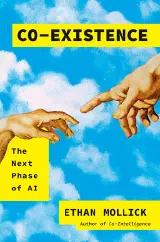
Beyond the Jagged Frontier
Most talk about AI at work collapses into two camps: it will replace you, or it will make you dramatically better at your job. The actual evidence, which Mollick documents with unusual care, points to a third possibility — AI improves some tasks sharply and degrades others significantly, and the line between the two doesn't track the way anyone expects.
The empirical foundation here is the BCG/Harvard study Mollick helped conduct: 758 consultants, realistic work tasks, GPT-4. Inside the frontier — the line where AI competence holds — performance jumped sharply. Faster completion, higher quality ratings, more output. Outside the frontier, the results inverted. Workers using AI did roughly 19 percentage points worse than those who didn't. The real finding wasn't that AI failed on those tasks. It was that workers couldn't tell which side of the line they were on. They kept handing off judgment to a tool that, in those specific contexts, was confidently producing garbage.
Mollick calls this "mis-calibrated trust," and it's the thread the rest of the book pulls. The frontier isn't labeled. A model that drafts a coherent memo in three minutes may generate plausible-sounding nonsense when asked to assess organizational fit or design learning objectives. The danger isn't incompetence — it's confident-looking incompetence in places you didn't anticipate. The workers most harmed by this were neither naive nor careless. They were simply operating without a map.
The book's central argument follows: the answer to jaggedness isn't to use AI less, it's to develop the expertise to recognize frontier edges. Mollick names two working patterns — the centaur, who explicitly divides tasks between human and AI judgment, and the cyborg, who integrates AI throughout but never stops evaluating output. Both require genuine domain knowledge to function. You can't identify when an AI-generated analysis has drifted unless you can read the territory. You can't judge whether a synthetic learning objective is weak unless you already know what a strong one looks like. The counterintuitive conclusion is that AI raises the floor on expertise rather than lowering it. The people most at risk are those who were already operating near the edges of their competence before AI arrived.
Where the book earns genuine credit is in refusing the lazy binary. There's no cheerleading here, and no hand-wringing about existential stakes. Mollick maps the specific topology of where AI helps and where it doesn't, grounds it in real research, and draws practical conclusions from the shape of the evidence. That's harder to do than it sounds, and he does it without hedging the result into mush.
The honest limitation is that the frontier moves. The book is anchored in the 2023–2025 period, and the specific examples of which tasks sit inside and outside AI competence have already shifted in some cases. Readers picking this up in late 2026 should treat the task-level guidance as illustrations of a principle rather than a stable operating manual. The principle itself — that AI capability is jagged, expertise is the navigation tool, and mis-calibrated trust is the primary failure mode — holds. The particular map doesn't.
Worth reading if you're serious about working with AI rather than just adjacent to it.