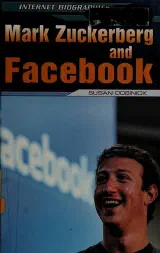
Mark Zuckerberg and Facebook
Internet Biographies
Young adult overview of Facebook's 2004 launch and its transformation of communication.
The most astonishing thing about Facebook is not that it started in a dorm room — lots of companies did — but that Zuckerberg went from first commit to product launch in roughly five weeks, and from that launch to 800 million users and a $16 billion IPO in eight years. Dobinick's young adult biography traces that arc in six chapters, from Facemash to the 2012 public offering, and mostly does it cleanly.
The book's strongest ground is the launch period. Zuckerberg's technical fluency before Harvard — the early music recommendation tools, the side projects that established him as someone who built first and asked forgiveness later — makes clear this wasn't a founder who stumbled onto a good idea. That pattern of build first, apologize never would define the company's culture for the next decade, though the book treats it more as youthful boldness than as something with long-term costs.
The growth chapters are workmanlike but feel compressed. The HarvardConnection lawsuit gets coverage; so does Peter Thiel's early $500,000 check and the eventual fallout with Eduardo Saverin. What's missing is any real analysis of *why* Facebook outcompeted MySpace and Friendster. The book notes that Facebook launched to college campuses first, then high schools, then everyone, without digging into why that sequencing worked. Dobinick tells you what happened; she's less interested in what made it inevitable.
The political chapter, covering the Arab Spring and Obama's 2008 campaign use of the platform, is the most interesting section for anyone revisiting this book now. In 2012, it reads as triumphalist — look what Facebook made possible. From where we sit, it's harder to read those sections without thinking about what came next: misinformation, election interference, governments using the same tools for very different ends. The book can't be faulted for not predicting any of that, but it's a useful historical marker for how differently the platform's political power was understood before the 2016 cycle reframed everything permanently.
This is a school-library book, classified juvenile nonfiction, and it performs that function well. The prose is clear, the chronology is organized, and the chapter on Zuckerberg's concept of "radical transparency" — his public argument that open sharing was morally better than privacy — is handled with enough nuance to prompt actual discussion. Don't come expecting the depth of David Kirkpatrick's *The Facebook Effect* or the narrative drive of Ben Mezrich's *The Accidental Billionaires*. What you get is a competent, honest primer for someone who wants the story without the noise. For the audience it was written for, that's the right call.