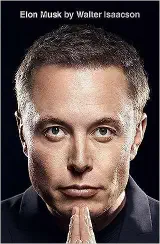
Elon Musk
Isaacson's authorized biography — Tesla, SpaceX, X, AI development, and ambition.
Elon Musk has done things that were not supposed to be possible for a private company: built the rockets that now carry 95 percent of US orbital launches, broke a century-long lock on automobile manufacturing, and created the satellite network that kept Ukraine's military connected in the first weeks of a full-scale invasion. Walter Isaacson's biography documents all of this in careful, reported detail, and that is the book's genuine achievement. Its limitation is that it documents without fully reckoning with what the accumulation means.
The industrial chapters are the core of the book and they earn their space. Isaacson captures how SpaceX survived three consecutive launch failures on borrowed money before finally reaching orbit; how Tesla's Model 3 crisis had Musk sleeping on the factory floor; how his insistence on vertical integration (making your own software, owning your own supply chain) let Tesla outmaneuver an entire legacy auto industry that had outsourced its nervous system. The argument here is not flattery but analysis: this is what industrial fanaticism looks like from the inside. Musk's obsession with the production process as the real innovation — the machine that makes the machine — is presented with enough operational detail that you could actually learn something from it, which is more than most business biography manages.
Sometimes great innovators are risk-seeking man-children who resist potty training. They can be reckless, cringeworthy, sometimes even toxic. They can also be crazy. Crazy enough to think they can change the world.
— Isaacson, Elon Musk, p. 615
The book struggles where it tries to explain the dysfunction. The psychological framework (traumatic childhood, absent empathy, violent mood swings) is genuinely reported and often compelling. But Isaacson never quite makes the case that the cruelty is mechanically necessary for the outcomes, as opposed to being a personality trait that happened to coexist with industrial genius. The framing risks becoming an apology: the childhood explains the behavior, the behavior is inseparable from the mission, therefore the behavior is load-bearing. That is not demonstrated so much as implied by structure. Plenty of driven people do not humiliate their employees. Plenty of difficult people have not built Mars rockets.
I probably spent too much time on Twitter. It's a good place to dig your own grave. You get your shoulder into it and you keep on digging.
— Musk, quoted in Isaacson, Elon Musk, ch. on Twitter/X
Twitter is where the book's formula breaks down and gets honest. Musk buys the company impulsively, retrofits a mission onto it that Isaacson plainly does not believe, and by the end admits the purchase was probably a mistake Musk knew he'd made. This chapter works because the tidy template of the difficult visionary who changes industries fails to accommodate what happened. It's the most useful section for understanding the actual risk profile of his decision-making.
you can work with him or be his friend, but not both
— University friend of Musk, quoted in Isaacson, Elon Musk
The complaint that Isaacson is insufficiently harsh is partially right but misses where the book actually disappoints. The reporting is honest: the anecdotes about brutal workplaces and personal wreckage are there and damning on their own terms. What the book never resolves is what it means that critical infrastructure now depends on one man's moods. The Starlink moment, when a private citizen decided whether Ukraine could attack the Russian fleet, is the most chilling passage in the book. Isaacson raises it clearly. He doesn't answer it. That gap is the real subject the biography circles without landing on, and it will matter more over time than any of the personal drama that surrounds it.
Read the longer summary
The book Isaacson set out to write
Walter Isaacson spent two years shadowing Elon Musk for this 688-page biography, and the book’s central tension shows up on nearly every page. Isaacson clearly admires what Musk has built. He just as clearly doesn’t know what to do with the man who built it.
Isaacson is the biographer who did Steve Jobs, Einstein, Benjamin Franklin, Leonardo da Vinci, and Jennifer Doudna. Musk reportedly called him up in 2021 asking for the same treatment, which is itself a revealing detail. No Musk biographer will get this level of access again. Isaacson was in the factories, on the all-nighters, in the hotbox meeting rooms at Twitter HQ. He interviewed Musk’s father Errol, his mother Maye, his ex-wives Justine and Talulah Riley, Grimes, and dozens of engineers and executives. If you want the primary source on how SpaceX and Tesla got built from the inside, this is the primary source.
The book Isaacson wrote is structured around a psychological thesis: to understand Musk you need the bullied South African boy, the emotionally abusive father, the undiagnosed Asperger’s, the “demon mode” Grimes named. The implicit argument is that the trauma made the visionary, and the cruelty is the price of the rockets. Isaacson closes the book by calling Musk a risk-seeking man-child, crazy enough to think he can change the world.
That frame is the book’s best marketing line and also its weakest intellectual move. A lot of the strongest criticism the book has drawn, from Jill Lepore in The New Yorker and Sarah Frier in The Atlantic, lands in the same place: by making Musk’s psychology the dominant frame, Isaacson ends up explaining away the things about Musk that matter most. The trauma story sands the edges off the politics, the power, and the harm.
The engineering chapters are where the book earns its keep
If you read Elon Musk for one thing, read it for how SpaceX and Tesla actually got built. Isaacson is very good at factory-floor detail. He watches Musk walk engineers through what they call “the algorithm”: question every requirement, delete every part you can, then simplify, then accelerate, then automate, in that order. He captures specific moments when Musk, against the collective judgment of his engineers, cut parts out of rockets and production lines that everyone said were essential, and more often than not turned out to be right.
The SpaceX story is genuinely remarkable and well-told here. In 2014, NASA awarded SpaceX a contract to take astronauts to the space station. It gave Boeing a parallel contract with 40% more funding. By 2020, SpaceX had delivered crewed flights and Boeing still couldn’t dock an unmanned test. The US human space program now rides on SpaceX because SpaceX is, at this point, the only game in town. Isaacson captures the specific engineering culture that got them there: vertical integration, designers placed physically next to the production line, relentless pressure to make the thing yourself instead of buying it from Aerojet Rocketdyne.
The Tesla chapters are the same shape. Every legacy automaker thought electric cars were a joke. Musk bet personally, publicly, and financially on the opposite thesis and was right. The Model 3 production ramp, when Musk reportedly slept next to the line for weeks, is the kind of anecdote that would read as implausible in a hagiography but hits harder here because Isaacson is not pretending it was pleasant for anyone involved.
He is clear about how ugly the management style is. Dozens of former employees describe it as brutal, capricious, humiliating. There’s a Musk line Isaacson quotes about urgency as an operating principle, and you can feel every engineer who has been on the receiving end of that quote remembering what it cost them. The book documents public dressings-down, firings based on a bad meeting, the years-long pattern of what one old friend told Isaacson: you can work with Musk or be his friend, but not both.
What the book leaves out is most of South Africa
Lepore’s New Yorker essay on the book is sharp, and the sharpest thing in it is this: in Isaacson’s version of Musk’s childhood, there are Musks and Haldemans and animals, but no Black people. Musk was born in Pretoria in 1971. He was four during the 1976 Soweto uprising, when police killed hundreds of schoolchildren protesting Afrikaans-medium instruction. Isaacson mentions apartheid once or twice in passing and never as a structure that shaped anything.
He mentions Musk’s maternal grandfather, Joshua Haldeman, a Canadian who led the quasi-fascist Technocracy movement and emigrated to South Africa in 1950, two years after apartheid was declared. Isaacson calls Haldeman’s politics “quirky.” Haldeman self-published a pamphlet in 1960 blaming both World Wars on Jewish financiers. That is not quirky. That is a specific ideological tradition, and it runs through the family Musk grew up in. Elon’s mother’s memoir covers growing up in 1950s and 60s South Africa without mentioning apartheid once. Errol Musk, Elon’s father, is currently sending Elon emails about what will happen to Blacks “with no Whites here.”
This matters because a lot of Musk’s current public behavior makes much more sense if you follow that thread. The fixation on demographic decline. The pronatalism specifically aimed at “smart people.” The fortress-building instincts. The migration toward great-replacement-adjacent tweets. Isaacson doesn’t follow the thread. He would rather tell you, at length, about being bullied at school.
The Quinn Slobodian and Ben Tarnoff book Muskism, reviewed in The Guardian last month, picks up exactly where Isaacson dropped it. Their argument, that apartheid South Africa is the nursery of Muskism and that the through-line from Haldeman to Musk is engineering-as-governance plus racialized exclusion, is the argument Isaacson’s book needed to engage with and doesn’t. Whether you buy every step of it is beside the point. The question has a serious answer, and this biography doesn’t even ask it.
The Twitter chapters are the chapters Isaacson believes least
The most interesting thing about the back third of the book is that even Isaacson can’t quite sell Musk’s own stated rationale for buying Twitter. Musk tells him he bought it to fight the “woke-mind virus” and to buy civilization time to become multi-planetary. Isaacson writes that as bullshit, though more politely, and he basically says so in the accompanying podcast tour: he asked Musk how this fit the mission, Musk admitted it maybe didn’t, and the multiplanetary justification got retrofitted later.
The Twitter chapters are also where the book gets sharpest about Musk’s actual behavior. Isaacson describes Musk impulsively ordering the physical relocation of Twitter’s Sacramento data center over a single weekend, which broke large parts of the platform for months. He describes Musk in a hotbox room with yes-men joking about Anthony Fauci and transgender pronouns and then tweeting “Prosecute Fauci are my pronouns” moments later. He describes the descent into conspiracy-adjacent posting about COVID, lockdowns, and the standard right-populist grievance inventory. And he records Musk’s own admission, late in the book, that he probably shouldn’t be spending his time like this.
Isaacson estimates elsewhere that 95% of the genuine hatred Musk has accumulated comes from what he posts on, does to, or does with Twitter. That seems roughly right. The book never fully answers the implied question: if the rockets are the legacy and Twitter is a blip, why is the blip eating the person? Musk himself, quoted in the book: Twitter is a great place to dig your own grave, and he keeps digging.
The Starlink correction is a case study in biographer proximity
There’s a useful object lesson buried in the rollout. Isaacson published a Washington Post excerpt describing a 2022 incident where Musk, during a Ukrainian drone attack on the Russian Black Sea fleet at Crimea, allegedly shut off Starlink coverage. That version was wrong. Musk hadn’t turned Starlink off that night. He had already geofenced the area earlier, refused to extend coverage when Ukraine asked, and the attack failed. The book and the excerpt were both corrected.
Isaacson argues, reasonably, that the essence of the story stands: a private citizen, in real time, was deciding whether a sovereign nation could conduct a military operation. That’s true, and it’s the more important point. But the original “he turned it off” version is the cleaner, more dramatic version, and that’s the version Isaacson wrote first. That tells you something about what happens when a biographer spends two years close enough to a subject to text him.
This is the book’s structural problem. Access is what makes the engineering chapters great. Access is also what makes the Twitter chapters a little pulled, the apartheid chapters empty, and the Starlink chapter wrong in the first printing. Access buys texture and costs distance. Isaacson knows this and mostly accepts the trade, which is an honest answer for a biographer to give. It just means the reader has to supply the distance themselves.
The cruelty-as-price-of-admission frame doesn’t hold up
The book’s implicit argument, summed up in its last lines, is that Musk’s cruelty and his accomplishments are linked — that the same engine that ships rockets also shreds people. Isaacson quotes associates saying versions of this. He gives Grimes’ “demon mode” phrase a lot of the emotional work. The closing line about innovators being “risk-seeking man-children who resist potty training” tries to wrap it up with a shrug.
I don’t think the link holds up on the book’s own evidence. Plenty of remarkable founders and engineers have been intense, obsessive, and high-velocity without also being cruel. The cruelty isn’t the price of admission; it’s a separate fact about this specific person. Isaacson himself gets close to admitting this when he documents Musk berating subordinates in ways that have nothing to do with any engineering decision: random public humiliations, firings based on a look, the multi-year campaign against his own trans daughter, the “pedo guy” attack on a British cave diver. None of that ships rockets. None of it builds Tesla. It’s just cruelty, and it’s on the record.
We’re sympathetic to Musk’s hard swings. The reusable-rocket and mass-market-EV revolutions are real, they materially improve the world, and neither was happening without somebody willing to be universally laughed at for a decade. We also think a fair amount of the anti-Musk press punches at him for reasons that have little to do with what he actually built. But if the question is whether the engineering justifies the cruelty, the right answer is that the engineering justifies itself, the cruelty is its own thing, and Isaacson’s attempt to fuse them in the closing pages is the book’s softest moment. Lepore is right to be unnerved that this is the conclusion Isaacson lands on after 615 pages about a man who controls a non-trivial slice of the US space program, the satellite internet over Ukraine, and one of the most influential social platforms in the Western world. “Crazy enough to change the world” is not a sufficient answer to the actual concentration of power involved.
What’s missing, and who should read it
A few things a reader finishing this book still won’t understand.
How Musk actually makes money. The book is thin on the SpaceX-Pentagon relationship, the Tesla subsidy stack, the PRC’s leverage over Tesla Shanghai. If you want the political economy of the empire, you will need Muskism or Ronan Farrow’s reporting, not this.
What his engineers really think. Isaacson interviews them, but they tend to speak in on-the-record, brand-safe terms. Eric Berger’s Liftoff and Tim Higgins’ Power Play give you a more textured picture of how the engineering cultures actually functioned, at what personal cost to the engineers, and where the mythology diverges from the logbook.
The ideology. Musk’s political evolution is the single most consequential fact about his public life since 2022, and Isaacson treats it as mood rather than thought. There is a coherent worldview under the tweets, with intellectual roots that go through Haldeman, Technocracy, a particular reading of Silicon Valley libertarianism, and the South African right. Isaacson treats all of it as going down “rabbit holes,” which is not wrong but is incomplete.
Still, who should read it? Read it if you want one book on how SpaceX and Tesla got built from the inside, with specific, sourced detail about the people who built them and the methods they used. The engineering chapters are the best nonfiction on Musk’s companies currently in print, and they’ll stay that way for a while.
Read it with something else next to it if you want to think seriously about what Musk’s power means now. Lepore’s essay is the sharpest short counterweight. Muskism is the longer one. Farrow’s New Yorker piece on Starlink and shadow rule is the best on the infrastructure-capture question.
The simplest reason to read Elon Musk is that Musk is the most consequential private individual currently alive, and this is the only book where a serious biographer had two years of unfiltered access to him. Whatever you end up concluding about the man, you want the source material. This is the source material. Read it with the other books open on the desk.