Co-founder of Storia AI, former Google Research engineer
Julia Turc
Profile
Julia Turc is one of the more useful people to follow if you want to understand what’s actually happening inside a Transformer, as opposed to what’s happening inside the discourse about Transformers. She spent roughly eight years at Google Research as a research engineer working on NLP — model efficiency, multilinguality, tokenization, and the distillation techniques that made BERT-scale models deployable — and she has since turned that background into a second career explaining deep AI concepts on YouTube with a stated goal of being comprehensible to her grandfather. The channel’s tagline is “anti-hype,” and it earns it: the videos are about architecture, physics, and hardware constraints, not about which lab shipped what this week.
Her research record is small but unusually well-cited, and it’s the kind of work developers actually touch. Well-Read Students Learn Better (2019) argued that pre-training matters just as much for small models as large ones, and shipped the family of miniature BERT checkpoints — BERT-Tiny through BERT-Medium — that are still sitting on Hugging Face as the default starting point when you need an encoder that fits on a laptop. CANINE explored dropping the tokenizer entirely and operating on Unicode characters, a line of thinking that has aged well as people rediscover how many of an LLM’s dumbest failures are tokenization artifacts. Pix2Struct pre-trained a model on screenshot parsing, an early bet on visual language understanding that fed into Google’s later multimodal work. She also co-authored The MultiBERTs with Jason Wei and others, a study on how much of what we conclude about a model is just an artifact of a single random seed — an under-appreciated result for anyone who takes benchmark deltas seriously.
In 2023 she co-founded Storia AI with Mihail Eric, first as a generative-video tool and then, after a pivot, as a code-understanding copilot. The open-source artifact from that era is Sage — “chat with any codebase in under two minutes,” runnable fully locally with Ollama and a local vector store, or against OpenAI/Anthropic APIs. It hit about 1.3k stars and got archived in early 2025; Storia went through Y Combinator’s Summer 2024 batch. Worth being honest about: Sage is a read-only artifact now, not a live tool to build on. But it’s still a clean, small reference implementation of code-aware RAG with published retrieval benchmarks, which makes it better reading than most repos with ten times the stars.
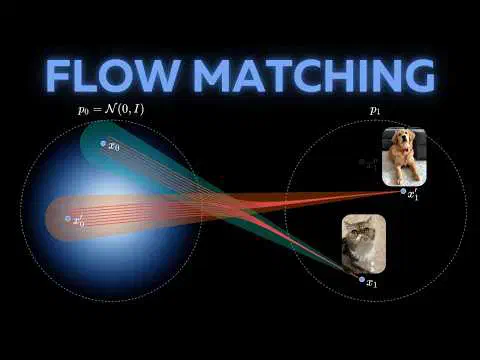
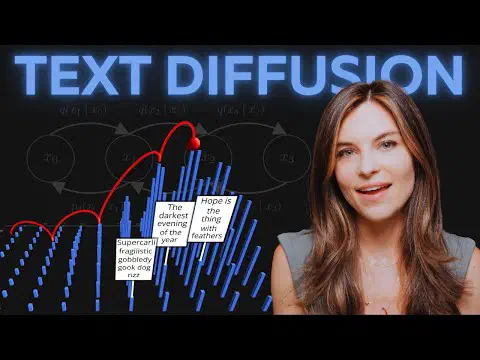
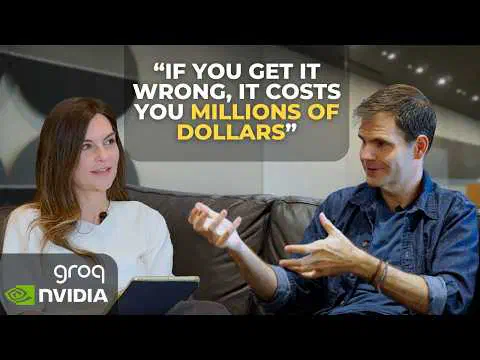
What makes her worth a developer’s attention in 2026 is the topic selection. Her recent videos are on flow matching, diffusion language models, world models, and — notably — how GPU hardware is reshaping model design, including an interview with Jonathan Ross of Groq. That last thread is the interesting one: most AI explainers stop at the math, and most hardware content stops at benchmarks. Turc connects them, arguing that things like FP4 quantization and tensor core layouts are not implementation details but forces that determine which architectures get built at all. If you’re a working programmer trying to build real intuition rather than collect vocabulary, that’s the rare angle you won’t get from a paper summary.
Key Articles & Papers
Well-Read Students Learn Better: On the Importance of Pre-training Compact Models CANINE: Pre-training an Efficient Tokenization-Free Encoder for Language Representation Revisiting the Primacy of English in Zero-shot Cross-lingual Transfer The MultiBERTs: BERT Reproductions for Robustness Analysis Pix2Struct: Screenshot Parsing as Pretraining for Visual Language Understanding Measuring Attribution in Natural Language Generation Models High Performance Natural Language Processing (EMNLP 2020 tutorial) Learning Task Sampling Policy for Multitask Learning Sage: Chat with any codebase in under two minutes Google's compact BERT checkpoints on Hugging FaceVideos


YouTube