a16z co-founder, PCAST tech advisor, AI market optimist
Marc Andreessen
Co-Founder & General Partner — Andreessen HorowitzAdvisor — President's Council of Advisors on Science and TechnologyInventor (web browser pioneer) — Mosaic/Netscape
Corona Brezina's biography in the Tech Pioneers series introduces Marc Andreessen as a technological pioneer whose forward-thinking ideas consistently challenged convention. The book traces his innovation journey from personal computing's dawn through the browser wars, cloud computing, and his role as co-founder of Netscape and partner at Andreessen Horowitz.
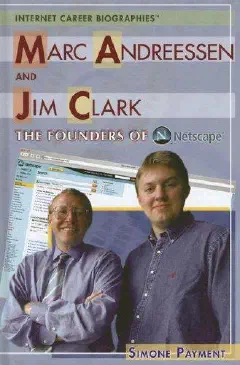
Simone Payment's dual biography traces Marc Andreessen and Jim Clark's rise from college dropouts to pioneering the modern web browser with Netscape, capturing their strategic decisions and the company's evolution through its merger with America Online.
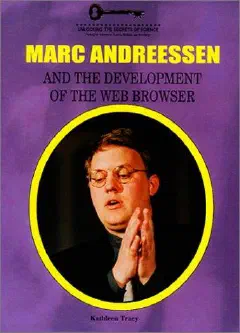
Marc Andreessen and the development of the Web browser
Kathleen Tracy
—
2002
Part of the Unlocking the Secrets of Science series, this biography covers Andreessen's work at the University of Illinois developing Mosaic, his subsequent founding of Netscape Navigator, his competitive battle with Microsoft, and his early moves into entrepreneurial ventures like Loudcloud.
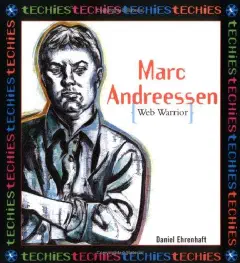
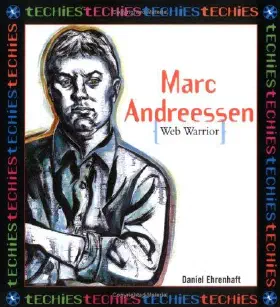
Part of the Techies series, this biography traces Marc Andreessen from his creation of Mosaic (the first Web browser to display inline images) through the founding of Netscape and his early venture into internet entrepreneurship during the explosive dot-com era.
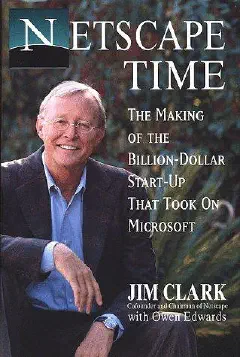
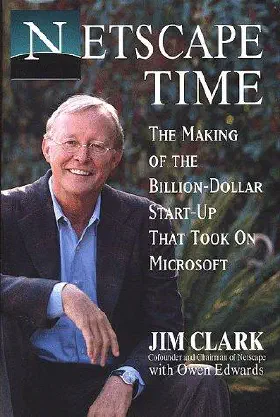
Co-founder Jim Clark's first-hand account of how he, Marc Andreessen, and core programmers transformed Mosaic into the revolutionary web browser that challenged Microsoft's dominance, detailing the startup's financial struggles and race to market leadership.
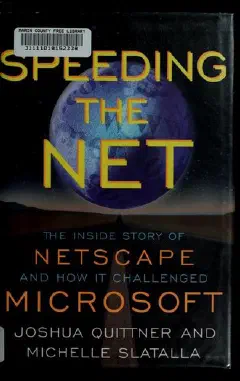
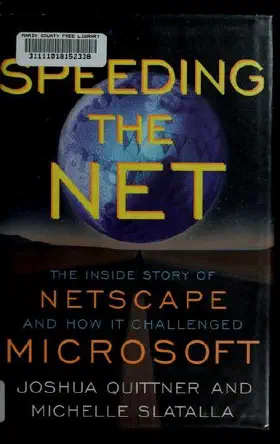
Fast-paced history of Netscape, the graphical Web browser co-founded by Marc Andreessen and Jim Clark, detailing their challenge to Microsoft's dominance during the critical 1995–1999 period when the internet was transforming how people work and communicate.
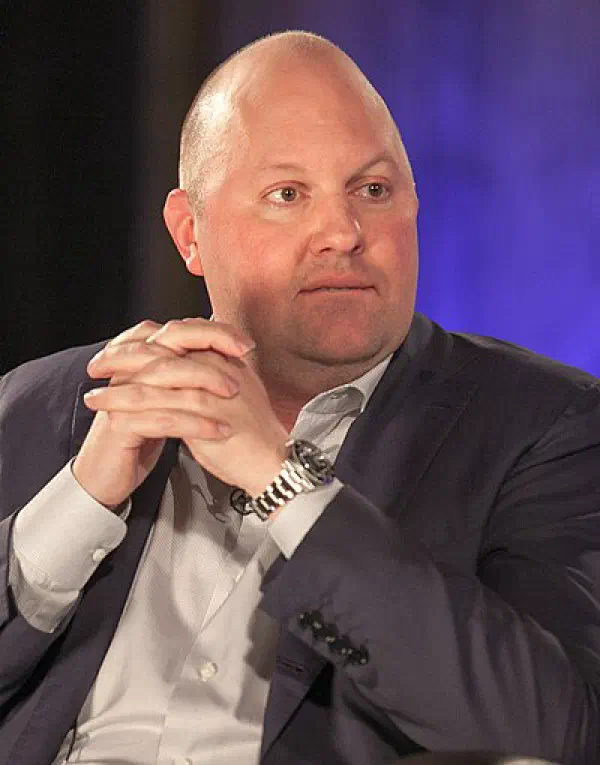
Marc Andreessen is arguably the most consequential person in AI who has never trained a model. If you want to understand where the money — and increasingly, the policy — flows in this industry, you have to understand him. At 22 he co-wrote Mosaic, the first web browser to display inline images, then co-founded Netscape and put the graphical web in front of ordinary people. Netscape’s 1995 IPO is the event most historians point to as the starting gun of the commercial internet. That single arc — student hacker to browser pioneer to the man who decides which startups get billions — is why his opinions carry weight most VCs could only dream of.
Today he runs Andreessen Horowitz (a16z), the firm he co-founded with Ben Horowitz in 2009, now managing roughly $90B+ in assets. a16z has invested in nearly every layer of the AI stack — OpenAI, Databricks, xAI, Mistral, Character.AI — and in 2025 raised what was reported as a ~$20B AI-focused fund, among the largest in venture history. For developers, this matters concretely: the tools you reach for, the model providers you can afford to build on, and the companies that survive long enough to ship an API are shaped in no small part by where a16z chooses to write checks. Andreessen is not neutral infrastructure; he is a kingmaker with a thesis.
That thesis is aggressive techno-optimism. In his 2011 essay “Why Software Is Eating the World,” he predicted software would consume industry after industry — a forecast that reads as almost understated in the age of AI agents. His 2023 “Why AI Will Save the World” and “The Techno-Optimist Manifesto” push the argument to its edge: AI is not a threat to be regulated but a force to be accelerated, fears of existential risk are “moral panic,” and open markets should decide the outcome. This puts him in direct, public opposition to the safety-focused wing of the field — people like Sam Altman’s more cautious counterparts, and researchers such as Ilya Sutskever who left frontier labs specifically over safety concerns. Developers should read Andreessen as one pole of the field’s central argument, not as a settled authority.
Since 2024 he has moved decisively into politics, aligning with Donald Trump, championing “Little Tech” (his framing of startups versus Big Tech incumbents), and in March 2026 accepting an appointment to the President’s Council of Advisors on Science and Technology (PCAST), co-chaired by David Sacks. That gives him a direct hand in US AI policy at a pivotal moment. Whether you find his vision exhilarating or alarming, if you build with AI, Marc Andreessen is helping set the rules of the game you’re playing.
Marc Andreessen's manifesto arguing that technological advancement is the key to solving humanity's greatest challenges, and that we should accelerate innovation without excessive constraints. Advocates for tech-first solutions to social, economic, and environmental problems.
Debanking claims. In a December 2024 appearance on the Joe Rogan podcast, Andreessen alleged that ~30 tech founders had been “debanked” and that a Biden-era “Operation Choke Point 2.0” was targeting crypto and startup entrepreneurs. The claims fueled a US House Oversight investigation, but were also widely disputed — critics noted that the CFPB he blamed had itself proposed rules against politically motivated account closures.
Political alignment and influence. His pivot to Trump, extensive time at Mar-a-Lago advising on tech policy, and subsequent PCAST appointment have drawn criticism that a major AI investor now helps write the rules governing his own portfolio — an unusually direct concentration of financial and regulatory power. Supporters counter that his technical background makes him a rare informed voice in Washington.
Anti-regulation stance on AI safety. His dismissal of existential-risk concerns as “moral panic” puts him at odds with a large share of the research community, including figures like Elon Musk (a sometime ally, sometime critic) and safety researchers who argue his open-markets-über-alles framing understates real risks.
Spotify Podcasts
Marc Andreessen on How AI, Culture, and Regulation Will Shape Tomorrow’s World (Replay)
Tom Bilyeu's Impact Theory
2026
Marc Andreessen and Chris Dixon: What’s at Stake in Crypto Regulation
The a16z Show
2026
Beyond P(doom): Marc Andreessen - Betting on America
The a16z Show
2026
Marc Andreessen on AI, Technology, and the Future of Humanity
The a16z Show
2026
Marc Andreessen on the Past, Present and Future of Artificial Intelligence | “YOUR WELCOME” #420
"YOUR WELCOME" with Michael Malice
2026
#2501 - Marc Andreessen
The Joe Rogan Experience
2026
Marc Andreessen, co-founder of a16z & Netscape
David Senra
2026
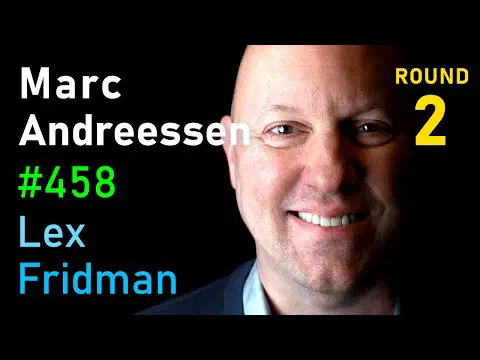
#458 – Marc Andreessen: Trump, Power, Tech, AI, Immigration & Future of America