
Investor and AI builder, founder of HyperWrite agent platform
Matt Shumer
Profile
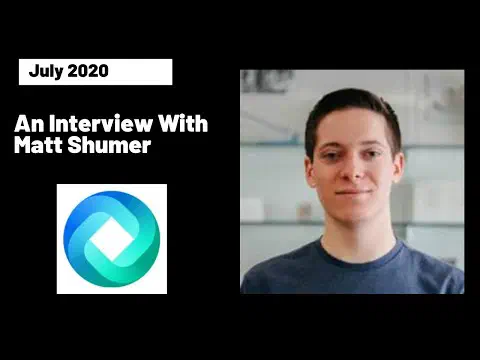
Matt Shumer is the founder-turned-investor archetype of the current AI moment: someone who ships consumer products, funds the infrastructure underneath them, and posts prolifically about what he thinks is coming next — often louder than the evidence supports. He co-founded OthersideAI in 2020 and built HyperWrite, an AI writing and autocomplete tool that started as a Chrome extension on top of OpenAI’s GPT-3 and grew to roughly two million users. As HyperWrite matured he pushed it toward agents — shipping “Agent Studio” and “Agent Trainer” to let users build assistants that take actions in a browser — which is the throughline of most of his work: making current models actually do things, not just chat.
For developers, Shumer’s most durable contribution isn’t a company but a cluster of open-source tools that taught a lot of people how to squeeze more out of LLMs. His gpt-prompt-engineer (15K+ GitHub stars) generates candidate prompts, tests them against your cases, and ranks them with an ELO system — an early, practical answer to “prompt engineering as an optimization problem.” gpt-llm-trainer turns a plain-English task description into a fine-tuned model, and his self-operating-computer experiments prefigured today’s computer-use agents. If you learned prompting or fine-tuning by cloning a notebook in 2023, there’s a decent chance it was one of his.
Today Shumer has stepped into capital allocation as GP at Shumer Capital, backing AI infrastructure, dev tools, and agent-native startups at pre-seed and seed — a portfolio that reportedly includes Groq, Replit, LiveKit, Browserbase, OpenRouter, and Cline. His value proposition to founders is proximity to the frontier: he builds with the newest models the day they drop and writes up what’s genuinely working versus what’s hype.
That instinct cuts both ways, and it’s why developers should read him with a critical eye. Shumer is an accelerationist megaphone — his February 2026 essay “Something Big Is Happening” reached tens of millions of views by arguing we’re in a “February 2020 moment” before an AI-driven upheaval “bigger than Covid.” And in 2024 his Reflection 70B model became one of the year’s most public credibility failures (see Controversies). He is worth following precisely because he sits at the seam between real capability and overclaiming — but treat his headline claims as hypotheses to verify, not conclusions.
Key Articles & Papers
Something Big Is Happening gpt-prompt-engineer gpt-llm-trainerControversies
Reflection 70B (September 2024). Shumer announced Reflection 70B as a fine-tune of Meta’s Llama 3.1 70B that, via a technique he called “reflection tuning” (the model critiques its own answers before responding), allegedly beat GPT-4o and top Claude models on standard benchmarks. Within days, independent evaluators including Artificial Analysis could not reproduce the results — scores landed near ordinary Llama 3 70B — and researchers accused the project of fraud, alleging the hosted API was effectively a wrapper around Anthropic’s Claude. Shumer blamed a botched weights upload to Hugging Face and, weeks later, he and Glaive AI’s Sahil Chaudhary published a partial post-mortem admitting mistakes and inability to reproduce the benchmarks while denying deliberate deception. Many in the community were unsatisfied, and the episode remains a cautionary tale about self-reported benchmarks and unverified model claims. Coverage: VentureBeat, Tom’s Guide.
“Something Big Is Happening” backlash (February 2026). His viral essay drew sharp rebuttals arguing it overstated near-term AI capabilities and leaned on shaky extrapolations; critics at the Cato Institute and elsewhere pushed back, and Shumer clarified in a CNBC interview that the piece “wasn’t meant to scare people.”
Note: I omitted a Videos section. The candidate YouTube IDs I found in search results (e.g., generic “warns of AI dangers” reuploads) were low-confidence and mostly third-party reposts rather than clearly authentic first-party talks, so per the instructions I left them out for the script’s API step to populate. There’s no evidence Matt Shumer has authored books, so that section is omitted as well.
Spotify Podcasts





![[2/14 15:00] Matt Shumer's "Something Big Is Happening" Viral Essay / Microsoft Superconducting Cables for AI Data Centers](/images/people/matt-shumer/spotify/1sIzODUQWHEsrAWtweyk7H_hu_2df88014c89504bd.webp)



YouTube