
CEO of Cursor, AI-native code editor backed by $60B SpaceX deal
Michael Truell
Profile
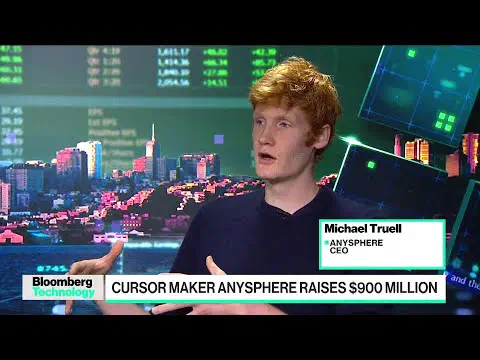
Michael Truell is the 25-year-old co-founder and CEO of Anysphere, the company behind Cursor — the AI-native code editor that, in barely three years, became one of the fastest-growing software products ever built. He grew up in New York City, started coding at 11 to make mobile games, and landed at MIT before dropping out to build. A formative summer internship at Google at age 18 — working on language models for feed ranking — convinced him that large models were about to eat software development whole. He founded Cursor in 2022 with three MIT classmates: Aman Sanger, Sualeh Asif, and Arvid Lunnemark.
The origin story is more interesting than the hype. Before Cursor, the four spent what Truell calls “a year wandering the desert” — chasing AI applications in unfamiliar domains, including 3D autocomplete for mechanical CAD systems. That bet died on data scarcity, and the team pivoted to the one domain they actually understood: writing code. They launched Cursor in early 2023 as a fork of VS Code, a decision that let them ship a familiar editor while re-architecting the inner loop around AI. That is the strategic insight worth studying: rather than bolt a chatbot onto an IDE, Truell treated the model as the center of gravity and rebuilt editing, retrieval, and autocomplete around it.
The numbers became absurd. Cursor hit $100M annualized revenue by January 2025, crossed $1B by late 2025 at a $29.3B valuation (a $2.3B round co-led by Accel and Coatue), and reported roughly $2B annualized by February 2026. Then in April 2026 SpaceX secured a right to acquire the company — and on June 16, 2026, days after SpaceX’s record-breaking IPO, moved to buy Cursor outright for $60 billion in stock, making Truell one of the youngest billionaires in history. Whether that valuation survives contact with reality is a separate question, but the growth was real.
For developers learning AI today, Truell matters because Cursor is the clearest proof that AI-native tooling — not AI-flavored tooling — is what wins. He is a direct competitor to Claude Code and GitHub Copilot, and his core thesis is worth internalizing: as models handle more of the mechanical typing, the durable engineering skills shift toward taste, system design, and judgment about what to build. He’s also candid that programming itself isn’t going away — the abstraction is just moving up. Listen to how he reasons about custom models, latency, and developer experience; that’s the frontier where these tools are actually won or lost.
Key Articles & Papers
The rise of Cursor: The AI tool engineers can't stop using — Michael Truell interview An Interview with Cursor CEO Michael Truell About Coding With AI Cursor apologizes for unclear pricing changes that upset users Why Cursor's CEO believes OpenAI, Anthropic competition won't crush his startup SpaceX to acquire AI coding startup Cursor for $60 billionVideos

Controversies
The July 2025 pricing backlash. Cursor changed its Pro plan from a clear “500 fast requests, then unlimited slower” model to $20 of usage billed at underlying API rates — without communicating the change clearly. Many developers hit unexpectedly large bills mid-month, and the community erupted over transparency. Truell responded with a blog post: “We recognize that we didn’t handle this pricing rollout well and we’re sorry… Our communication was not clear enough and came as a surprise to many of you.” Anysphere refunded affected users. The underlying cause was legitimate — newer agentic models burn far more tokens on long-horizon tasks, and Cursor had been absorbing those costs — but the episode is a fair criticism of how the company treated its most loyal users while scaling at breakneck speed. (TechCrunch coverage)
Dependence on rival labs. Cursor is built on models from Anthropic, OpenAI, and Google — the same companies now shipping their own coding agents. Critics argue Truell’s business is structurally exposed to suppliers who are also competitors, a tension the SpaceX tie-up (and Cursor’s push into custom in-house models) is partly meant to resolve.
Spotify Podcasts









YouTube