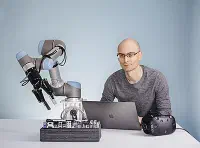
Amazon Frontier AI & Robotics researcher, Berkeley professor
Pieter Abbeel
Profile
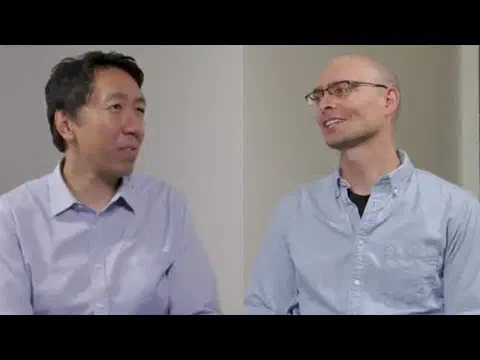
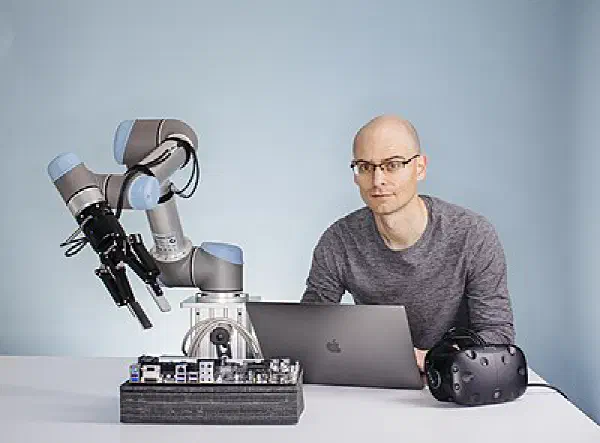
If you want to understand how modern robots learned to learn — instead of being painstakingly hand-programmed — you end up at Pieter Abbeel. A Belgian-born professor of electrical engineering and computer science at UC Berkeley, Abbeel directs the Berkeley Robot Learning Lab and co-directs the Berkeley AI Research (BAIR) Lab. He did his PhD at Stanford under Andrew Ng, where their autonomous helicopter that taught itself aerobatic stunts from expert demonstrations became one of the field’s iconic early results. In 2021 he won the ACM Prize in Computing for his contributions to robot learning — the discipline’s clearest signal that this line of work had arrived.
Abbeel’s real influence is less any single robot than the toolbox he helped build for deep reinforcement learning. If you’ve touched RL, you’ve touched his lab’s fingerprints: TRPO and its descendant PPO, Generalized Advantage Estimation, Soft Actor-Critic (SAC), Hindsight Experience Replay, domain randomization (train in a wildly randomized simulator, deploy in the messy real world), and — with Chelsea Finn and longtime collaborator Sergey Levine — Model-Agnostic Meta-Learning (MAML). Many of these are still default baselines a decade later. For developers, that’s the point: these aren’t museum pieces, they’re the algorithms your libraries ship.
He is also, arguably, one of the most productive mentors in AI. His students and postdocs went on to co-found or lead an improbable share of the field — early OpenAI researchers, Perplexity (Aravind Srinivas), Physical Intelligence, Covariant, Skild, and more. In 2017 he co-founded Covariant to bring foundation-model-style learning to warehouse robots, after earlier co-founding Gradescope (AI-assisted grading, later acquired). He’s also a founding investment partner at AIX Ventures and hosts The Robot Brains podcast.
In August 2024, Amazon licensed Covariant’s technology and brought Abbeel and his team aboard to co-lead the Frontier AI & Robotics group inside Amazon. Then, in the December 2025 shakeup that saw AGI chief Rohit Prasad depart and Peter DeSantis take over a unified AI org, Abbeel’s remit expanded again — he was tapped to lead Amazon’s frontier model research team, an unusual arc for a roboticist now steering large-model work. Whether embodied AI or LLMs, the through-line is consistent: get systems to learn from data and interaction rather than being told exactly what to do.
Key Articles & Papers
Autonomous Helicopter Aerobatics through Apprenticeship Learning Trust Region Policy Optimization (TRPO) High-Dimensional Continuous Control Using Generalized Advantage Estimation Model-Agnostic Meta-Learning (MAML) Domain Randomization for Transferring Deep Neural Networks from Simulation to the Real World Hindsight Experience Replay (HER) Soft Actor-Critic (SAC) Decision Transformer: Reinforcement Learning via Sequence Modeling
Videos
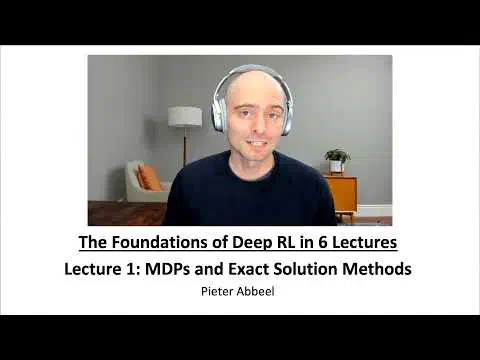
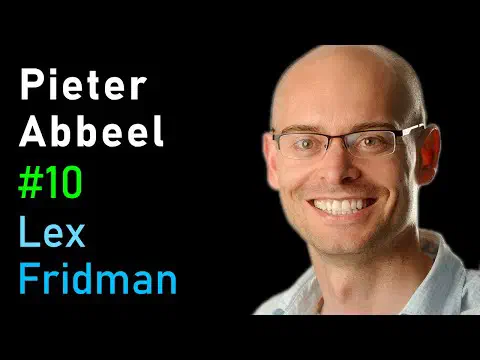
Spotify Podcasts





YouTube