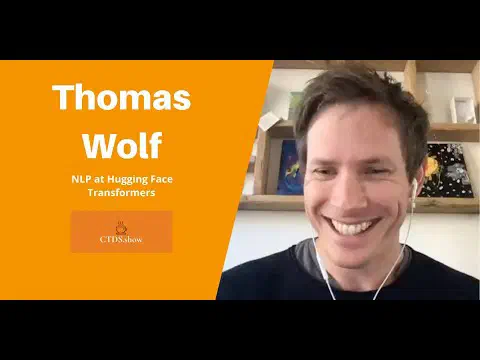

Hugging Face Chief Science Officer, Transformers library creator
Thomas Wolf
Profile
Thomas Wolf is the co-founder and Chief Science Officer of Hugging Face — and if you’ve ever written from transformers import AutoModel, you’ve used his work. Wolf created the Transformers library, the piece of software that turned “download a state-of-the-art model and run it in three lines” from a research fantasy into the default workflow for essentially every ML engineer on earth. Alongside it he built or seeded a whole ecosystem — Datasets, Accelerate, Tokenizers, DataTrove, nanotron, lighteval, smolagents — the plumbing that makes open-source AI practical rather than aspirational. More than any single model, this tooling is why Hugging Face became the GitHub of machine learning.
His path there is unusual and worth knowing, because it’s encouraging. Wolf holds a PhD in statistical and quantum physics from Sorbonne University, where he studied superconducting materials, and he spent years afterward working as a patent attorney in physics — not AI at all. He taught himself machine learning from books and online courses in his spare time, and roughly a year into that self-education, Clément Delangue asked if he wanted to build something ambitious. That “something” became Hugging Face. For a developer picking up AI in mid-career, Wolf is close to the ideal proof point: he is a builder first and a credentialed scientist second, and the order matters.
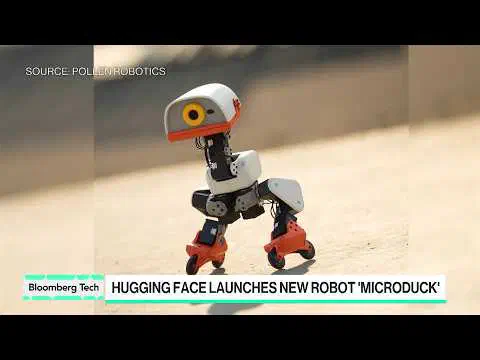
Today Wolf steers Hugging Face’s research direction and its moonshots. The biggest current bet is LeRobot, launched in 2024 to do for robotics what Transformers did for NLP — open code, open datasets, and cheap hardware like the ~$100 SO-100 arm, backed by the 2025 acquisition of Pollen Robotics. His team also ships genuinely useful small models like SmolLM3 (a 3B model that runs on a laptop or phone) and, crucially, publishes the full data, recipes, and training knowledge rather than just weights. That transparency is the thread running through everything he does.
What makes Wolf worth reading rather than just using is that he’s become one of the sharpest skeptical voices inside the AI boom. He argues, publicly and specifically, that today’s LLMs are brilliant at producing plausible answers but incapable of the original, contrarian questioning that drives real science — “very obedient students, not revolutionaries.” That’s a useful counterweight for anyone building with these tools: it’s a reminder of what they’re genuinely good at, and where the hype outruns the hardware.
Books
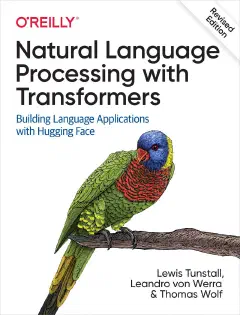
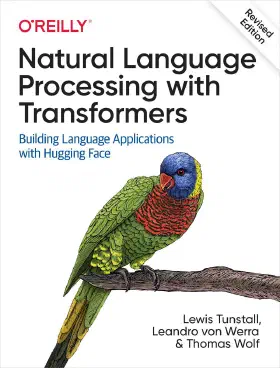
Key Articles & Papers
Transformers: State-of-the-Art Natural Language Processing Datasets: A Community Library for Natural Language Processing The Einstein AI Model Some Notes on 'DeepSeek and Export Control'Videos

Controversies
Wolf’s most notable public disagreement is intellectual, not scandalous. In early 2025 he directly challenged Dario Amodei’s “Machines of Loving Grace” vision — the idea of a “compressed 21st century” delivered by a “country of geniuses in a data center.” Wolf countered that scaling today’s models is more likely to yield “a country of yes-men on servers”, because LLMs fill gaps between known facts rather than asking the disruptive questions that produce real breakthroughs. He separately criticized Anthropic’s stance on DeepSeek and export controls as a rationalization for closed-source AI. The exchanges were widely covered and generally seen as a healthy, substantive split between “scaling will get us there” optimists and architecture skeptics — a debate worth understanding rather than a black mark.
Spotify Podcasts








YouTube