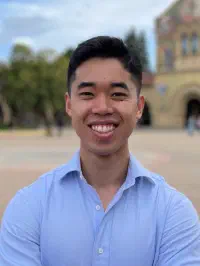
Princeton professor and Together AI Chief Scientist, hardware-aware algorithms
Tri Dao
Profile
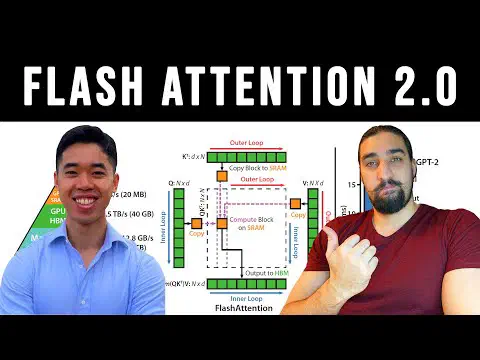
If you’ve trained or served a large language model in the last three years, you’ve almost certainly run Tri Dao’s code — probably without knowing it. FlashAttention, the algorithm he introduced in 2022, quietly became the default way GPUs compute attention across virtually every major model and framework. It didn’t change what a Transformer computes; it changed how — reordering the memory access pattern so attention stops thrashing the GPU’s slow high-bandwidth memory and instead keeps the work in fast on-chip SRAM. The result was an exact (not approximate) attention that runs several times faster and uses far less memory, and it’s the single biggest reason long-context models went from a research curiosity to something you can actually deploy. That is the through-line of Dao’s career: he is a systems person who treats the hardware as a first-class constraint, not an afterthought.
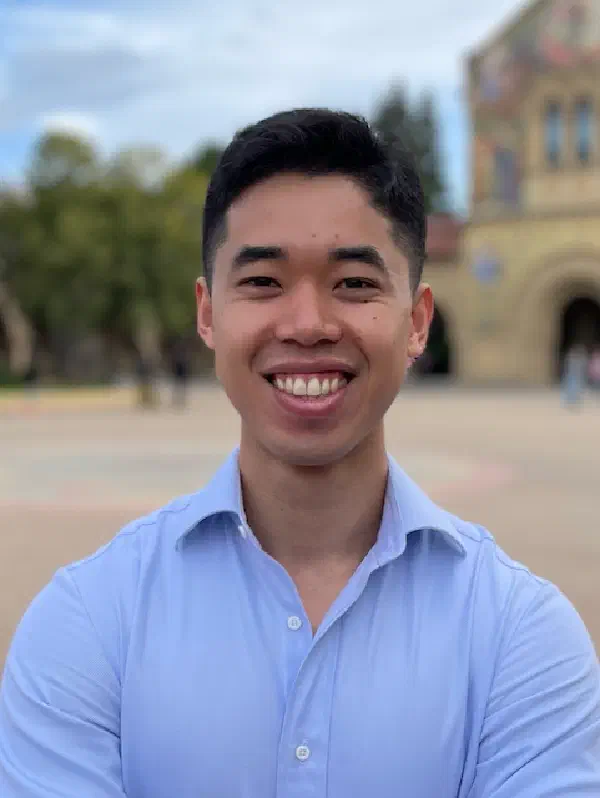
Dao did his PhD at Stanford, co-advised by Christopher Ré and Stefano Ermon, where the FlashAttention work began. He is now an Assistant Professor of Computer Science at Princeton (he joined in 2024) directing the Dao AI Lab, and simultaneously Chief Scientist and co-founder of Together AI, the cloud and research company built around open models and efficient inference. That dual role matters: his academic output ships almost immediately into production infrastructure that other developers rent by the hour. FlashAttention has gone through three generations — FlashAttention-2 (2023) rewrote the parallelism and work partitioning, and FlashAttention-3 (2024) rebuilt it again for NVIDIA’s Hopper architecture, exploiting asynchronous execution and FP8 low precision to push H100 utilization far past what the earlier versions achieved.
His second major line of work questions the Transformer itself. With Albert Gu, Dao co-created Mamba (2023), a selective state-space model that processes sequences in linear time and constant memory per step, rather than the quadratic cost of attention. Where FlashAttention makes attention cheaper, Mamba proposes an alternative to attention entirely — one that’s especially attractive for very long sequences and streaming inference. The 2024 follow-up, “Transformers are SSMs” (Mamba-2), drew a formal duality between state-space models and attention, which is the kind of result that reframes how a whole subfield thinks about sequence modeling. Whether SSMs ultimately displace Transformers or (more likely near-term) get hybridized with them, Dao’s work has made the alternative credible enough that every serious lab now has to have an opinion on it.
For a developer learning AI today, Dao is worth studying less for any single model and more for the discipline he represents: real speedups come from understanding the memory hierarchy, the arithmetic intensity, and the specific silicon you’re running on — not from stacking more layers. His recognition reflects it, including an ICML 2022 Outstanding Paper runner-up, a COLM 2024 Outstanding Paper, a Google junior faculty award, and selection as a Schmidt Sciences AI2050 Early Career Fellow in 2025. He is still early in his career, which is precisely why he sits in the “rising” tier — the work is foundational, but the arc is far from finished.
Key Articles & Papers
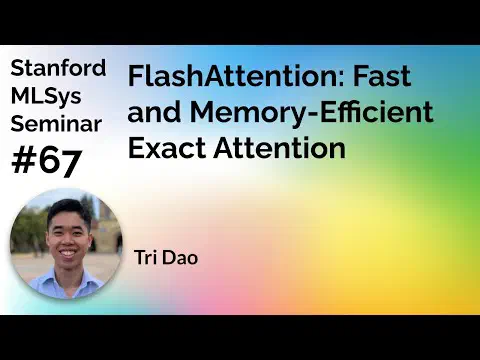
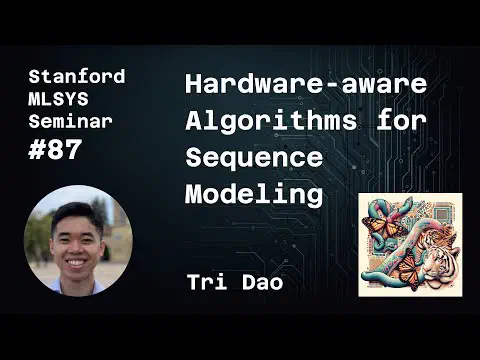
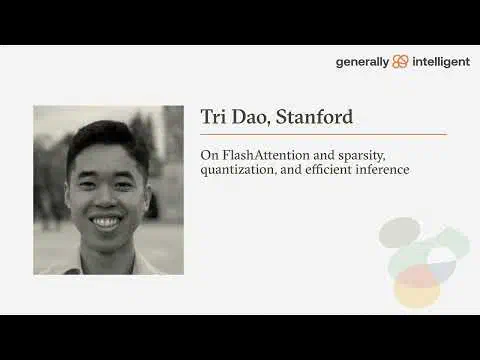
FlashAttention: Fast and Memory-Efficient Exact Attention with IO-Awareness FlashAttention-2: Faster Attention with Better Parallelism and Work Partitioning FlashAttention-3: Fast and Accurate Attention with Asynchrony and Low-precision Mamba: Linear-Time Sequence Modeling with Selective State Spaces Transformers are SSMs: Generalized Models and Efficient Algorithms Through Structured State Space Duality (Mamba-2) FlashAttention (GitHub)Videos
Spotify Podcasts
YouTube