Founder of Khosla Ventures, early OpenAI investor
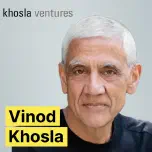
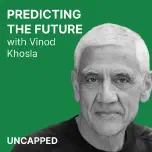
Vinod Khosla
Biographies
Profile
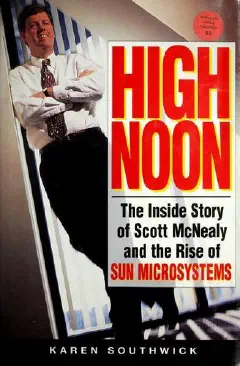
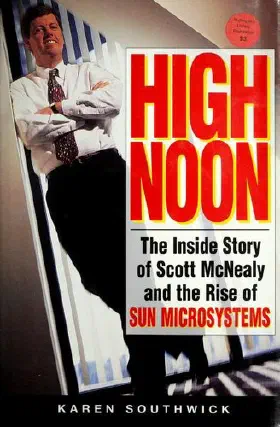
Vinod Khosla is arguably the most intellectually aggressive investor in the AI era, and one of the few whose track record earns him the right to be. Long before he was writing $50 million checks into research labs, he was a founder: in 1982 he co-founded Sun Microsystems with Stanford classmates Andy Bechtolsheim and Scott McNealy, serving as its first CEO and helping build a company that hit $1 billion in annual sales within five years and defined the workstation era. Born in 1955 into an Indian Army household with no business connections, he talked his way from IIT Delhi to a master’s at Carnegie Mellon and an MBA from Stanford, then into the founding of Sun — a classic immigrant-outsider trajectory he still references when arguing that ambition beats pedigree.
After Sun, Khosla spent nearly two decades at Kleiner Perkins, where he made prescient (and occasionally disastrous) bets on semiconductors, optical networking, and clean tech. In 2004 he left to start Khosla Ventures, a firm built explicitly around funding “science experiments” — nuclear fusion, synthetic biology, robotics, and other things most VCs consider uninvestable. That contrarian appetite is exactly what set up his defining move: in 2019, when much of Silicon Valley still treated deep learning as a curiosity, Khosla wrote a $50 million check into OpenAI’s new for-profit subsidiary — his largest-ever initial investment and, by his own telling, a bet placed partly to keep frontier AI out of Chinese and Big Tech monopoly hands. By early 2026 that stake was reportedly worth billions, one of the great venture returns of the century.
What makes Khosla worth a developer’s attention isn’t the returns, though — it’s that he treats AI as a civilizational forcing function and says so, loudly. His thesis, laid out most fully in the 2025 essay AI: Dystopia or Utopia?, is that AI will be able to do roughly 80% of economically valuable work by 2030, that “the need to work will go away” by around 2040, and that this collapses the cost of expertise — doctors, tutors, lawyers, engineers — toward zero, producing an era of abundance rather than mass immiseration. He’s been saying versions of this since his 2012 TechCrunch piece arguing algorithms would replace most doctors, a claim that drew fury from the medical establishment and now looks directionally early rather than wrong.
For someone learning to build with AI, Khosla is useful precisely because he is not neutral. He is an optimist with money on the table and a habit of dismissing the “cognitively lazy” dystopian view as a failure of imagination — and it’s worth reading him critically, because he underweights transition pain, distributional politics, and the safety concerns that people like Yoshua Bengio foreground. But his core structural insight — that the marginal cost of expertise is the thing AI actually destroys, and that whoever builds those near-free expert systems captures enormous value — is one of the sharpest framings of why this technology matters for what you choose to build.
Key Articles & Papers
AI: Dystopia or Utopia? A Roadmap to AI Utopia Do We Need Doctors or Algorithms?Videos
Controversies
Martins Beach public access. Khosla’s most sustained public fight has nothing to do with AI. After buying an $32.5M oceanfront property in San Mateo County in 2008, he blocked a long-used public road to Martins Beach, drawing a lawsuit from the Surfrider Foundation. Courts ruled his gating of the road counted as “development” requiring a permit under the California Coastal Act; he lost at trial and on appeal, and in 2018 the U.S. Supreme Court declined to hear his case, leaving the public-access ruling in place. Critics point to it as a case study in billionaire property maximalism; Khosla framed it as a property-rights principle.
AI job-loss predictions. His repeated claim that AI will eliminate 80% of jobs — and that this is good — is genuinely divisive. Supporters see hard-nosed honesty about automation; critics, including many economists and AI-ethics researchers, argue he waves away the distributional and political turmoil of getting from here to his post-scarcity endpoint, and that “you won’t need to work” reads very differently from the top of the wealth distribution than the bottom.
Spotify Podcasts

YouTube