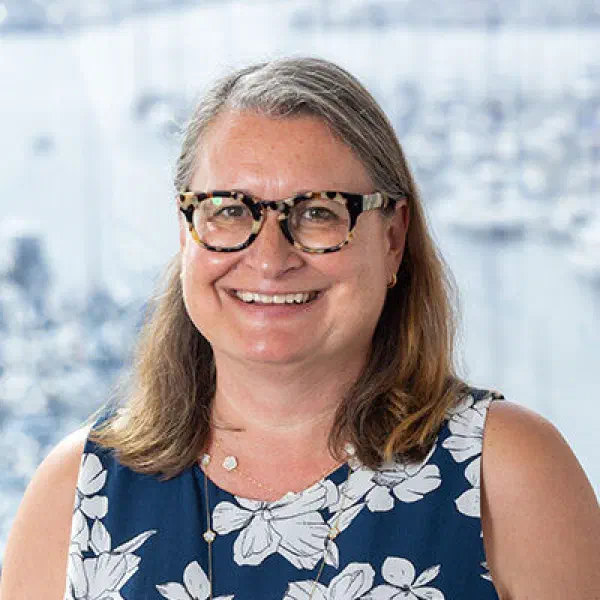
ACM President and AI researcher at USC Information Sciences Institute
Yolanda Gil
Profile
Yolanda Gil is what the AI field looks like when it grows up and starts thinking about institutions. While much of the industry chases the next frontier model, Gil has spent three decades building the unglamorous but essential machinery of scientific AI — the workflow systems, provenance standards, and knowledge-rich reasoning tools that let researchers actually trust and reproduce what a machine does. Born in Spain and trained at the Technical University of Madrid, she earned her Ph.D. at Carnegie Mellon in 1992 under Jaime Carbonell, then joined USC’s Information Sciences Institute, where she has remained ever since. Today she is a Principal Scientist and Senior Director for AI and Data Science Initiatives at ISI, and directs its Center on Artificial Intelligence Research for Health (AI4Health).
Her research thesis is deceptively simple and, in 2026, quietly contrarian: AI should amplify human researchers, not replace them. That idea runs through everything she has built. The WINGS semantic workflow system encodes scientific intent so that computational experiments can be reused, validated, and reasoned about — not just executed. Her DISK project pushes further, toward AI that forms and revises hypotheses against growing data repositories. And her leadership of the W3C Provenance work gave the semantic web its PROV standards — the plumbing that makes “where did this result come from?” an answerable question. For developers, the lesson is durable: the value of an AI system is bounded by whether you can trace, audit, and reproduce what it did.
Gil is now one of the field’s most consequential institution-builders. She was President of the Association for the Advancement of Artificial Intelligence (AAAI) from 2018–2020, chaired ACM’s SIGAI, and since July 2024 has served as President of the Association for Computing Machinery (ACM) through 2026 — the professional home of essentially every working computer scientist. In 2024 she was also appointed to the National Science Board for a six-year term, giving her a direct hand in how U.S. federal science funding treats AI. That combination — ACM President plus NSB member — makes her a genuine shaper of the norms, funding, and governance the rest of the field operates inside.
She matters to anyone building with AI today because she represents the “thoughtful AI” school in an era of move-fast maximalism. Her fellowships span the whole map — ACM, AAAI, IEEE, AAAS, and the Cognitive Science Society — and she was the first computer scientist to win the Geological Society of America’s M. Lee Allison Award, a signal of how deeply she has embedded AI into real scientific practice. If your interest is scaling laws and chatbots, Gil isn’t your headliner. If your interest is building AI systems that scientists, regulators, and future maintainers can actually rely on, she has been writing that playbook for thirty years.
Key Articles & Papers
Amplify Scientific Discovery with Artificial Intelligence Thoughtful Artificial Intelligence: Forging a New Partnership for Data Science and Scientific Discovery Wings: Intelligent Workflow-Based Design of Computational Experiments PROV Model Primer (W3C Working Group Note) Will AI Write the Scientific Papers of the Future? — AAAI Presidential AddressVideos
Spotify Podcasts
YouTube