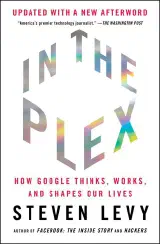
In the Plex
How Google Thinks, Works, and Shapes Our Lives
Wired veteran Steven Levy's definitive account of Google under CEO Eric Schmidt.
Google started with a conviction that most people, including most engineers, would have laughed at: that the whole of human knowledge could be organized by computers, retrieved in under a second, and given to anyone with a web browser for free. Steven Levy's *In the Plex* is the most detailed account we have of how Larry Page and Sergey Brin actually pulled that off — and what they became in the process.
The first half of the book is strongest. Levy reconstructs Google's early engineering decisions with the precision of someone who sat in on the meetings. PageRank, the insight that links between pages encode trust the way citations encode academic credibility, was elegant and obvious in hindsight. What was not obvious was building it at scale: a system that indexed billions of pages, served results in milliseconds, and ran on commodity hardware stitched together in server farms that Google treated as a proprietary competitive advantage. The AdWords auction is equally underappreciated — rather than selling ads at fixed rates, Google built a market that continuously set prices based on what advertisers were willing to pay per click. That mechanism turned a search engine into a money printer. It's an example of using market design, not just software engineering, to solve a business problem, and Levy explains it well enough that you feel the cleverness of it.
We designed Google to be the kind of place where the kind of people we wanted to work here would work for free.
— Levy, In the Plex, ch. “How Google Built Its Culture” (Urs Hölzle)
The book gets genuinely interesting in the China chapter. Google's decision to launch a censored search engine in China forced a real ideological collision. Brin, who grew up in the Soviet Union and had a visceral understanding of what state censorship does to people, was deeply opposed. The rest of Google's leadership calculated that a limited presence was better than none. They were wrong, got hacked by Chinese intelligence in 2010, and withdrew. Levy doesn't editorialize much here, but the facts do the work: "don't be evil" was a sincere aspiration, and it cracked under commercial pressure. What's interesting is not the moral failure itself but the mechanism — how a company that genuinely believed in its own values still found ways to rationalize the compromise.
It is astounding that Google, whose corporate philosophy is 'don't be evil,' would enable evil by cooperating with China's censorship policies just to make a buck.
— Levy, In the Plex, ch. “GuGe”
The book's weakness is also its source of strength. Levy got unprecedented access, which means candid quotes, details that don't appear anywhere else, and a feel for the personalities involved that you can't fake. It also means the book is broadly sympathetic to Google. The hardest questions — about the advertising surveillance model, about what it means to control the world's information infrastructure, about the ways "engineering culture" became a justification for not thinking about social consequences — get softer treatment than they deserve. The 2021 update adds an afterword but doesn't rewrite the core, which was written before the antitrust battles, before the content moderation crises, before it became clear that "organizing all the world's information" also meant organizing all the world's misinformation.
Read it for the early chapters. For developers especially, the infrastructure story alone is worth the book: how Google's insistence on building its own hardware, networking, and storage systems compounded into a structural advantage that no competitor ever fully closed. The account of how Google thought about engineering is, if nothing else, a case study in what happens when you take computation seriously as a discipline rather than as a means to an end. If you want something sharper about where Google ended up, you'll need to look elsewhere. But for how it got there, nobody has done it better.