CEO — Relativity SpaceChairman — Sandbox AQCo-founder — Schmidt FuturesFounding Partner — Innovation EndeavorsFormer CEO and Executive Chairman — Google
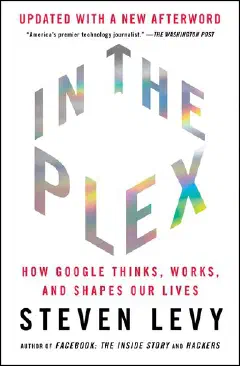
Steven Levy's comprehensive narrative of Google from academic project to 24,000-person global company, following the firm since 1999 with access to CEO Eric Schmidt and extensive staff interviews. Covers Google's engineering mindset, acquisitions (YouTube, DoubleClick), expansion into China, battles with EU regulators, and the corporate culture that shaped the company's rise through search dominance and advertising innovation.
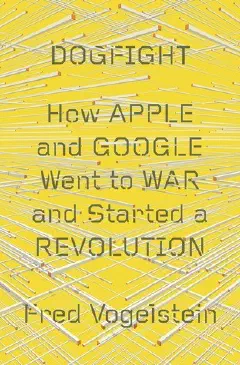
Fred Vogelstein's 2013 narrative of the bitter rivalry between Apple and Google, tracing how the two tech giants evolved from allies (Schmidt served on Apple's board; he was onstage when Jobs introduced the iPhone) to fierce competitors battling over mobile dominance. The book features Schmidt's leadership at Google and the strategic decisions that defined the Android era, based on Vogelstein's decade-long reporting and rare access to key players including Steve Jobs and Eric Schmidt.
Corona Brezina's biography profiles the three leaders of Google: Stanford graduate students Sergey Brin and Larry Page, who founded the company, and Eric Schmidt, recruited as CEO in 2001 to bring management expertise and scale operations. The book explores Google's business model, innovations, and mission while examining how these three individuals shaped the company's growth and culture.
Ken Auletta's extensively reported account of Google's evolution from Stanford startup to media-disrupting giant, based on unprecedented access to founders Larry Page and Sergey Brin, CEO Eric Schmidt, and 150+ interviews. Examines how Google's rise threatens traditional media institutions and explores the company's business ethics, philosophy, and societal impact during the search and early advertising era.
Ken Auletta's 2009 investigation examines Google's evolution, competitive strategies, and cultural philosophy, based on interviews with approximately 300 people (150 from Google, 150 outside observers including media executives). The book explores Eric Schmidt's role as CEO, Google's relationships with competitors like Apple, Microsoft, and Facebook, and tensions between the company's stated commitment to information access and its actual opacity regarding algorithms—framed through the concept of "frenemies."
Inside the Hottest Business, Media, and Technology Success of Our Time
David A. Vise, David Vise, Mark Malseed
—
2005
Pulitzer Prize-winning Washington Post reporter David A. Vise and researcher Mark Malseed trace Google's evolution from a Stanford research project through its explosive growth under the leadership of founders Sergey Brin and Larry Page and CEO Eric Schmidt. The book examines the motivations and personal growth of all three leaders and focuses on the human story behind Google's rise to dominance. A 2018 updated edition extends the narrative through two decades of company growth.
If you want to understand how Washington thinks about artificial intelligence, you have to understand Eric Schmidt. More than any other single figure, the former Google CEO built the bridge between Silicon Valley and the national-security state — and then walked across it repeatedly. He ran Google from 2001 to 2011, turning a scrappy search company into an advertising and infrastructure colossus, then served as executive chairman through the years when Google became one of the most important AI labs on earth. For developers, that lineage matters: the org that produced TensorFlow, the Transformer, and DeepMind grew up on his watch, even if the research breakthroughs weren’t his.
Since leaving Google’s board in 2019, Schmidt has become something rarer than an executive: an AI policy power broker. He chaired the National Security Commission on Artificial Intelligence, whose 2021 final report warned that the U.S. was not “AI-ready” and could lose a technology race with China — and that report became the de facto blueprint for federal AI strategy, feeding into the CHIPS Act and a wave of defense-AI spending. He now chairs the Special Competitive Studies Project, a think tank that functions as an NSCAI sequel, and he continues to testify before Congress as the elder statesman lawmakers call when they want to know what’s coming.
In March 2025, Schmidt made his most surprising move yet: he became CEO of Relativity Space, the 3D-printing rocket startup, after taking a controlling stake. The bet is not really about rockets — it’s about AI. Schmidt has argued that AI’s power appetite is unsustainable on Earth (he told Congress the U.S. may need 92 additional gigawatts, roughly 92 nuclear plants’ worth), and reporting suggests he wants to launch data centers into orbit. Whether or not that pans out, it captures how he thinks: AI is the master variable, and everything — energy, space, geopolitics — reorganizes around it.
For someone learning AI today, Schmidt is worth studying less as a technologist than as a lens on how capital and power position themselves around the technology you’re building. He is relentlessly bullish — his headline claim is that AI is underhyped, that superintelligence arrives within a decade, and that agentic systems doing “recursive self-improvement” are the real story. He is also a walking conflict of interest, funding, warning about, and investing in the same technology simultaneously. Take his forecasts seriously and his framing skeptically.
Eric Schmidt, Jonathan Rosenberg, Alan Eagle
—
2019
A chronicle of Bill Campbell's coaching philosophy and mentoring of Silicon Valley's greatest leaders. Drawing from interviews with over eighty figures in his circle, the book reveals how this football coach-turned-executive fostered cultures of psychological safety, direct feedback, and operational excellence at companies like Google, Apple, and Intuit.
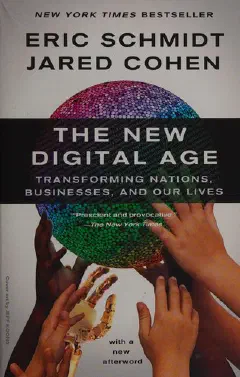
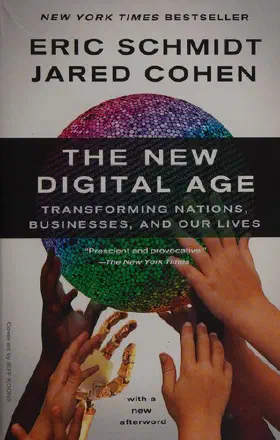
Schmidt and Cohen examine how five billion newly connected people will reshape the world through digital innovation. Drawing on travels to thirty-five countries, they analyze technology's transformative impacts on privacy, security, conflict, diplomacy, and social movements.
Schmidt’s defining controversy is the conflict between his public warnings and his private portfolio. While chairing the NSCAI and warning that China’s AI ambitions threatened U.S. security, his foundation and connected entities made dozens of AI investments — including, per CNBC and the Tech Transparency Project, reported ties to funds feeding Chinese AI companies via Hillhouse Capital. In 2022, Senator Elizabeth Warren asked the Pentagon to investigate his advisory-board conflicts. No ethics violation was ever established, but ethics experts widely described the arrangement as a serious conflict: he helped write the rules for an industry he was actively betting on.
Critics also object to his outsized, largely self-appointed influence over U.S. AI policy — a private billionaire shaping defense doctrine through think tanks he funds. His MAIM proposal, which contemplates states sabotaging rivals’ AI projects, has drawn its own criticism for potentially normalizing preemptive attacks on data centers rather than reducing risk.
Spotify Podcasts
Former Google CEO Eric Schmidt: The Road to Superintelligence
Inside Blackstone
2026
Eric Schmidt: Singularity's Arrival, the 92-Gigawatt Problem, and Recursive Self-Improvement Timelines | 241
Moonshots with Peter Diamandis
2026
Eric Schmidt on AI, the Battle with China, and the Future of America
All-In with Chamath, Jason, Sacks & Friedberg
2025
Ex-Google CEO: What Artificial Superintelligence Will Actually Look Like w/ Eric Schmidt & Dave Blundin | EP #183
Moonshots with Peter Diamandis
2025
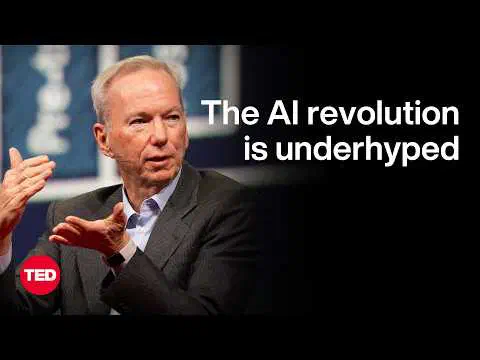
The AI revolution is underhyped | Eric Schmidt
TED Talks Daily
2025
Ex Google CEO: AI Is Creating Deadly Viruses! If We See This, We Must Turn Off AI! They Leaked Our Secrets At Google!
The Diary Of A CEO with Steven Bartlett
2024
EP #8 Eric Schmidt's AMA: AI, National Security, and Cyborgs
Moonshots with Peter Diamandis
2022
Eric Schmidt (former Google CEO)
Armchair Expert with Dax Shepard
2022
#541: Eric Schmidt — The Promises and Perils of AI, the Future of Warfare, Profound Revolutions on the Horizon, and Exploring the Meaning of Life