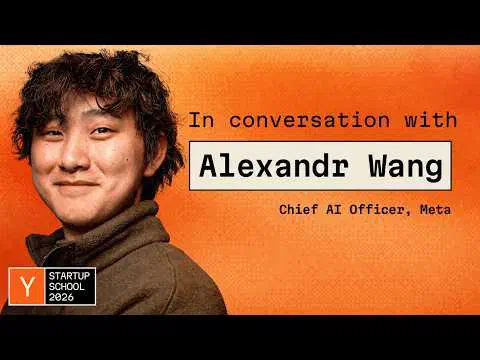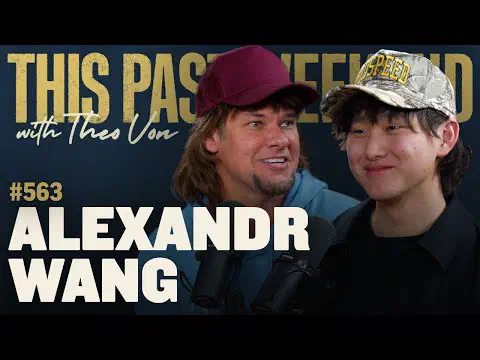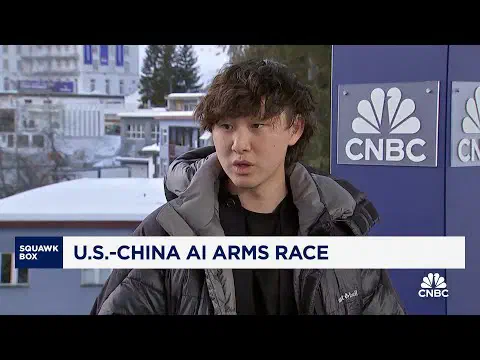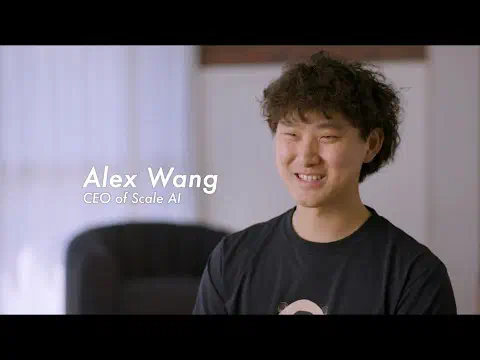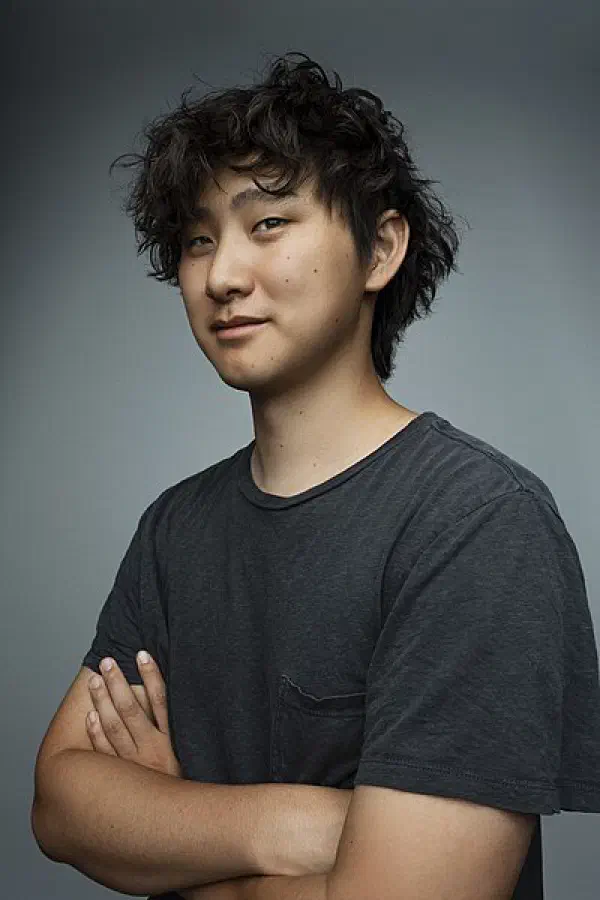
Meta Chief AI Officer, Scale AI founder
Alexandr Wang
Profile
Alexandr Wang is the closest thing the AI industry has to a case study in what “data is the bottleneck” actually means in dollars and power. Born in 1997 in Los Alamos, New Mexico — the son of two physicists at the national weapons lab — he was a competitive math-and-coding prodigy who landed at MIT and dropped out at 19. In 2016 he and co-founder Lucy Guo started Scale AI, a company built on an unglamorous but decisive insight: frontier models are only as good as the labeled data they train and evaluate on, and someone has to industrialize the messy human work of producing it. Scale became that someone. By 2021, at 24, Wang was the world’s youngest self-made billionaire.
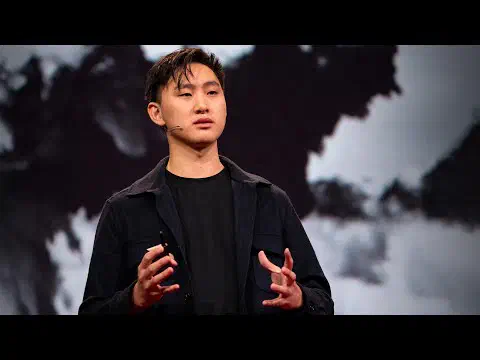
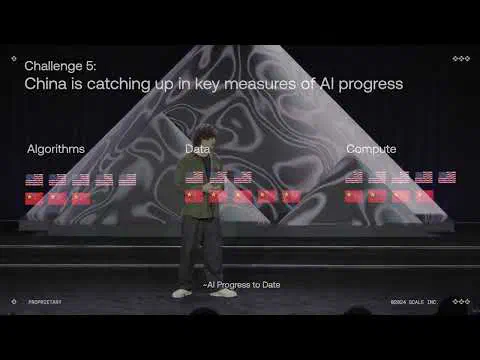
What makes Wang matter to anyone building with AI is that Scale sat underneath almost everyone. Its human-labeling and evaluation pipelines fed OpenAI, Google, the U.S. Department of Defense, and most of the major labs — the “picks and shovels” of the model era. Wang turned data annotation into critical infrastructure and, along the way, became one of the most persistent public voices arguing that the U.S. is in a national-security race with China where training data is a form of ammunition. His 2023 TED talk and his testimony before the House Armed Services Committee cemented that framing.
In June 2025 Meta paid roughly $14.3 billion for a 49% non-voting stake in Scale — a deal that valued the company north of $29 billion and, more to the point, brought Wang inside as Meta’s first-ever Chief AI Officer, leading the newly formed Meta Superintelligence Labs. Mark Zuckerberg essentially bought a founder and a hand-picked team, then handed them the keys to Meta’s AI strategy after the underwhelming reception of Llama 4. Wang stepped down as Scale’s CEO (Jason Droege took over) but stayed on its board — a conflict-of-interest arrangement that raised plenty of eyebrows.
For developers, the interesting part is that Wang is now being tested on the thing he isn’t famous for: shipping frontier models. Meta’s first proprietary model under his watch, Muse Spark (April 2026), a deliberate move away from Meta’s open-weight tradition, landed to mixed reviews — Wang himself called it “not at the tier of the leading frontier models” and framed it as an “appetizer.” The reorg has been turbulent: Yann LeCun, Meta’s long-time chief AI scientist and FAIR’s founder, departed in late 2025, and reporting through 2026 describes redundant leadership structures and pressure on Wang to prove the acquihire was worth its historic price tag. Whether he can turn a data empire into model leadership is still an open question — and one worth watching, because a lot of Meta’s AI bet rides on his answer.
Key Articles & Papers
Statement Before the House Armed Services Subcommittee on Cyber, IT and Innovation Frontier Data Foundries: The Power of Data (a16z interview) Meta unveils Muse Spark, its first new AI model since hiring Alexandr WangVideos
Controversies
Labor practices at Scale AI. Scale’s core business depends on a vast contract workforce, largely recruited through its subsidiary Outlier AI. The company has faced class-action lawsuits alleging worker misclassification and wage theft, and a separate suit claiming contractors developed PTSD from grading graphic and disturbing content — including a Meta-linked self-harm safety project. The U.S. Department of Labor opened an inquiry into Scale’s compliance with the Fair Labor Standards Act in 2024. Wang built and led the company through this period, and critics argue the human cost of “data labeling at scale” has been consistently understated. (Inc., Rappler)
The Meta deal’s structure and conflicts. Meta’s $14.3B “investment-plus-acquihire” was widely read as a way to absorb Scale’s talent and data pipeline while sidestepping a formal acquisition and antitrust review. Wang’s continued board seat at Scale while running Meta’s AI strategy — with Meta as a major Scale customer — drew conflict-of-interest scrutiny, and several rival labs reportedly pulled back from Scale after the deal. (Fortune, CNBC)
Spotify Podcasts

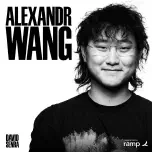

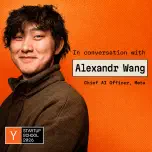

![Alexandr Wang - A Primer on AI - [Invest Like the Best, EP. 272]](/images/people/alexandr-wang/spotify/0jFd4L8nvDROu05lk2kv6y_hu_762c07bf5ce3c13f.webp)
YouTube