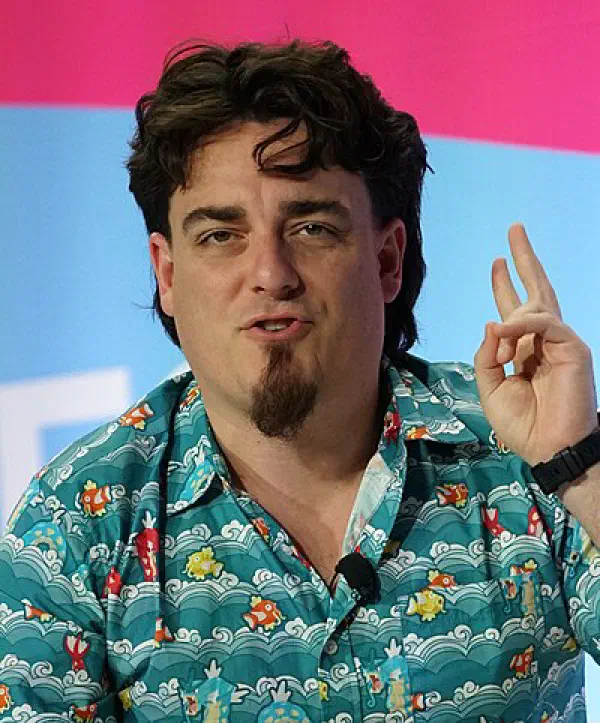
Anduril founder, building autonomous defense AI
Palmer Luckey
Biographies


Profile
Palmer Luckey is the rare founder who has now built two category-defining companies before the age most engineers make senior. At 19 he founded Oculus and effectively kickstarted the modern VR industry from a garage in Long Beach; two years later Facebook (now Meta) bought it for roughly $2 billion. Then, in 2017 — after Facebook pushed him out amid a political-donation controversy — he did the thing almost no Silicon Valley darling does: he walked into the defense-industrial complex, an ossified world of cost-plus contracts and decades-long procurement cycles, and started Anduril Industries to blow it up. Named after Aragorn’s sword, Anduril was pitched, only half-jokingly, as an attempt to build Stark Industries in real life.
What makes Luckey matter to anyone building with AI is that Anduril is one of the most aggressive real-world deployments of autonomous, safety-critical AI on the planet. The company’s crown jewel isn’t a drone or a sensor tower — it’s Lattice, an AI-powered command-and-control operating system that fuses feeds from thousands of sensors, drones, and weapons into a single autonomous picture, detecting, tracking, and cueing responses at machine speed. Around it Anduril has built a hardware portfolio that reads like a defense-tech fever dream: the YFQ-44 Fury “loyal wingman” fighter drone meant to team with F-35s, the Roadrunner reusable interceptor, the Ghost Shark autonomous submarine Australia is buying, and Barracuda cruise missiles. Unlike traditional primes, Anduril funds much of this R&D itself and sells finished products — a software-company go-to-market grafted onto weapons manufacturing.
The bet has paid off spectacularly. In May 2026 Anduril closed a ~$5 billion round led by Thrive Capital and Andreessen Horowitz, doubling its valuation to roughly $61 billion — a figure that has now doubled almost every year since 2022. In March 2026 the U.S. Army awarded the company a ~$20 billion, ten-year enterprise contract, and Anduril has absorbed Microsoft’s troubled $22 billion IVAS augmented-reality helmet program, reuniting Luckey with Meta and Mark Zuckerberg to build the “EagleEye” soldier headset — running Meta’s Llama models and plugging into Lattice. Luckey is also backing adjacent bets like the nuclear startup Valar.
For developers, Luckey is worth studying less as a coder and more as a proof of thesis: that vertically integrated hardware-plus-AI, shipped fast and iterated like software, can dislodge incumbents even in the most regulated industries imaginable. He is also the most articulate advocate for military AI you’ll find — and one of the most polarizing figures in the field. He argues, bluntly, that “there is no moral high ground in using inferior technology” when lives are at stake, and that AI-guided precision reduces collateral damage rather than increasing it. You don’t have to agree with him to recognize that the questions he’s forcing — about autonomy, accountability, and who controls lethal AI — are the ones the whole field will be arguing about for the next decade.
Key Articles & Papers
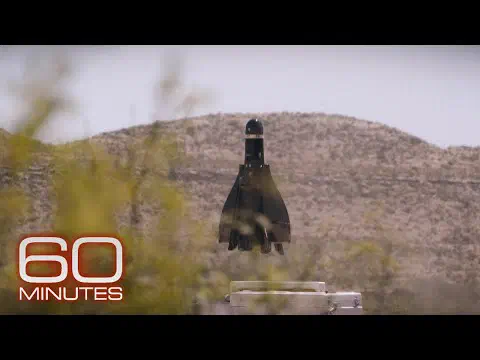
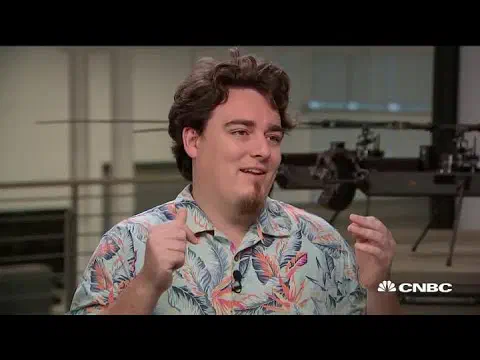
American Vulcan Why Palmer Luckey thinks AI-powered, autonomous weapons are the future of warfare (60 Minutes) Palmer Luckey and the Future of American Power Meta and Anduril work on mixed reality devices for the US military Anduril doubles valuation to over $60 billion as defense tech funding boom continues Palmer Luckey says Silicon Valley has the Pentagon all wrongVideos




Controversies
The Facebook ouster (2016–2017). In 2016 Luckey donated $10,000 to Nimble America, a pro-Trump group behind an anti–Hillary Clinton billboard. The backlash was severe, and he left Facebook in March 2017. Facebook maintained it was “not because of a political view,” and Mark Zuckerberg declined to explain it to Congress; Luckey has since flatly said “I got fired.” Leaked internal emails later suggested executives pressured him to publicly disavow Trump and back Gary Johnson. In 2025 Meta’s Reality Labs chief Andrew “Boz” Bosworth publicly apologized to him — an unusual coda that coincided with the two companies’ renewed collaboration.
Autonomous lethal weapons. Anduril’s core business — AI systems that can identify, track, and engage targets — draws sustained criticism from arms-control advocates and researchers who warn about “killer robots” and eroding human control over lethal force. Luckey rejects the framing, arguing that a human must always bear responsibility, that precision AI reduces civilian harm, and mocking critics by asking whether NATO should be armed “with squirt guns.” Notably, he also voices the opposite concern from a different angle: that too much foreign-policy power could concentrate in private companies — “we can’t live in a world where corporate executives have more practical power… than the president.” Reasonable people land in very different places here; it is the central ethical debate of the field he leads.
Spotify Podcasts






![Palmer Luckey - Inventing the Future of Defense - [Invest Like the Best, CLASSICS]](/images/people/palmer-luckey/spotify/0cDyoIou824vpwgoLYgIZX_hu_f888f4d8bad95813.webp)

YouTube