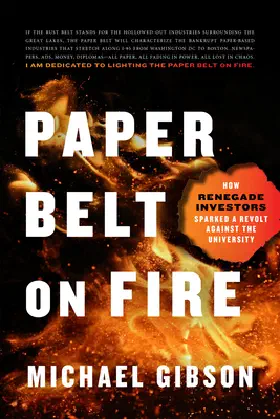
How Renegade Investors Sparked a Revolt Against the University
Gibson, Michael
—
2022
A narrative account of Peter Thiel's founding and vision for the Thiel Fellowship, a $250,000 grant program designed as an alternative to traditional university education. Gibson explores Thiel's contrarian philosophy on education, the fellows he selected, and the fellowship's impact on entrepreneurship and innovation culture.
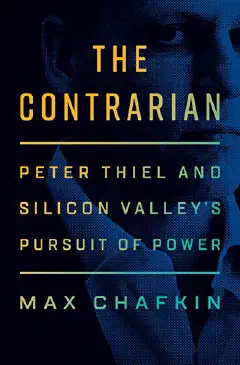
Max Chafkin's acclaimed biography traces Peter Thiel's arc from his upbringing as the child of immigrant parents to his founding of PayPal and Palantir, early Facebook investment, and rise as a tech titan and political kingmaker. Designated a New York Times Notable Book and included in Fortune's Best Books of 2021.
The Story of Paypal and the Entrepreneurs Who Shaped Silicon Valley
Jimmy Soni
—
2021
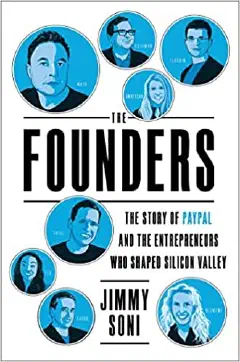
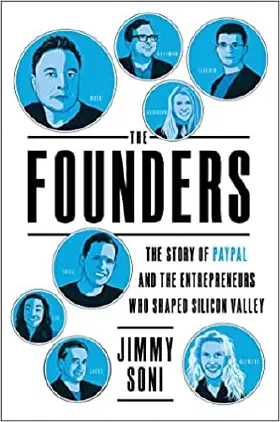
A narrative history of PayPal's founding and early years, with Peter Thiel as one of the main subjects. Covers key moments including the Musk-Thiel transition of power, the eBay acquisition, and Thiel's subsequent investments. Named New York Times Editors' Choice and Best Book of 2022 by The New Yorker.
Peter Thiel, Hulk Hogan, Gawker, and the Anatomy of Intrigue
Ryan Holiday
—
2018
A biographical narrative of Peter Thiel's multi-year proxy war against Gawker through the Florida legal system, culminating in a $140 million settlement in favor of Hulk Hogan. Explores Thiel's financial leverage, strategic thinking, and the intersection of wealth, power, and media in Silicon Valley.
Richard Byrne Reilly's unauthorized microbiography examines Peter Thiel's business ventures, worldview, and impact. The work is structured around sixty-seven short chapters exploring Thiel's philosophy on technology, investing, and society. Published as ebook format.
Battles with eBay, the Media, the Mafia, and the Rest of Planet Earth
Eric M. Jackson
—
2004
Former PayPal marketing executive Eric M. Jackson's first-hand account of PayPal's founding and rise through 2002. Features David Sacks prominently as a key member of the PayPal team and describes his role in the company's pivotal strategic decisions. Won the 2005 Writers Notes Book Award for best business book and the 2005 DIY Book Award for non-fiction.
Peter Thiel is the closest thing Silicon Valley has to a house philosopher — and its most polarizing power broker. He co-founded PayPal in the late 1990s, and the network of operators it produced (the “PayPal Mafia,” including Elon Musk, Reid Hoffman, and David Sacks) went on to seed a startling fraction of the modern tech economy. In 2004 he wrote Facebook’s first outside check — $500,000 for roughly 10% — one of the best angel investments in history. That same year he co-founded Palantir with Alex Karp, betting that software fusing messy data would become indispensable to intelligence agencies, militaries, and eventually every large enterprise. Two decades later Palantir is one of the defining AI-defense companies of the era, and Thiel’s early conviction — that the state would be a customer, not a regulator to avoid — looks prophetic.
Today his real influence runs through Founders Fund, the venture firm he launched in 2005. It is not a normal VC shop. Founders Fund makes concentrated, contrarian bets on “hard” technology the rest of the industry finds unfashionable or uncomfortable — space, nuclear, biotech, crypto, and above all defense and AI. In 2025 the firm led Anduril’s $2.5 billion round with a $1 billion check, its largest single investment ever, and took a $1.25 billion position in Anthropic, the maker of Claude. It closed a record ~$6 billion Growth IV fund in early 2026 after burning through the prior fund in under a year. For anyone building with AI, this matters directly: Thiel’s capital is actively shaping which companies at the AI-defense-infrastructure frontier get to exist at scale.
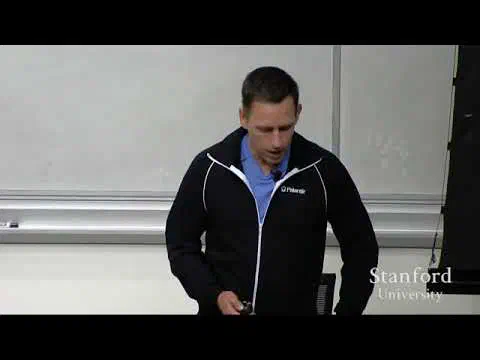
The intellectual through-line is contrarianism as a discipline. Thiel’s signature interview question — “What important truth do very few people agree with you on?” — and his thesis that great companies are monopolies, not competitors, come from his 2012 Stanford class, distilled into the bestseller Zero to One. His other famous idea is “stagnation”: his claim that outside of bits and screens, the West has seen 50 years of stalled progress (“we wanted flying cars, instead we got 140 characters”). His current read on AI flows straight from that — he calls it “more than a nothingburger, less than a total transformation,” the one real exception to stagnation, but warns that an over-cautious, “woke,” compliance-obsessed AI could actually deepen the malaise it’s supposed to cure. Developers should sit with that tension: the person funding a huge slice of frontier AI is also its most articulate skeptic about whether it’s transformative enough.
He is also, increasingly, a political and metaphysical actor. Thiel was Donald Trump’s most prominent Silicon Valley backer in 2016, mentored figures across the new tech-right, and has folded his libertarianism into an idiosyncratic Christianity — most visibly in a 2025 sold-out lecture series on the biblical Antichrist, where “the Antichrist” stands in for centralized world government and the regulatory impulse he opposes. You do not have to buy any of this to grasp why he matters to AI builders: few individuals have done more to set the terms — commercial, ideological, and geopolitical — under which the current AI boom is being financed and deployed.
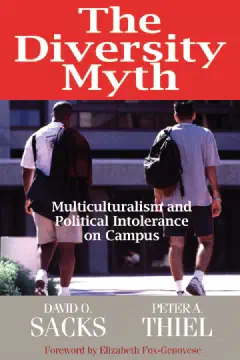
A critical examination of Stanford University's multicultural experiment beginning in the 1980s. David O. Sacks and Peter A. Thiel argue that multiculturalism resulted in speech codes, lowered academic standards, and ideologically driven curricula rather than genuine diversity, documenting how political correctness became institutionalized on campus.
Bankrolling Gawker’s destruction. After Gawker’s Valleywag outed him as gay in 2007, Thiel secretly funded Hulk Hogan’s (Terry Bollea’s) invasion-of-privacy suit, spending a reported $10 million. The 2016 verdict bankrupted Gawker. Supporters saw accountability for a cruel outlet; critics saw a billionaire covertly using the courts to erase a publication he disliked — a chilling precedent for press freedom. Reuters
Palantir and surveillance. Palantir’s work with ICE, the Pentagon, and intelligence agencies has drawn sustained criticism from civil-liberties groups who argue it enables mass surveillance and deportation infrastructure. Thiel and the company counter that the tools serve legitimate, oversight-bound government functions. The Guardian
Politics and the tech-right. As Trump’s earliest major Silicon Valley backer and a funder of populist-right candidates, Thiel is a lightning rod; detractors view his blend of anti-democratic writing and political spending as a threat, while allies frame it as principled dissent from Valley orthodoxy.
Epstein meetings. Thiel has acknowledged scheduled meetings with Jeffrey Epstein between 2014 and 2016; he has said he was never involved in Epstein’s crimes. Business Insider
Spotify Podcasts
Peter Thiel: The Billionaire Behind the Controversies
Ancient Mysteries
2026
Peter Thiel is the Real Antichrist w/ Gil Duran
Tech Won't Save Us
2025
Part Two: Peter Thiel and the Anti-Christ
Behind the Bastards
2025
Part One: Peter Thiel and the Anti-Christ
Behind the Bastards
2025
Ep 112: Peter Thiel on DOGE, Tariffs, Building Generational Companies & the Future of Civilization
Joe Lonsdale: American Optimist
2025
Peter Thiel
Tetragrammaton with Rick Rubin Podcast
2024
Apocalypse Now? Peter Thiel on Ancient Prophecies and Modern Tech | Uncommon Knowledge | Peter Robinson | Hoover Institution
Uncommon Knowledge
2024
Part One: How Peter Thiel Became the Gravedigger of Democracy
Behind the Bastards
2024
#2190 - Peter Thiel
The Joe Rogan Experience
2024
Ep 28: Peter Thiel, Billionaire Investor and Company Creator on Investing, Business, and Life