PrometheusRoot
Blog Links Prometheans 100+ AI Books AI Companies Why are you here?
← Prometheans 100+
×
Arvind Narayanan
builder
ResearcherEducatorPolicy
X / Twitter Website
ai-snake-oilprincetoncriticismhype

Related

builder Gary Marcus
← Prometheans 100+ Arvind Narayanan

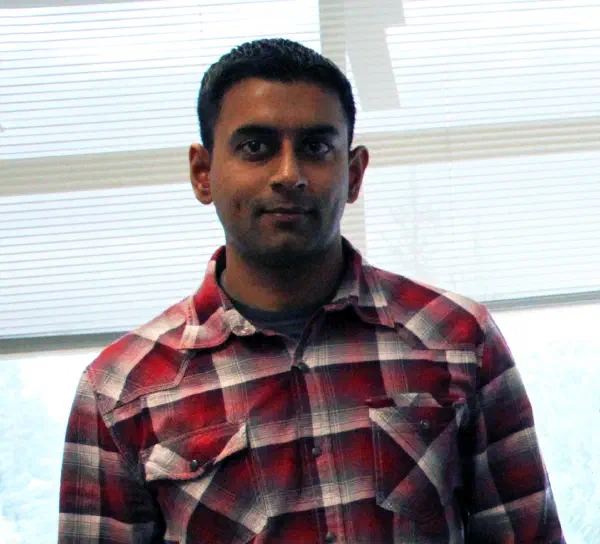
Princeton professor and CITP director, AI policy and evaluation researcher

Arvind Narayanan

Professor of Computer Science, Director of Center for Information Technology Policy — Princeton University Faculty Associate — Harvard Berkman Klein Center Co-author, AI Snake Oil (with Sayash Kapoor) — Princeton University Press
Listen — profile
0:00 / 3:43

Profile

Arvind Narayanan is what the AI field badly needs more of: a serious computer scientist who reads the papers, runs the experiments, and then tells you plainly when the emperor has no clothes. He’s a professor of computer science at Princeton and director of its Center for Information Technology Policy, and for developers trying to separate genuine capability from marketing, his work is close to essential reading. His trajectory matters here: this isn’t a pundit lobbing takes from the sidelines. Narayanan earned his PhD at UT Austin under Vitaly Shmatikov, did a postdoc at Stanford with Dan Boneh, and built a research career on privacy and de-anonymization before AI hype became his beat. As a grad student he and Shmatikov showed that the “anonymized” Netflix Prize dataset could be re-identified by cross-referencing public IMDb reviews — a result that permanently changed how people think about big-data privacy. He later led the Princeton Web Transparency and Accountability Project measuring online tracking, and co-authored the widely used free textbook Bitcoin and Cryptocurrency Technologies.

Today he’s best known as co-author, with Sayash Kapoor, of AI Snake Oil (2024) and the newsletter of the same name, now published under the AI as Normal Technology banner and read by tens of thousands of researchers, policymakers, and journalists. The through-line of all of it is empirical skepticism: not the reflexive AI-is-useless contrarianism of some critics, and not the breathless superintelligence-is-imminent framing of the labs, but a demand that claims be backed by evidence. Narayanan is happy to say that large language models are genuinely useful and transformative — and in the same breath dismantle a benchmark result or a “predictive AI” product that doesn’t survive scrutiny.

That evidence-first stance is what makes him useful to people actually building with AI. His critique of “GPT-4 passed the bar exam at the 90th percentile” — data contamination, misleading percentile framing, and the gap between test-taking and real professional work — is the kind of analysis every developer citing a leaderboard should internalize. With Kapoor he has pushed hard on the evaluation crisis in agents, showing that state-of-the-art agents are often needlessly complex and expensive, and that ignoring cost while chasing accuracy produces misleading rankings. His broader “Leakage and the reproducibility crisis in ML-based science” work documented how data leakage has corrupted results across hundreds of papers in seventeen scientific fields — a sobering reminder for anyone shipping an ML model.

His current intellectual project, “AI as Normal Technology,” is his most ambitious argument yet: that AI will diffuse into society the way electricity and the internet did — slowly, unevenly, gated by institutions and adoption — rather than arriving as a sudden superintelligent break. It has become the leading counter-framework to the AGI-is-imminent worldview, and whether or not you buy it in full, it’s a more rigorous way to reason about deployment, timelines, and policy than most of what circulates online. Narayanan appeared on the inaugural TIME 100 AI list, is a faculty associate at Harvard’s Berkman Klein Center, and remains one of the clearest thinkers on where AI actually delivers and where it’s being oversold.

Books
📖
AI Snake Oil: What Artificial Intelligence Can Do, What It Can't, and How to Tell the Difference
With Sayash Kapoor, a clear-eyed, evidence-driven guide to distinguishing real AI capabilities from hype — separating genuinely useful generative AI from the 'predictive AI' snake oil sold for hiring, criminal justice, and medicine.
📖
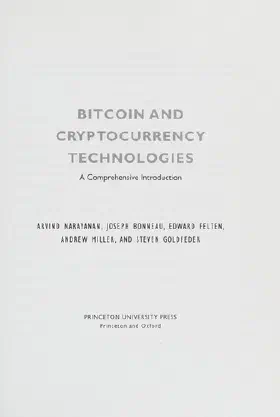
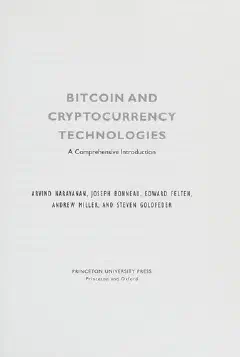
Bitcoin and Cryptocurrency Technologies
The influential free textbook (and companion Princeton/Coursera course) that explained how Bitcoin actually works from a computer-science first-principles view.

Key Articles & Papers

AI as Normal Technology 2025 — The long-form essay (with Kapoor) arguing AI will diffuse like electricity or the internet rather than arrive as sudden superintelligence — now the leading alternative framework to the AGI-imminent view. AI Agents That Matter 2024 — Shows pervasive flaws in how AI agents are evaluated and makes the case for optimizing cost alongside accuracy — required reading before you trust any agent leaderboard. GPT-4 and Professional Benchmarks: The Wrong Answer to the Wrong Question 2023 — Dismantles the 'GPT-4 passed the bar at the 90th percentile' claim via data contamination and framing errors — a masterclass in reading benchmark results critically. Leakage and the Reproducibility Crisis in Machine-Learning-Based Science 2023 — Documents how data leakage has produced overoptimistic results across 294 papers in 17 fields — essential caution for anyone building or citing ML models. Pitfalls of Evidence-Based AI Policy 2025 — Argues for grounding AI regulation in evidence while warning how 'evidence-based' rhetoric can itself be misused to stall needed policy. How to Break Anonymity of the Netflix Prize Dataset 2008 — The landmark de-anonymization result that reshaped how researchers and regulators think about the privacy risks of 'anonymized' big data.

Videos

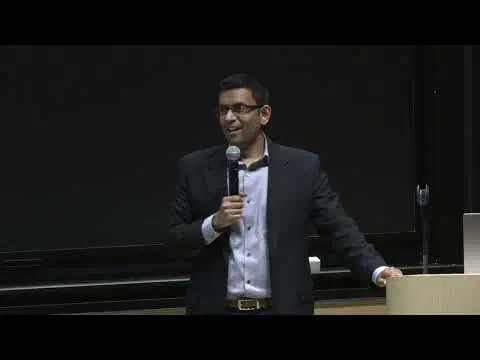
YouTube video

Spotify Podcasts

Arvind Narayanan on Why AI Isn’t All That Revolutionary
The Good Fight
2026
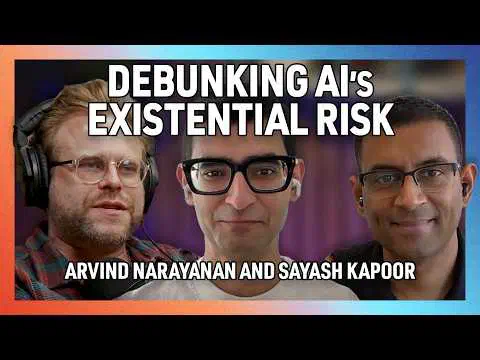
Debunking AI’s “Existential Risk” with Arvind Narayanan and Sayash Kapoor
Factually! with Adam Conover
2026
AI DEBATE: Runaway Superintelligence or Normal Technology? |  Daniel Kokotajlo vs Arvind Narayanan
AI DEBATE: Runaway Superintelligence or Normal Technology? | Daniel Kokotajlo vs Arvind Narayanan
Limitless: An AI Podcast
2025
AI Snake Oil by Sayash Kapoor & Arvind Narayanan (English) Full Podcast
Penplexity English
2025
Ep 54: Princeton Researcher Arvind Narayanan on the Limitations of Agent Evals, AI’s Societal Impact & Important Lessons from History
Unsupervised Learning with Jacob Effron
2025
Two Computer Scientists Debunk A.I. Hype with Arvind Narayanan and Sayash Kapoor (Adam Conover)
KEEP MOVING FORWARD
2025
AI Agents: Substance or Snake Oil with Arvind Narayanan - #704
The TWIML AI Podcast (formerly This Week in Machine Learning & Artificial Intelligence)
2024
Two Computer Scientists Debunk A.I. Hype with Arvind Narayanan and Sayash Kapoor
Factually! with Adam Conover
2024
20VC: AI Scaling Myths: More Compute is not the Answer | The Core Bottlenecks in AI Today: Data, Algorithms and Compute | The Future of Models: Open vs Closed, Small vs Large with Arvind Narayanan, Professor of Computer Science @ Princeton
The Twenty Minute VC (20VC): Venture Capital | Startup Funding | The Pitch
2024
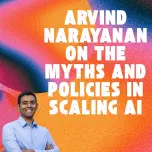
#9 – Arvind Narayanan: Myths and Policies in Scaling AI
Scaling Theory
2024

YouTube

YouTube video
2026
YouTube video
2025
YouTube video
2025
YouTube video
2025
YouTube video
2024

Related People

builder Gary Marcus
© 2026 PrometheusRoot