Founder & Executive Chairman of Robust.AI, AI skeptic
Gary Marcus
Profile
Gary Marcus is the AI world’s most persistent — and most infuriating, depending on who you ask — skeptic. A cognitive scientist by training and professor emeritus of psychology and neural science at New York University, Marcus spent decades studying how human minds actually acquire language and reasoning before turning that lens on deep learning and finding it wanting. His central claim, repeated across books, papers, and a prolific Substack, is that scaling up neural networks with more data and more chips will not, by itself, produce reliable, trustworthy, or genuinely intelligent machines. For developers weaned on the “just add parameters” gospel, he is the loudest dissenting voice in the room.
Marcus is a builder as well as a critic. In 2019 he co-founded Robust.AI with legendary roboticist Rodney Brooks (co-founder of iRobot), where he serves as Executive Chairman; the company builds software and collaborative robots for warehouses and logistics. Earlier he founded and sold the machine-learning startup Geometric Intelligence to Uber in 2016, where it seeded Uber AI Labs. But his lasting influence is intellectual: he is the field’s most articulate advocate for neurosymbolic AI — hybrid systems that marry the pattern-matching strengths of neural networks with the structured, verifiable reasoning of classical symbolic AI. Where Geoffrey Hinton and Yann LeCun long insisted deep learning would get there on its own, Marcus argued the missing ingredients were compositionality, abstraction, and explicit world models.
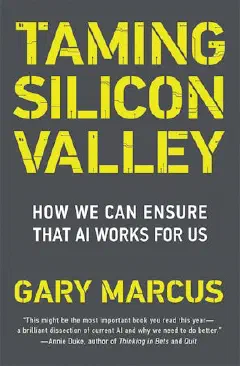
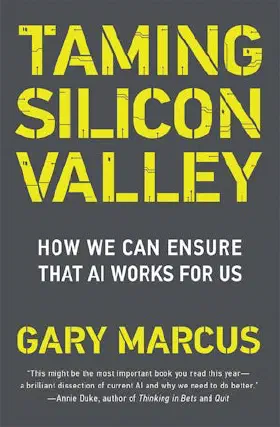
What makes Marcus essential reading — rather than merely contrarian — is that many of his early predictions aged well. His warnings that large language models would hallucinate, fail at reliable reasoning, and struggle to distinguish truth from plausible-sounding fiction were dismissed as pessimism in 2018 and are now conventional wisdom in 2026. He has become a fixture in policy circles too, testifying before the U.S. Senate alongside Sam Altman in 2023 and calling for FDA-style oversight of powerful AI systems. His more recent work, including the book Taming Silicon Valley, widened his aim from technical critique to the politics and economics of an industry he believes is overpromising to the public and regulators alike.
Marcus is a polarizing figure, and it’s worth being honest about that. Critics accuse him of moving goalposts, cherry-picking failures, and underrating the genuine progress of the last few years; supporters counter that he simply refused to be swept up in hype cycles that repeatedly overstated what these systems can do. For a developer building real products on top of LLMs, the value isn’t in deciding whether Marcus is “right” — it’s in internalizing his core engineering lesson: these systems are powerful but brittle, they do not understand what they output, and robust applications must be designed around those limits rather than assuming they’ll disappear with the next model.
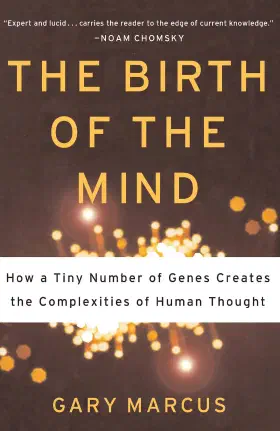
Books
Key Articles & Papers
Deep Learning: A Critical Appraisal Deep Learning Is Hitting a Wall The Next Decade in AI: Four Steps Towards Robust Artificial Intelligence Senate Testimony: Oversight of A.I. — Rules for Artificial Intelligence Six (or seven) predictions for AI in 2026 from a Generative AI realist Open letter responding to Yann LeCun
Videos
Controversies
Marcus’s long-running public feud with Yann LeCun is the most visible flashpoint in his career — a multi-year, often personal argument over whether deep learning alone can reach general intelligence. Detractors, including many prominent deep-learning researchers, accuse Marcus of relentlessly emphasizing failures while discounting real progress, and of “moving the goalposts” whenever systems clear a bar he previously set. Marcus, for his part, argues that his skeptics only quietly adopted his positions once ChatGPT’s limitations became undeniable. He has also sparred publicly with Elon Musk and other AGI optimists over timelines and hype. The disputes are substantive rather than scandalous — a genuine, unresolved disagreement about the direction of the field — but readers should weigh his claims knowing he is an interested party with a strong prior, not a neutral referee. See his open letter to LeCun and coverage of the symbolist-connectionist debate for both sides.
Spotify Podcasts



YouTube