
Founder of AMI Labs, world models AI researcher
Yann LeCun
Biographies
Profile
Yann LeCun is one of the three people who dragged deep learning out of its “winter” and into the center of computing — and, at 65, one of the very few willing to bet his reputation that the current AI paradigm is a dead end. In the late 1980s and 1990s he invented the convolutional neural network (CNN), the architecture that taught machines to see. His LeNet system read handwritten checks at scale years before “deep learning” was even a phrase. For that foundational work he shared the 2018 ACM Turing Award — computing’s Nobel — with Geoffrey Hinton and Yoshua Bengio. Every image model, every vision transformer, every self-driving perception stack descends in part from what LeCun built. If you have ever run a CNN, you have run his idea.
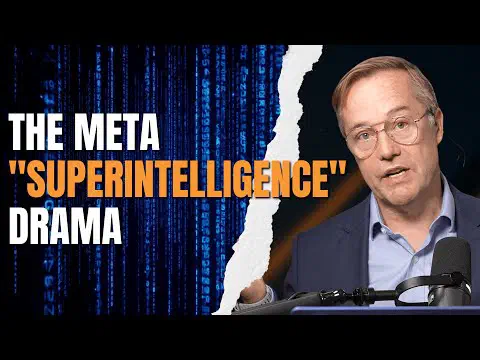
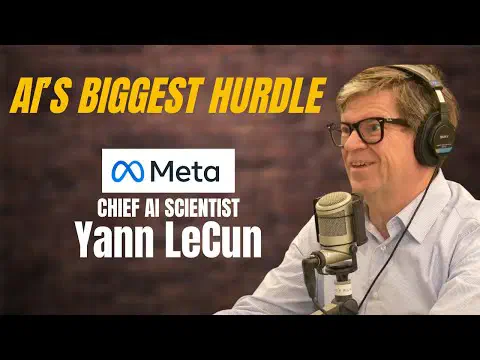
For over a decade he was Chief AI Scientist at Meta, where in 2013 he founded and led FAIR (Fundamental AI Research) — the lab that produced PyTorch, the Llama open-weight models, and a research culture defined by open publication. He kept his professorship at NYU the whole time, and remained one of the loudest evangelists for open-source AI against a rising tide of closed, “safety”-branded labs. But by 2025 LeCun and Meta had diverged: as the company reorganized around a superintelligence push and raced to catch up on LLMs, he wanted to go the other direction entirely.
In November 2025 he announced his departure, and in December he co-founded Advanced Machine Intelligence Labs (AMI Labs), a Paris-based startup where he serves as Executive Chairman alongside CEO Alexandre Lebrun and Chief Strategy Officer Saining Xie. In March 2026 AMI closed a staggering $1.03 billion seed round at a $3.5B pre-money valuation — the largest seed round in European history — backed by Nvidia, Bezos Expeditions, Temasek, Mark Cuban, and others. Notably, Meta itself signed on as a partner rather than an adversary.
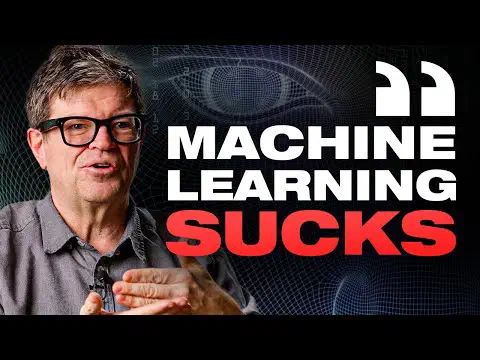
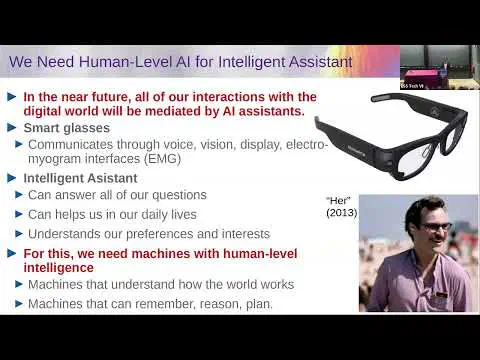
What matters to developers is why he walked. LeCun’s core thesis is contrarian and specific: autoregressive LLMs — the entire ChatGPT lineage — are a “dead end” on the path to human-level intelligence. His alternative is world models: systems that learn the structure and physics of reality by prediction in an abstract representation space, embodied in his Joint Embedding Predictive Architecture (JEPA). Whether he is right is one of the most consequential open questions in the field. If LLMs plateau, LeCun looks like the prophet who saw it coming; if they keep scaling, he’s the man who bet a billion dollars against the trend line. Either way, anyone building with AI should understand the argument he’s making — it’s the sharpest well-credentialed dissent from the current consensus that exists.
Key Articles & Papers
Gradient-Based Learning Applied to Document Recognition Deep Learning (Nature Review) A Path Towards Autonomous Machine Intelligence Self-Supervised Learning from Images with a Joint-Embedding Predictive Architecture (I-JEPA)Videos
Controversies
-
The 2020 bias dispute and Twitter exit. After LeCun argued that a face-upsampling model (PULSE) produced biased output mainly because of biased data rather than the algorithm, a heated multi-day exchange with researcher Timnit Gebru and others over how to frame algorithmic bias led him to quit Twitter. Critics felt he was dismissive of systemic issues; supporters felt he was making a narrow technical point. See Synced’s contemporaneous account.
-
Long-running feud with Gary Marcus. LeCun and Gary Marcus have sparred publicly for years — Marcus argues neural nets need innate symbolic structure and that LeCun’s own JEPA quietly concedes the point, while LeCun dismisses much of Marcus’s critique. It’s a genuine intellectual disagreement that often turns personal (Marcus’s side).
-
AI-safety skeptic. LeCun is one of the most prominent voices against existential-risk alarmism and against regulation that would restrict open models, putting him at odds with many peers — including his fellow laureates Hinton and Bengio. Developers should read his stance as a substantive position in a live debate, not settled fact.
Spotify Podcasts
![Yann LeCun's $1B Bet Against LLMs [Part 2]](/images/people/yann-lecun/spotify/7mZwyJkJRVJBvmnq1AfZgl_hu_e0a315371800b058.webp)
![Yann LeCun's $1B Bet Against LLMs [Part 1]](/images/people/yann-lecun/spotify/46r7wAc9H4JmhUhtC4BuWj_hu_e0a315371800b058.webp)



YouTube