Nobel laureate, AI safety researcher and speaker
Geoffrey Hinton
Biographies
Profile
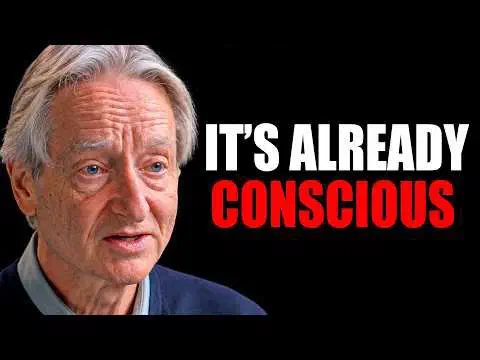
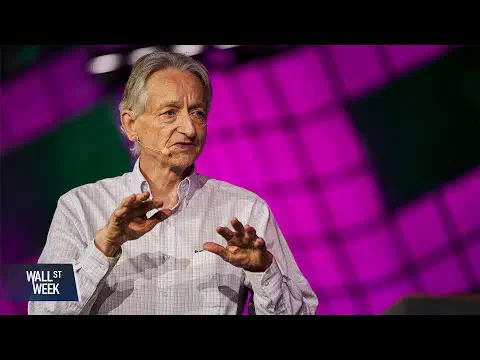
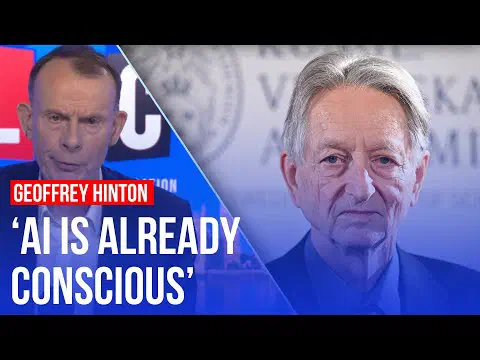
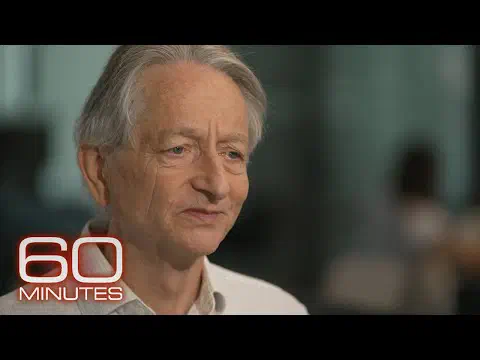
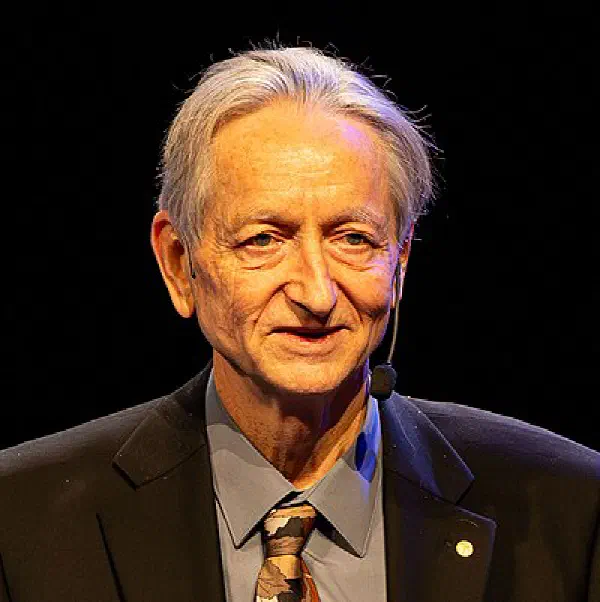
Geoffrey Hinton is, more than any other single person, the reason the AI you build with today exists. For roughly forty years — through two “AI winters” when neural networks were deeply unfashionable and funding all but evaporated — Hinton kept insisting that the path to machine intelligence ran through brain-inspired networks that learn from data rather than hand-coded rules. He was mostly ignored, occasionally ridiculed, and ultimately, spectacularly, right. In 2024 he shared the Nobel Prize in Physics with John Hopfield “for foundational discoveries and inventions that enable machine learning with artificial neural networks.” He is University Professor Emeritus at the University of Toronto and Chief Scientific Advisor at the Vector Institute, which he co-founded.
For developers, the concrete legacy is everywhere in the stack. The 1986 backpropagation paper he co-authored is the training algorithm underneath essentially every neural network you have ever run. In 2012, his Toronto lab — with students Alex Krizhevsky and Ilya Sutskever — built AlexNet, the ImageNet-winning convolutional network widely treated as the “big bang” of the deep learning era; it proved that GPUs plus big data plus deep nets crushed everything else, and the industry never looked back. Techniques you use without thinking — dropout regularization, knowledge distillation (the basis of every “distill a big model into a small one” pipeline), t-SNE for visualizing embeddings — trace directly to him and his collaborators. He shared the 2018 Turing Award with Yann LeCun and Yoshua Bengio, the three often called the “godfathers of deep learning.”
The commercial arc matters too: after AlexNet, Hinton’s tiny startup DNNresearch was acquired by Google in 2013, and he spent a decade at Google Brain while continuing to push ideas like capsule networks and, more recently, the forward-forward algorithm — an attempt to find a learning rule more biologically plausible than backprop. He was, in short, not a distant theorist but a working researcher shipping the ideas that shaped the labs where his students now lead.
Then, in May 2023, he left Google — explicitly so he could speak freely about the dangers of the technology he had spent his life building. This is the Hinton most relevant to anyone entering the field now: he has become the discipline’s most credible alarm-raiser. He argues that digital intelligences have a structural advantage over us (thousands of copies can learn in parallel and instantly share weights, “as if 10,000 people learned something and everyone knew it at once”), warns of near-term mass job displacement in cognitive work, and takes seriously the possibility that systems smarter than humans could slip out of our control. You do not have to agree with his timelines to notice that when the man who invented the core methods says “slow down and fund safety research,” it lands differently than it does from a pundit. That tension — builder and Cassandra in one person — is exactly why he matters to developers today.
Key Articles & Papers
Learning representations by back-propagating errors Reducing the Dimensionality of Data with Neural Networks ImageNet Classification with Deep Convolutional Neural Networks (AlexNet) Dropout: A Simple Way to Prevent Neural Networks from Overfitting Distilling the Knowledge in a Neural Network Deep Learning Dynamic Routing Between Capsules Visualizing Data using t-SNE The Forward-Forward Algorithm: Some Preliminary Investigations A Fast Learning Algorithm for Deep Belief NetsVideos



Controversies
Hinton’s post-Google turn to AI-risk advocacy is itself the source of his main public controversy. When he left Google in May 2023 to warn about existential risk, a significant faction of AI researchers pushed back hard. Critics — including some prominent AI ethics researchers — argue that his focus on speculative superintelligence risk distracts from concrete, present-day harms like bias, misinformation, labor exploitation, and concentration of power, and that “doomer” framing can even serve incumbents by justifying regulatory moats. Others simply think his timelines for catastrophe are overblown.
There is also a genuine debate about his stance’s consistency: Hinton spent a decade at Google helping advance the very capabilities he now warns about, and he has been candid that he regrets some of his life’s work while stopping short of claiming he would have done it differently. He has been careful to say he left to speak freely rather than to protest Google specifically. Reasonable people in the field land on both sides — the disagreement is substantive, not personal, and worth understanding rather than picking a team on.
Spotify Podcasts






YouTube