
Chief Ethics Scientist at Hugging Face, AI ethics pioneer
Margaret Mitchell
Profile
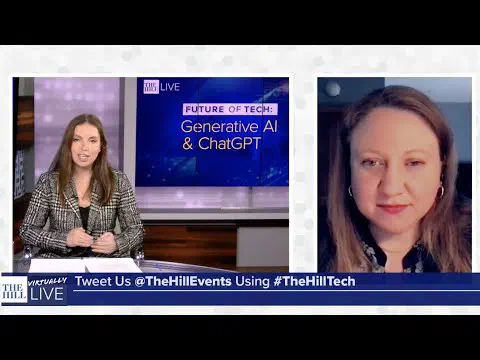
Margaret Mitchell is one of the people who turned “AI ethics” from a philosophy-seminar abstraction into engineering practice. As Chief Ethics Scientist at Hugging Face, she leads work on ML data governance, model evaluation, and responsible development — but for most developers her name is inseparable from a single, deceptively humble idea: the Model Card. Her 2019 paper argued that every trained model should ship with a short, standardized document stating what it’s for, what data trained it, how it performs across different demographic slices, and where it breaks. That idea is now baseline hygiene across the industry — the little “Model card” tab you see on every Hugging Face repo, and increasingly a regulatory expectation, traces directly back to her.
Her path into AI ethics runs through language and vision, not policy. She has a linguistics degree from Reed College, a PhD from the University of Aberdeen on generating natural-language descriptions of visible objects, and early research years at Microsoft Research, where she worked on the vision-to-language technology behind Seeing AI — an app that narrates the world for blind and low-vision users. That grounding matters: Mitchell approaches fairness as a systems problem baked into data and evaluation, not a coat of paint applied afterward. Her work on adversarially removing unwanted demographic biases from models is squarely an ML-engineering contribution, not a manifesto.
Then came Google. From 2016 she co-founded and co-led the Ethical AI team alongside Timnit Gebru, building one of the most respected internal research groups in the field — until it detonated publicly. After Gebru’s contested exit in December 2020 over the “Stochastic Parrots” paper, Mitchell used scripts to gather evidence of what she saw as discriminatory treatment; Google locked her account and fired her in February 2021, alleging she had exfiltrated files. Her quiet act of defiance — publishing on that paper under the byline “Shmargaret Shmitchell” — became one of the most-cited protest gestures in modern tech. The episode crystallized a real tension developers still live with: the friction between shipping fast and interrogating what you’re shipping.
Why she matters to someone building today: Mitchell is proof that the most durable ethics work is concrete and tooling-shaped. Model Cards, disaggregated evaluation, and data documentation are things you actually do in a repo, not vibes. Named to TIME’s 100 Most Influential People in AI in 2023 and an affiliate of Harvard’s Berkman Klein Center, she remains an unusually credible bridge between the people worried about AI harms and the people writing the code — and she’s still shipping the documentation and governance primitives that make open ML models usable responsibly.
Key Articles & Papers
Model Cards for Model Reporting On the Dangers of Stochastic Parrots: Can Language Models Be Too Big? Mitigating Unwanted Biases with Adversarial Learning Machine Learning Experts: Margaret Mitchell interviewVideos
Controversies
The defining episode is her February 2021 firing from Google, weeks after her co-lead Timnit Gebru departed under contested circumstances tied to the “Stochastic Parrots” paper. Google said Mitchell violated its code of conduct and security policies by exfiltrating documents; Mitchell said she was gathering evidence of discriminatory treatment of Gebru and that the company was retaliating against ethics researchers for doing their jobs. The twin departures triggered widespread criticism of Google’s commitment to its own responsible-AI research and prompted resignations and open letters across the field. Coverage was extensive and largely sympathetic to Mitchell and Gebru, though Google maintained its account of policy violations. It remains a reference case in any honest discussion of how much independence corporate AI-ethics teams actually have.
Spotify Podcasts


YouTube