Founder of Elorian, visual reasoning AI startup
Ian Goodfellow
Biographies
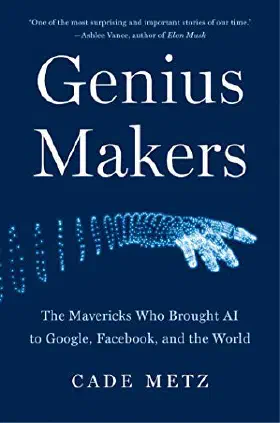
Profile
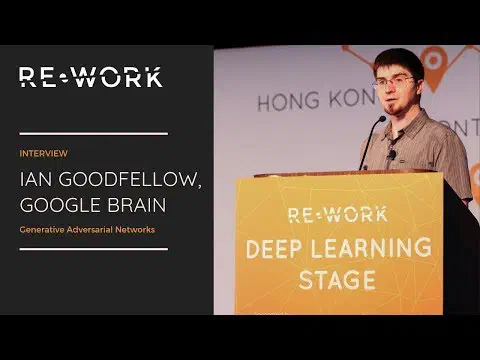
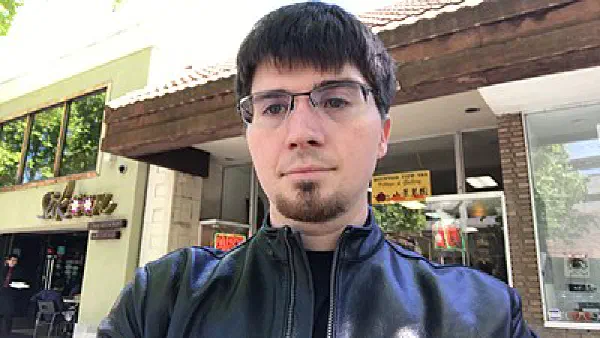
Ian Goodfellow is the person who taught neural networks to compete with themselves. In 2014, as a PhD student, he sketched out Generative Adversarial Networks — reportedly after an argument at a bar — pitting a generator that fabricates images against a discriminator that tries to catch the fakes, each pushing the other to improve. The idea landed like a thunderclap. GANs powered the first wave of photorealistic synthetic faces, style transfer, super-resolution, and the whole “this person does not exist” moment that made generative AI legible to the public years before diffusion models and transformers took the crown. Yann LeCun called adversarial training the most interesting idea in machine learning in a decade, and for a while he was right.
Goodfellow’s pedigree reads like a tour of the field’s founding families: undergrad and master’s at Stanford under Andrew Ng, then a PhD in Montréal under Yoshua Bengio and Aaron Courville. That trio wrote Deep Learning (2016), the free MIT Press textbook that has functioned as the field’s canonical reference for the better part of a decade — if you learned this material formally, you probably learned it from Goodfellow’s chapters. His career then bounced across the most consequential labs of the era: Google Brain, a stint at the newly founded OpenAI, back to Google, then Apple as Director of Machine Learning, where he publicly resigned in 2022 over a return-to-office mandate, and finally Google DeepMind.
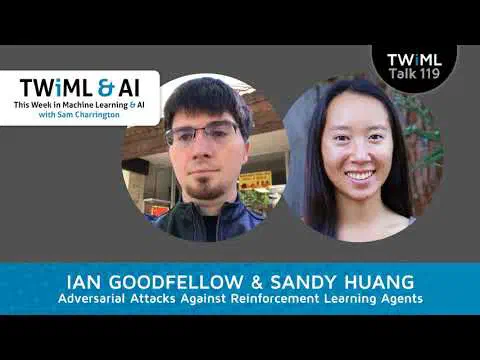
His second major contribution matters as much as GANs for anyone shipping models today: adversarial examples. Goodfellow showed that imperceptible pixel-level perturbations could reliably fool state-of-the-art classifiers, and his Fast Gradient Sign Method turned that observation into a practical attack — and a research subfield. If you care about model robustness, security, or why your vision system does something insane on a slightly odd input, that lineage starts here.
In 2025 Goodfellow left Google after roughly 12 years spanning Brain and DeepMind. He has since resurfaced in the orbit of Elorian, a visual-reasoning startup launched by former DeepMind colleagues (led by Andrew Dai) that raised a reported $55M seed at a $300M valuation before shipping a product — with backing that reportedly includes Jeff Dean. Worth a caveat for readers: Elorian’s own team page and press coverage credit Dai and other ex-DeepMind researchers as the founders, so treat “CEO” framing with some skepticism until the company confirms his title. Either way, Elorian’s thesis — models that reason natively in the visual medium instead of flattening images into text tokens — sits squarely in the lineage of Goodfellow’s generative and vision work, and it’s a bet worth watching if you build anything that has to understand the world through pixels.
Books
Key Articles & Papers
Generative Adversarial Networks Explaining and Harnessing Adversarial Examples Intriguing Properties of Neural Networks NIPS 2016 Tutorial: Generative Adversarial Networks Improved Techniques for Training GANs Adversarial Examples in the Physical World Maxout Networks Multi-digit Number Recognition from Street View ImageryVideos
Controversies
Goodfellow’s signature invention is also the technology that made deepfakes possible. GANs enabled convincing synthetic faces, voices, and video, and the same machinery now underpins non-consensual imagery, fraud, and disinformation. Goodfellow has consistently engaged with this openly — arguing for detection research and treating adversarial robustness as a defensive discipline rather than pretending the misuse away — but it remains the double edge of his legacy, and a useful reminder for developers that a generative breakthrough and its abuse ship together.
His 2022 departure from Apple was also unusually public: he left his Director of Machine Learning role in protest of the company’s return-to-office policy, a moment that became a flashpoint in the broader tech-industry fight over remote work.
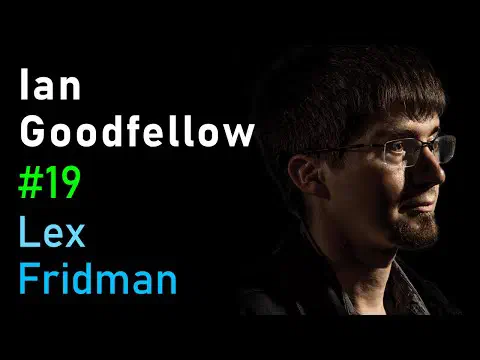
A note for you (not for the page): The one thing I’d flag before publishing is the Elorian role. Your database bio says “Co-founder & CEO of Elorian AI,” but Elorian’s own site lists Andrew Dai’s team without Goodfellow, and Bloomberg’s coverage frames the founders as other ex-DeepMind researchers. Goodfellow’s LinkedIn confirms he left Google in 2025 and is co-founding a startup, and he publicly amplified Elorian’s launch — but I couldn’t verify the CEO title from a primary source. I wrote the profile to reflect that uncertainty honestly rather than assert a title that may be wrong. If you have a source that confirms his exact role, I can tighten that paragraph. I omitted additional videos beyond the verified Lex Fridman #19 episode (Z6rxFNMGdn0) since I couldn’t confirm other 11-character IDs — your script’s YouTube API will fill that section.
Spotify Podcasts

YouTube