
AI safety advocate, LawZero co-president and MILA founder
Yoshua Bengio
Biographies
Profile
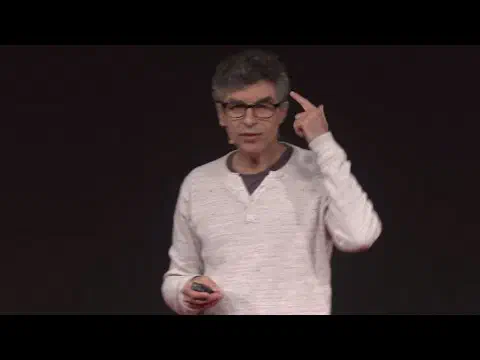
If you want to understand how modern AI actually got built — and why one of its principal architects is now warning it could go badly wrong — Yoshua Bengio is the person to study. A Full Professor at the Université de Montréal and founder of Mila, the Quebec AI Institute, Bengio shared the 2018 ACM A.M. Turing Award — computing’s “Nobel Prize” — with Geoffrey Hinton and Yann LeCun for the conceptual and engineering breakthroughs that made deep neural networks a load-bearing part of computing. In 2025 he became the first living scientist to pass one million citations on Google Scholar, and by most measures he is the most-cited computer scientist alive. If you use a language model today, you are using ideas he helped make practical.
His technical legacy is unusually foundational. Bengio’s 2003 A Neural Probabilistic Language Model introduced learned word embeddings and attacked the “curse of dimensionality” that had stalled statistical NLP — the intellectual seed that eventually grew into word2vec, transformers, and the LLMs developers build on now. His lab’s 2014 work on attention for neural machine translation (Bahdanau, Cho, Bengio) put the word “attention” into the field’s vocabulary three years before Attention Is All You Need. And Ian Goodfellow invented GANs while a student in Bengio’s group. For a generation of researchers, “Bengio’s lab” was where you went to learn deep learning; his co-authored textbook Deep Learning trained many of the people now running frontier labs.
Since roughly 2023, Bengio has done something rare for a scientist of his stature: he publicly changed his mind about the trajectory of his own field. Alarmed by the speed of capability gains and by early evidence of deception, reward-hacking, and self-preservation in frontier models, he pivoted from pure research toward AI safety and governance. He chairs the International AI Safety Report — the IPCC-style scientific synthesis mandated at the 2023 Bletchley summit, backed by ~30 nations, the UN, OECD and EU, with over 100 experts contributing — whose 2025 and 2026 editions now anchor how policymakers reason about AI risk.
In June 2025 he launched LawZero, a Montréal non-profit funded with roughly $30M in philanthropy (Jaan Tallinn, Eric Schmidt, Open Philanthropy, the Future of Life Institute) and incubated at Mila. Its flagship research bet, “Scientist AI,” is a deliberately non-agentic system — one that builds a probabilistic world model and makes predictions without holding goals or taking actions — proposed as a safer foundation and a guardrail against dangerous agentic systems. For developers, Bengio is worth watching precisely because he sits at both poles: he helped create the paradigm and is now trying to constrain it from the inside, with concrete technical proposals rather than only manifestos.
Books


Key Articles & Papers
A Neural Probabilistic Language Model Representation Learning: A Review and New Perspectives Generative Adversarial Networks Neural Machine Translation by Jointly Learning to Align and Translate Managing Extreme AI Risks amid Rapid Progress Can a Bayesian Oracle Prevent Harm from an Agent? Superintelligent Agents Pose Catastrophic Risks: Can Scientist AI Offer a Safer Path? Introducing LawZero International AI Safety Report 2026Videos
Controversies
Bengio is not “controversial” in the scandal sense, but his post-2023 turn toward existential-risk warnings has made him a lightning rod in a genuine scientific disagreement. His fellow Turing laureate Yann LeCun has publicly dismissed near-term extinction fears as overblown, and critics — including some who worry about “AI doom” narratives crowding out present-day harms like bias and misinformation — argue that emphasizing hypothetical catastrophe risks fueling regulatory capture or hype. Bengio’s response is consistent: he treats extinction-level risk as a low-probability-but-high-stakes tail worth insuring against, alongside (not instead of) immediate harms, and he backs the position with peer-reviewed technical work rather than rhetoric. Developers should read the debate as a live, good-faith split among serious researchers, not a settled question.
Spotify Podcasts





YouTube