
Apple AI research director, Torch co-creator, former Google Brain
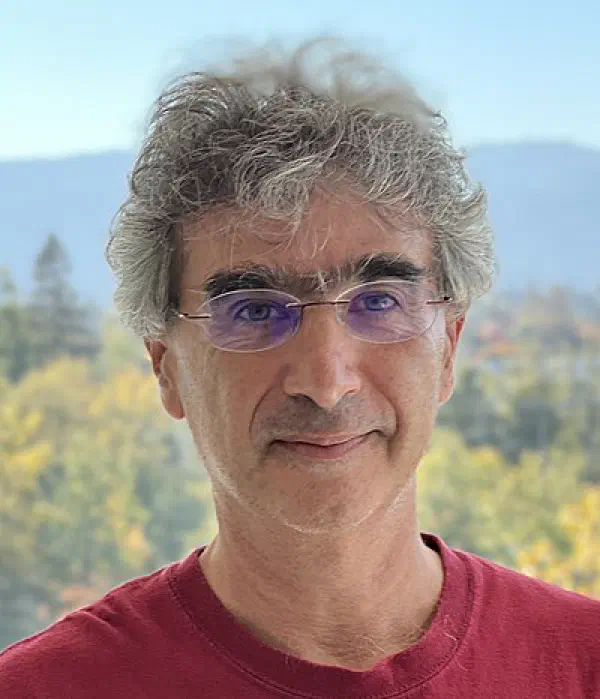
Samy Bengio
Profile
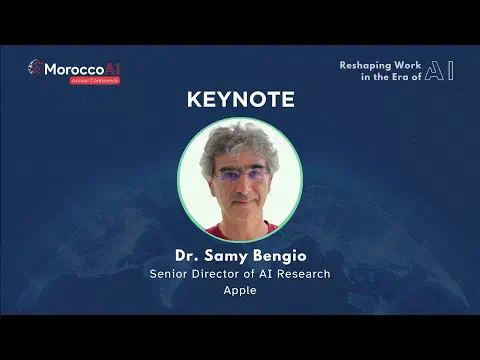
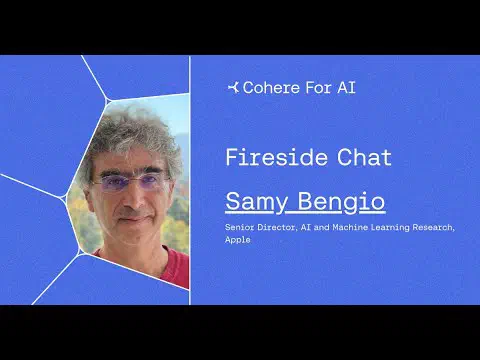
Samy Bengio is one of those researchers whose fingerprints are all over the tools you use without ever seeing his name in the changelog. Since 2021 he has been Senior Director of AI and Machine Learning Research at Apple, where he oversees the science behind machine learning that ships to more than a billion devices. But developers should know him for something older and more foundational: back in the early 2000s at Switzerland’s IDIAP Research Institute, he was a co-author of Torch, the open-source scientific computing framework that became the direct ancestor of PyTorch. If you have ever written import torch, you are working in a lineage he helped start.
He is also, unavoidably, a Bengio — the younger brother of Yoshua Bengio, one of the three “godfathers” of deep learning. Samy has built a large and independent body of work in his own right. He earned his PhD from the Université de Montréal in 1993, spent nearly a decade at IDIAP and EPFL, then joined Google in 2007, where he rose to lead a major slice of Google Brain. There he helped drive some of the defining papers of the deep learning era: neural image captioning with Oriol Vinyals (“Show and Tell”), sequence-to-sequence modeling for sets, and the landmark “Understanding deep learning requires rethinking generalization,” which won ICLR’s best paper award in 2017 and forced the field to admit it didn’t actually know why over-parameterized networks generalize. His work spans representation learning, adversarial robustness, and sequence processing — with roughly 250 papers and citation counts north of 100,000.
His exit from Google in 2021 was not quiet. Bengio managed the research group that included Timnit Gebru and Margaret Mitchell, and after Google forced both of them out in the fallout over the “Stochastic Parrots” paper, he said he was “stunned” — and left for Apple. For developers, this matters as a reminder that the AI ethics fights of the early 2020s reached deep into the leadership of the biggest labs, and that senior scientists took sides with their feet.
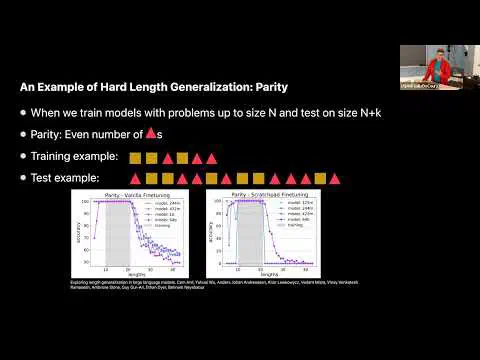
At Apple, Bengio’s team has become one of the more interesting skeptical voices in the reasoning-model hype cycle. Under his direction, Apple published “GSM-Symbolic” and the widely-debated “The Illusion of Thinking,” papers arguing that large “reasoning” models may be pattern-matching more than genuinely reasoning, with accuracy collapsing as problem complexity scales. Whether you agree or not, this is the useful kind of research to follow: it stress-tests the claims everyone else is making in marketing decks. For anyone learning AI today, Bengio is a model of the career researcher — less a personality, more a through-line connecting Torch, Google Brain, and Apple’s contrarian take on what today’s models can and can’t do.
Key Articles & Papers
Understanding Deep Learning Requires Rethinking Generalization Show and Tell: A Neural Image Caption Generator The Illusion of Thinking: Understanding the Strengths and Limitations of Reasoning Models GSM-Symbolic: Understanding the Limitations of Mathematical Reasoning in LLMs Order Matters: Sequence to Sequence for SetsVideos
Controversies
Bengio’s 2021 departure from Google was tied to the company’s controversial firings of AI ethics co-leads Timnit Gebru and Margaret Mitchell, who reported into his organization. He publicly stated he was “stunned” by Gebru’s treatment and left for Apple shortly after (AI Business). Separately, Apple’s “Illusion of Thinking” paper, produced under his direction, drew heavy debate — with critics arguing its puzzle-based benchmarks conflated output-length limits with genuine reasoning failure (arXiv). Both are scientific and professional disputes rather than personal misconduct.
Spotify Podcasts
YouTube