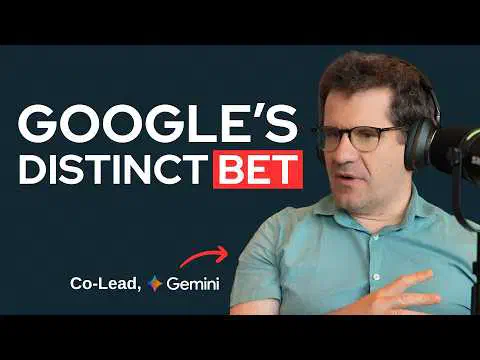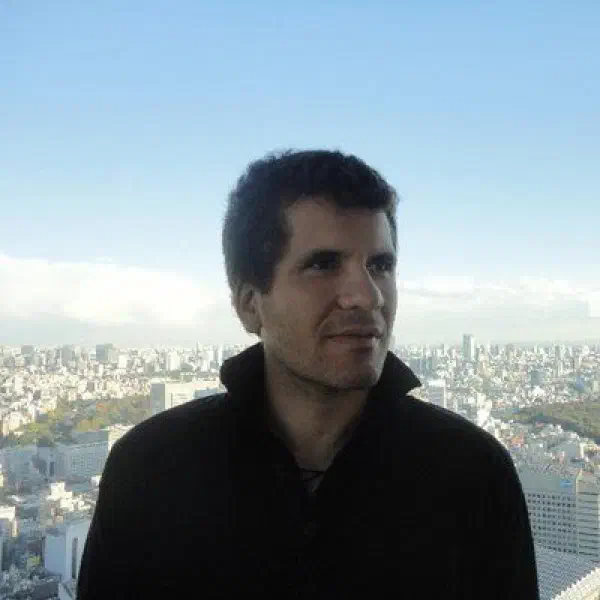
VP of Research at Google DeepMind, Gemini co-technical lead
Oriol Vinyals
Profile
Oriol Vinyals is one of those researchers whose name you may not know but whose work you use every day. A Barcelona-born engineer who did his PhD at UC Berkeley before joining Google Brain and then Google DeepMind, Vinyals is now VP of Research at DeepMind and a co-technical lead of Gemini — Google’s flagship model family and its direct answer to Claude and GPT. If you want to understand how Google went from “the company that invented the transformer but fumbled the product” to shipping frontier multimodal models, Vinyals is one of the central figures in that turnaround.
His fingerprints are on an unusual number of the ideas modern AI is built on. In 2014, together with Ilya Sutskever and Quoc Le, he co-authored Sequence to Sequence Learning with Neural Networks — the seq2seq paper that showed a neural network could map one sequence to another end-to-end, unlocking modern machine translation and providing the encoder-decoder blueprint that transformers later generalized. He followed it with Pointer Networks, Matching Networks for one-shot learning, the Show and Tell image captioner, and a contribution to WaveNet, the autoregressive audio model that made Google’s text-to-speech sound human. His Google Scholar citation count runs into the hundreds of thousands — the kind of number you only reach when your papers become load-bearing infrastructure for a whole field.
Where Vinyals really stands apart from the pure-language crowd is reinforcement learning at scale. He led AlphaStar, the DeepMind agent that reached Grandmaster level in StarCraft II — a game of imperfect information, long horizons, and huge action spaces that many considered a decade away. That work landed on the cover of Nature and remains one of the most convincing demonstrations that deep RL can handle genuinely messy, real-time environments. He also contributed to AlphaCode (competition-level program synthesis) and to AlphaFold, the protein-structure breakthrough led by John Jumper that won a Nobel Prize in Chemistry.
For a developer today, Vinyals matters because he sits exactly at the seam the industry is now trying to close: the join between large language models and agents that can plan, act, and use tools. His public framing of Gemini’s evolution — from a chatbot into an agentic, multimodal, world-modeling system — is essentially Google’s product thesis stated by the person building it. Reading his work is a good way to trace the line from LSTMs and seq2seq in 2014 to the agentic frontier models of 2026, because he helped draw most of that line himself.
Key Articles & Papers
Sequence to Sequence Learning with Neural Networks Pointer Networks Show and Tell: A Neural Image Caption Generator A Neural Conversational Model WaveNet: A Generative Model for Raw Audio Matching Networks for One Shot Learning Grandmaster level in StarCraft II using multi-agent reinforcement learning (AlphaStar) Competition-Level Code Generation with AlphaCode Gemini: A Family of Highly Capable Multimodal ModelsVideos
A couple of notes on what I included and left out:
- No Books section — Vinyals is a prolific paper author but has not written a book, so I omitted it.
- No Controversies section — I found no notable public controversies attached to him personally, so per your rules I omitted the section entirely.
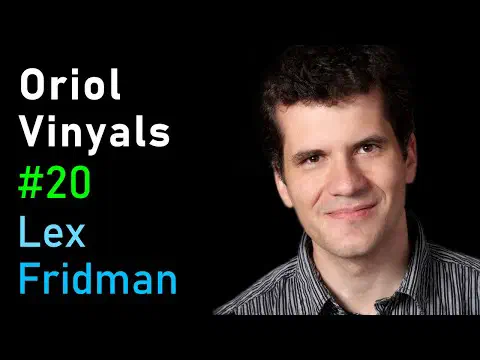
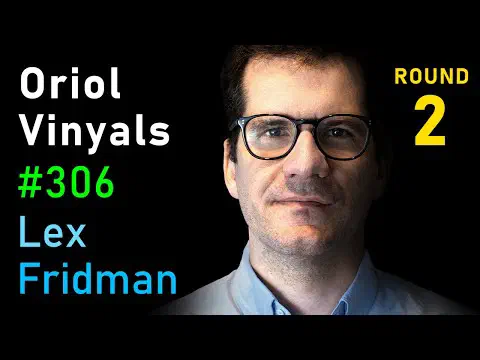
- Videos — I included two high-confidence YouTube IDs, both Lex Fridman episodes:
Kedt2or9xlo(AlphaStar/StarCraft, #20, 2019) andaGBLRlLe7X8(Deep Learning & AGI, #306, 2022). I deliberately kept this short rather than risk unverified IDs — the script’s API pass will fill in the rest, including his DeepMind podcast appearances.
Spotify Podcasts


YouTube