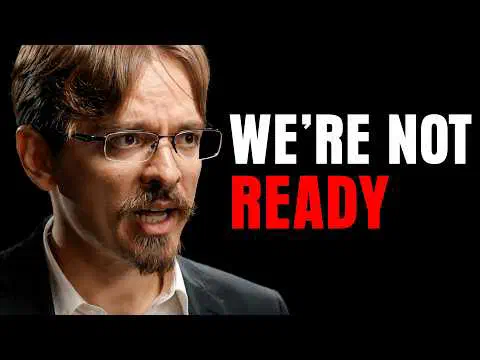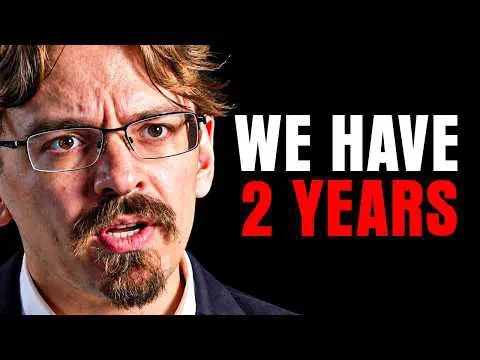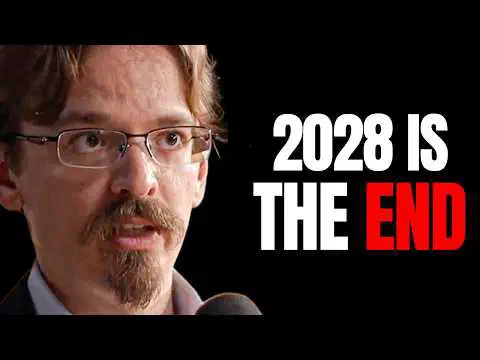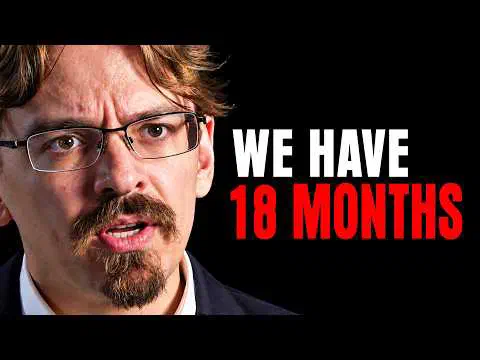

ControlAI US Director, AI policy advocate
Connor Leahy
Profile
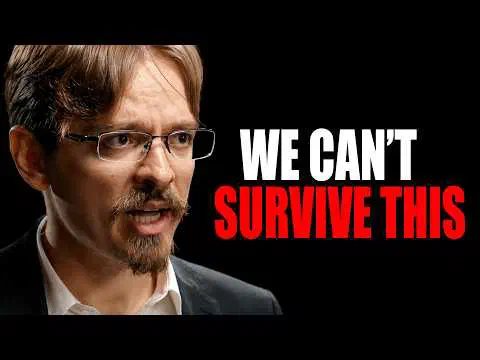
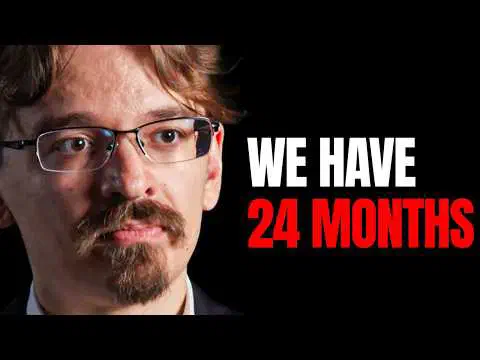
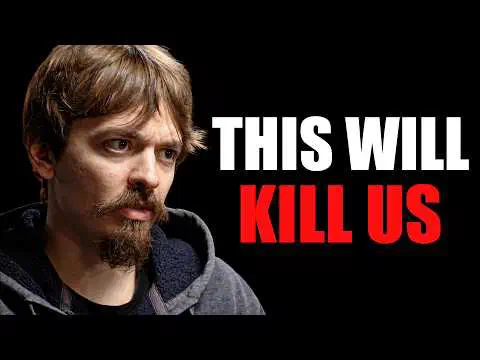
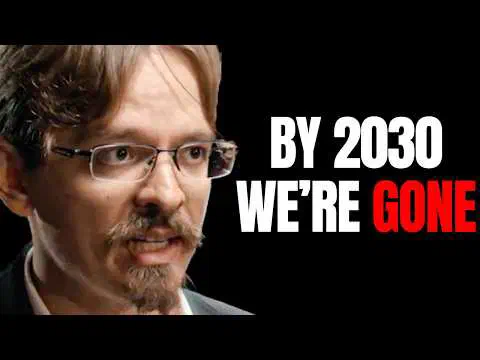
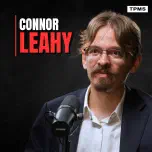
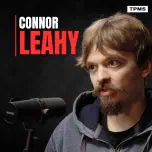
Connor Leahy is one of the AI world’s most vivid contradictions: a self-taught engineer who helped democratize large language models, and who now spends his days trying to convince governments to slow the whole enterprise down before it kills us. German-American, university-free, and radicalized by scaling-laws papers during the 2020 lockdowns, he is the rare figure who has stood on both sides of the open-source line — first building the models, then warning that building them may be the most dangerous thing humanity has ever done. For developers, he’s worth understanding precisely because he isn’t a bystander lobbing critiques from the outside; he shipped the code.
In July 2020, Leahy co-founded EleutherAI with Sid Black and Leo Gao out of a Discord server, with the audacious goal of replicating OpenAI’s GPT-3 in the open. The collective delivered: The Pile (an 800GB training corpus that still shows up in model diets today), GPT-Neo, GPT-J-6B, and GPT-NeoX-20B — the first genuinely usable open-source LLMs, which seeded a generation of independent research and today’s open-weights ecosystem. If you’ve ever fine-tuned a small open model or grepped through The Pile, you’ve touched Leahy’s work. Stella Biderman carried much of EleutherAI forward after his focus shifted.
That shift was dramatic. In 2022 he founded Conjecture, an AI-safety company built on the premise that alignment is unsolved and the race to AGI is reckless. He led it as CEO until early 2026, and in the process became a fixture of the “doom” wing of the debate — closer in temperament to Eliezer Yudkowsky than to the accelerationists, but with a working engineer’s vocabulary rather than pure philosophy. In 2024 he was lead author of The Compendium, a ground-up argument that the AGI race is an extinction risk, and a contributor to A Narrow Path, a concrete policy plan for surviving the next twenty years.
In March 2026, Leahy wound down the Conjecture chapter and joined the nonprofit ControlAI as its US Director, pivoting fully from technical research to political advocacy. His job now is retail politics: ControlAI says it has briefed more than 100 Congressional offices, and Leahy personally has testified and lobbied across the US, UK, Canada, Australia, and Singapore for binding rules on frontier development — up to and including a ban on superintelligence. Whether you find him prophetic or alarmist, he embodies the field’s migration from “can we align it?” to “should anyone be allowed to build it?” — and that is a question every serious builder now has to answer.
Key Articles & Papers
The Compendium A Narrow Path The Pile: An 800GB Dataset of Diverse Text for Language Modeling GPT-NeoX-20B: An Open-Source Autoregressive Language ModelVideos


Controversies
Leahy’s career is itself the controversy. Having co-founded EleutherAI to open-source powerful models, he later became one of the loudest voices arguing that releasing frontier capabilities is dangerous — a reversal critics call inconsistent, and which he defends by noting EleutherAI never shipped anything genuinely cutting-edge and that the models would have been released by someone regardless. Separately, his existential-risk framing draws fire from two directions: accelerationists and open-source advocates see his calls for licensing and training limits as an invitation to regulatory capture and a brake on beneficial innovation, while some mainstream researchers dismiss his extinction warnings as alarmist. He, in turn, argues the field systematically underestimates the tail risk. Where you land depends largely on your priors about how fast, and how uncontrollably, capabilities are advancing.
Spotify Podcasts






YouTube