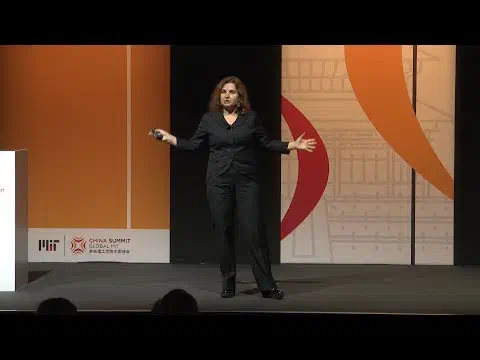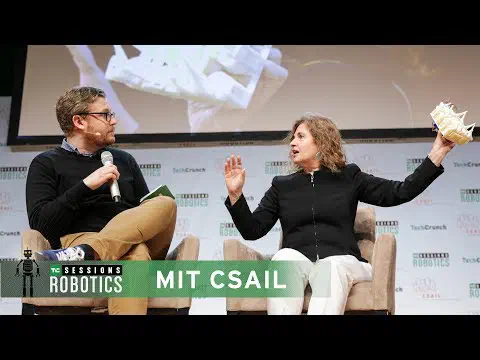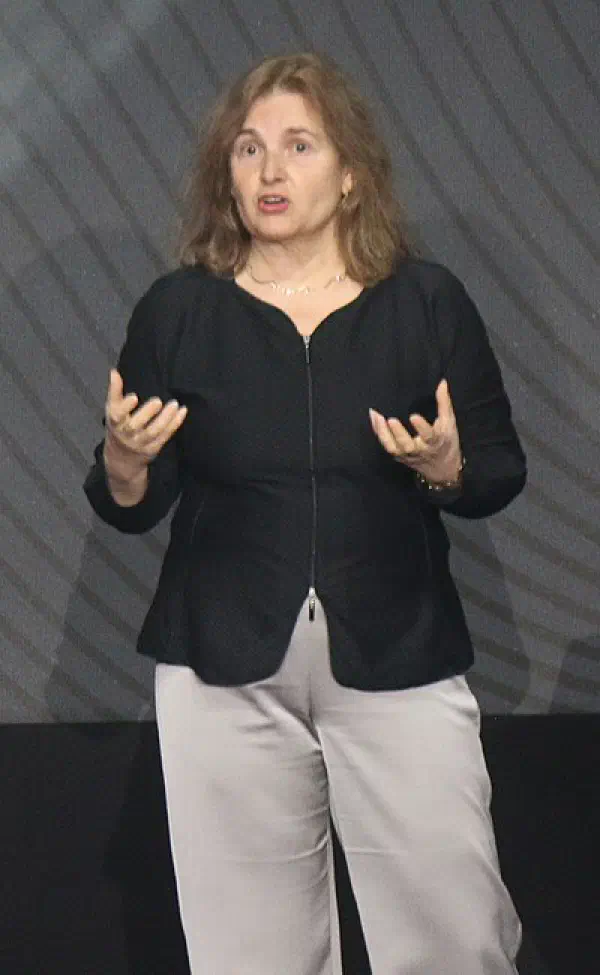
MIT CSAIL Director, roboticist and embodied AI researcher
Daniela Rus
Biographies
Profile
Daniela Rus runs MIT CSAIL — the Computer Science and Artificial Intelligence Laboratory, the largest research lab at MIT and, by most measures, the most consequential single address in academic computing. She has directed it since 2012, the first woman to hold the job, and she is the Andrew and Erna Viterbi Professor of Electrical Engineering and Computer Science (the Promethean directory lists her Panasonic chair; MIT’s current title is Viterbi). A Class of 2002 MacArthur “genius” Fellow, member of the National Academy of Engineering, and fellow of ACM, AAAI, and IEEE, she is one of the few people who can plausibly speak for the whole field of modern robotics.
What makes Rus worth a developer’s attention is that she works on the half of AI that most of the current LLM boom ignores: the body. Her three-decade research program is about embodied, physical intelligence — machines that reason, adapt, and act in the messy real world rather than predicting the next token in a chat window. She built her reputation on distributed and modular robotics (self-reconfiguring machines that shape-shift by rearranging their own parts) and then on soft robotics, where the hardware itself is compliant. Her lab’s greatest hits read like a museum of clever hardware: origami robots that fold themselves flat-to-functional and then dissolve, the M-Blocks self-assembling magnetic cubes with internal flywheels, and SoFi, a silicone robotic fish that swims among real reef fish without spooking them.
The reason she matters right now, though, is liquid neural networks. With her students Ramin Hasani, Mathias Lechner, and Alexander Amini, Rus developed a class of continuous-time networks whose neurons are governed by differential equations — models that stay adaptable after training, are dramatically smaller than transformer-scale networks (a car can be steered by a network of ~19 neurons), and are far more interpretable. That work spun out into Liquid AI, the startup she co-founded in 2023, which is now shipping “liquid foundation models” as an efficiency-first alternative to the giant-transformer orthodoxy. It’s a genuine bet against the “just scale it” consensus, and it comes from someone with the hardware chops to know why efficiency on-device actually matters.
She is also, increasingly, an establishment figure — and honestly earned it. She took the 2025 IEEE Edison Medal for “leadership and pioneering work in modern robotics” and the John Scott Award, and in January 2026 joined the board of directors of Gartner. If you want to understand where AI goes once it “steps off the screen” — her phrase — Rus is the clearest and most credible guide, precisely because she is neither a doomer nor a hype merchant. She thinks robots should be tools that augment people, and she has spent thirty years building the science to make that concrete rather than rhetorical.
Books
Key Articles & Papers
Liquid Time-constant Networks A method for building self-folding machines Exploration of underwater life with an acoustically controlled soft robotic fish (SoFi) M-Blocks: Momentum-driven, magnetic modular robotsVideos
Spotify Podcasts




YouTube