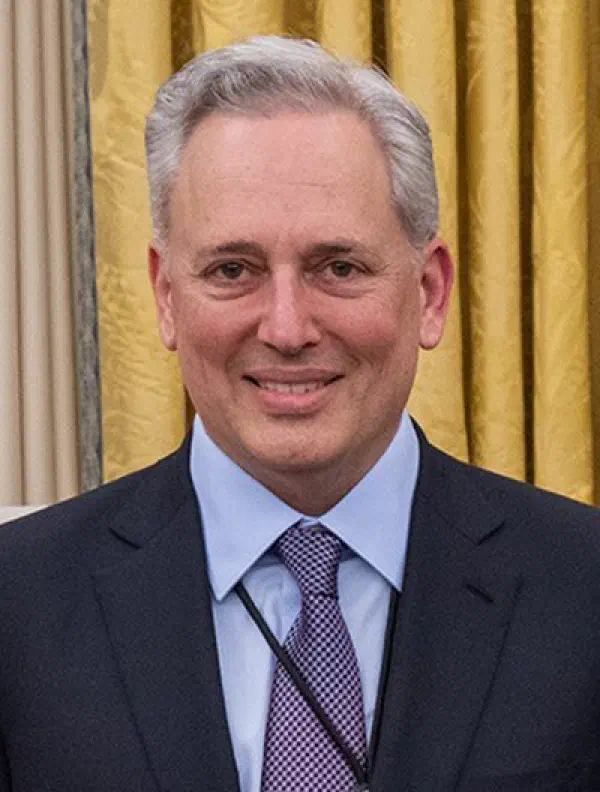
PCAST co-chair, Craft Ventures founder and investor
David Sacks
Biographies
Profile
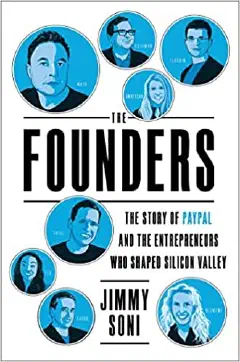
David Sacks is what happens when a Silicon Valley operator-investor gets handed the keys to US technology policy. A founding member of the “PayPal Mafia,” Sacks was chief operating officer of PayPal during its formative years alongside Peter Thiel, Elon Musk, and Reid Hoffman — the crew that seeded a generation of Silicon Valley companies. He went on to found the enterprise social network Yammer, which Microsoft bought for $1.2 billion in 2012, did a turbulent stint as interim CEO of the HR startup Zenefits, and in 2017 co-founded Craft Ventures, the venture firm he still runs as general partner.
For developers, Sacks matters less as a coder than as the person who codified how modern SaaS companies operate and get financed. His essays “The Cadence” and “The Burn Multiple” are close to required reading in startup circles — the former lays out a quarterly operating rhythm that synchronizes sales, finance, product, and marketing; the latter introduced a now-standard capital-efficiency metric (net burn divided by net new ARR) that VCs use to sanity-check growth. If you build an AI product and pitch investors, the vocabulary you’ll be graded on is partly Sacks’s invention. He’s also one of the four “besties” on the All-In podcast, which became one of the most-watched tech-and-politics shows during the AI boom.
In December 2024, President Trump named Sacks the White House “AI and crypto czar,” making him the administration’s chief liaison to Silicon Valley on the two technologies reshaping the decade. As a special government employee capped at 130 service days, he pushed a deregulatory, pro-acceleration agenda: loosening chip-export restrictions (he brokered a deal sending 500,000 Nvidia AI chips to the UAE), backing the GENIUS Act on stablecoins, and generally treating AI leadership as a national-security race the US must win rather than a risk to be throttled. He served through March 2026.
Sacks now co-chairs the President’s Council of Advisors on Science and Technology (PCAST) alongside OSTP director Michael Kratsios, advising on AI, semiconductors, quantum, and nuclear power — sharing a panel with figures like Jensen Huang and Mark Zuckerberg. The through-line worth understanding: Sacks simultaneously shapes federal AI policy and allocates private capital into AI startups through Craft. For anyone trying to read where American AI regulation and funding are heading, he’s one of the most consequential — and most contested — people to watch.
Books
Key Articles & Papers
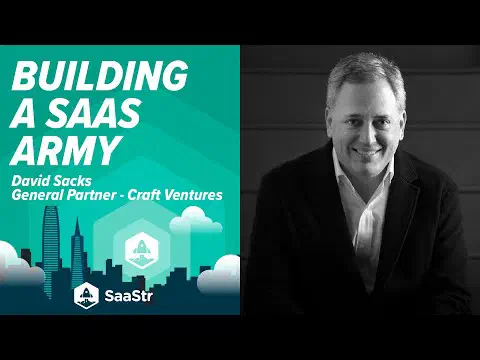
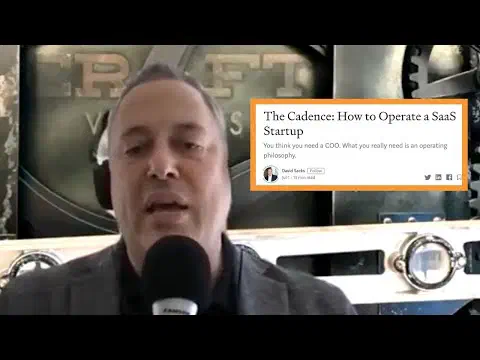
The Cadence: How to Operate a SaaS Startup The Burn Multiple Bottom Up (Substack)Videos
Controversies
-
Conflicts of interest as AI/crypto czar. A December 2025 New York Times investigation reported that Sacks retained roughly 700 tech investments — hundreds tied to AI and about 20 to crypto — while setting policy affecting those same sectors. Critics, including watchdog Public Citizen and NYU’s Stern Center, argued his ethics waivers gave him “carte blanche” to shape rules benefiting his own portfolio; a specific example cited was Craft’s stake in BitGo alongside his support for the stablecoin-regulating GENIUS Act. Sacks called the reporting a “nothing burger,” noted the Office of Government Ethics had approved his waivers, and said the claims “lacked evidence.” (NPR, SF Standard)
-
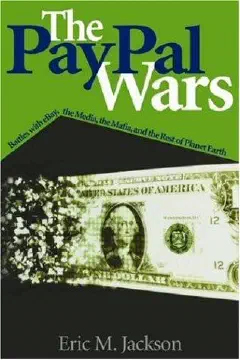
The Diversity Myth. His 1995 book with Peter Thiel drew renewed scrutiny during his government tenure for passages downplaying campus sexual-assault concerns and criticizing multiculturalism; Sacks has said some of the writing was youthful and that he no longer holds all of those views. (Wikipedia)
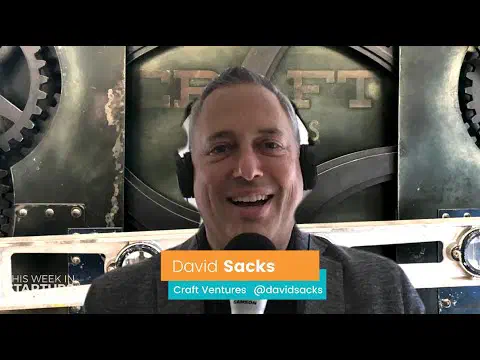
A note on the videos: I included three that surfaced directly as YouTube URLs in search results (the SaaStr/New New “Cadence” talk and two “Cadence” podcast episodes), but I could not independently confirm each 11-character ID resolves correctly. If any fail to load, drop them and let the script’s API-based lookup populate the section instead.
Spotify Podcasts
![David Sacks - How to Operate a SaaS Startup - [Invest Like the Best, EP. 234]](/images/people/david-sacks/spotify/39gJPLeWyHtQXtEI6o84Cd_hu_9241fa161d7eba94.webp)
YouTube