
Meta Superintelligence Labs researcher, reasoning pioneer
Jason Wei
Profile
Jason Wei is one of the clearest examples of how a single idea, at the right moment, can reshape a field. In early 2022, while a young researcher at Google Brain, he was lead author on “Chain-of-Thought Prompting Elicits Reasoning in Large Language Models” — the paper that showed you could dramatically improve an LLM’s reasoning simply by prompting it to think step by step before answering. It sounds almost trivially obvious in hindsight, which is exactly why it matters: chain-of-thought (CoT) is now baked into how nearly every modern reasoning model works, and the paper has become one of the most-cited works in contemporary AI. For developers, Wei’s fingerprints are on techniques you use every day, often without realizing it.
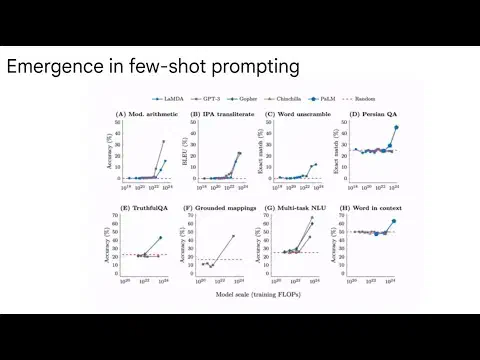
Wei’s Google Brain era was remarkably productive beyond CoT. He led the FLAN instruction-tuning work, which demonstrated that finetuning a model on a broad mix of instructions makes it far better at following prompts it has never seen — a direct ancestor of the instruction-following behavior in every chat model today. He also co-authored the influential (and somewhat contested) “Emergent Abilities of Large Language Models,” arguing that certain capabilities appear suddenly only past a scale threshold. Taken together, these papers form a coherent thesis: scale plus the right training and prompting recipe unlocks reasoning that smaller models simply cannot do.
In 2023 Wei moved to OpenAI, where he worked on reasoning and agents and became a contributor to the o1 series — the first widely deployed models to spend real inference-time compute “thinking” before responding. This is CoT taken to its logical conclusion: instead of prompting a model to reason, you train it to reason and let it run. He also helped build the deep-research capabilities and authored practical evaluations like SimpleQA, an adversarially-collected benchmark for short-form factuality that exposes how confidently models hallucinate. If you want to understand where the “reasoning model” wave came from, Wei sits at the center of both its academic origin and its productization.
In July 2025, Wei left OpenAI for Meta Superintelligence Labs — part of Mark Zuckerberg’s aggressive, deep-pocketed talent raid on rival labs — bringing longtime collaborator Hyung Won Chung with him. He’s still early-career by conventional measures, which is part of what makes him worth watching: he is not an elder statesman coasting on past work but an active researcher shaping the next generation of reasoning and multimodal systems. For anyone learning AI today, Wei is also unusually generous as a teacher — his whiteboard talks and blog posts on “intuitions” about why language models work are some of the best plain-language explanations available anywhere.
Key Articles & Papers
Chain-of-Thought Prompting Elicits Reasoning in Large Language Models Emergent Abilities of Large Language Models Finetuned Language Models Are Zero-Shot Learners (FLAN) Scaling Instruction-Finetuned Language Models SimpleQA: Measuring Short-Form Factuality in Language Models Six Intuitions About Large Language Models Easy Data Augmentation (EDA) for Text ClassificationVideos
YouTube