
Adjunct professor and policy advisor, former Deputy Secretary of Defense
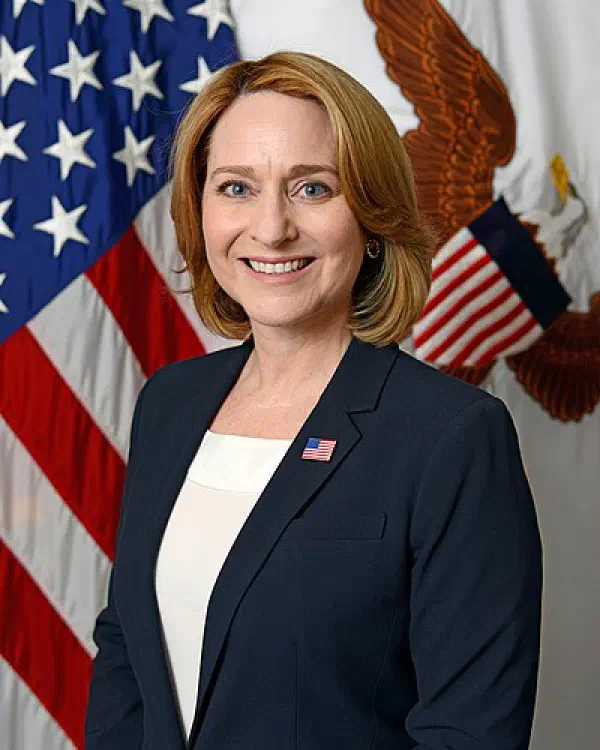
Kathleen Hicks
Profile
Kathleen Hicks is not a machine-learning researcher, and she has never shipped a model. But if you want to understand how autonomous AI is actually reaching the battlefield — at scale, on a deadline, inside the world’s largest bureaucracy — she is one of the most consequential figures of the decade. As the 35th U.S. Deputy Secretary of Defense (2021–2025), and the first Senate-confirmed woman to hold the job, Hicks ran the Pentagon’s day-to-day operations as its chief operating officer. Her signature act was launching Replicator, the initiative to field thousands of low-cost, “attritable” autonomous systems across air, land, sea, and software — explicitly to counter China’s advantage in sheer military mass.
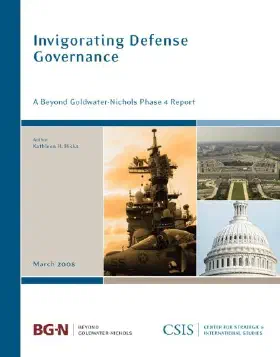
Hicks is a career defense strategist, not a technologist by training. She earned her Ph.D. in political science from MIT in 2010, rose through the civil service in the Office of the Secretary of Defense from 1993 to 2006, and helped author the 2010 Quadrennial Defense Review and the 2012 Defense Strategic Guidance. Between government tours she was senior vice president and Henry A. Kissinger Chair at the Center for Strategic and International Studies (CSIS), where she directed the International Security Program and built a reputation as one of Washington’s clearest thinkers on force planning and painful budget tradeoffs. That analyst’s discipline shows in how she framed Replicator: not as a moonshot, but as a forcing function to make an ossified acquisition system move at the speed of commercial software.
What makes Hicks matter to people building with AI is the problem she tried to solve — the gap between what’s technically possible and what a slow, risk-averse institution will actually buy and deploy. Replicator deliberately routed procurement through the Defense Innovation Unit and courted nontraditional vendors like Anduril (co-founded by Palmer Luckey) and Shield AI (co-founded by Brandon Tseng), betting that startups could out-iterate primes on autonomy and swarming. It is the clearest recent case study in the messy, unglamorous work of moving AI from demo to fielded capability — the software integration, the reliability testing, the coalition-building with Congress and industry.
Since leaving the Pentagon in January 2025, Hicks has moved into the think-and-teach lane: adjunct professor at Duke’s Sanford School of Public Policy, a fellow at Johns Hopkins’ Kissinger Center for Global Affairs, and an expert with the Chicago Council on Global Affairs. Expect her to remain a leading voice on autonomous systems, military innovation, and great-power competition — the policy scaffolding that will shape what kinds of AI the U.S. government funds, buys, and constrains.
Books


Key Articles & Papers
Unpacking the Replicator Initiative (Defense News Conference remarks) Keynote Address on Emerging Military Innovation Tech and the Replicator Initiative Additional Replicator All-Domain Attritable Autonomous Capabilities Defense Strategy and the Iron Triangle of Painful Tradeoffs Getting to Less? Exploring the Press for Less in America's Defense CommitmentsControversies
Replicator drew sustained skepticism, and it’s worth being honest about it. Members of Congress — including Rep. Mike Gallagher — publicly complained that the initiative was underspecified, with few concrete details about what was being bought or whether it duplicated existing programs. In August 2024, Hicks was compelled to defend the effort after Hill scrutiny, arguing it was on schedule (Breaking Defense). Reporting later surfaced real technical struggles: unreliable hardware, integration failures coordinating drones from different manufacturers, rudder failures on unmanned surface vessels, and communications vulnerabilities in some systems (Defense News). After Hicks departed, questions grew about whether the program would survive the transition and deliver at the promised scale (Asia Times). Supporters counter that Replicator’s real achievement was cultural — forcing the Pentagon to buy autonomy faster — and that judging a two-year sprint solely on delivery counts misses the point. The verdict is genuinely still open.
Spotify Podcasts