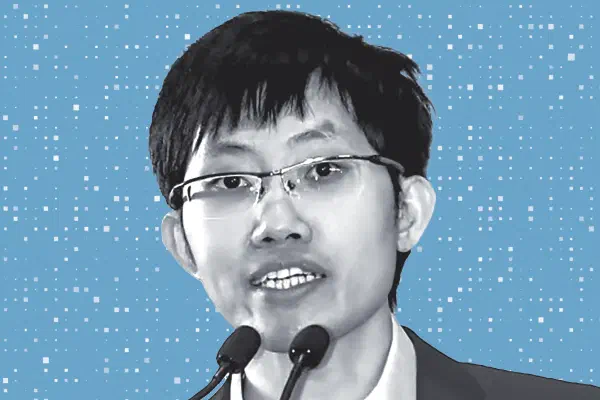
DeepSeek founder and CEO, Chinese AI innovator
Liang Wenfeng
Profile
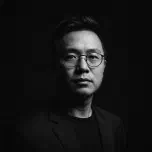
Liang Wenfeng is the rarest kind of AI founder: one who reshaped the industry’s economics while barely showing his face. Born in 1985 in Zhanjiang, a modest city in Guangdong province, to two primary-school teachers, he showed an early gift for mathematics, enrolled at Zhejiang University at 17, and left with degrees in electronic and information engineering — already writing AI-driven algorithms for stock selection as a student. That thread — math plus machine learning applied to hard problems — runs through everything he has built. In 2015 he co-founded High-Flyer, a quantitative hedge fund that used deep learning to trade Chinese equities and grew into one of the country’s largest quant shops, peaking near $14 billion in assets under management. Crucially, High-Flyer stockpiled thousands of NVIDIA GPUs for its trading models — a compute war chest that would later fund a very different ambition.
That ambition became DeepSeek, spun out in 2023 as a research lab first and a company second. Where most Chinese AI efforts raced to commercialize, Liang did the opposite: he hired young researchers straight out of top universities, pointed them at foundational problems, and told them to chase AGI rather than revenue. The bet paid off spectacularly in January 2025, when DeepSeek released DeepSeek-R1, an open-weight reasoning model that matched OpenAI’s o1 on major benchmarks. The detail that detonated across markets was the price: the base DeepSeek-V3 model reportedly cost around $5.6 million to train on export-restricted NVIDIA H800 chips — an order of magnitude cheaper than comparable Western runs — and the reinforcement-learning stage on top cost a fraction of that. NVIDIA shed hundreds of billions in market value in a single day, and the phrase “DeepSeek moment” entered the industry’s vocabulary.
For developers, this is why Liang matters more than most billionaires on any AI list. DeepSeek’s models ship as open weights under permissive licenses, are dramatically cheaper to run via API than closed frontier models, and forced the entire market to reprice. The technical contributions are real, not marketing: Multi-head Latent Attention, an efficient Mixture-of-Experts architecture, the DualPipe parallelism trick to squeeze around H800 bandwidth limits, and a demonstration that reasoning ability can emerge from pure RL. If you build with AI on a budget, you have likely benefited from the price pressure DeepSeek created — whether or not you run its models directly. Liang’s stated philosophy is that the gap between China and Silicon Valley is “originality versus imitation,” and that the real moat is confidence to try things others haven’t. He backs it with an unusually open research culture, publishing papers and weights that rivals like Sam Altman’s OpenAI increasingly keep locked away.
Where is he now? Deliberately out of sight. Liang has given only a handful of interviews (mostly to Chinese outlet Waves/36Kr), and his most visible public moment was a February 2025 televised meeting where Xi Jinping gathered China’s top tech founders — placing DeepSeek’s low-key founder alongside figures like Robin Li and Kai-Fu Lee in the front rank of Chinese tech. He remains CEO of both DeepSeek and High-Flyer, reportedly reinvesting hedge-fund profits into research rather than chasing outside venture money — a founder who seems genuinely more interested in advancing the frontier than in owning it.
Key Articles & Papers
DeepSeek-R1: Incentivizing Reasoning Capability in LLMs via Reinforcement Learning DeepSeek-V3 Technical Report Interview: 'We're Done Following. It's Time to Lead.' DeepSeek: From Hedge Fund to Frontier Model Maker Who Is Behind DeepSeek? What To Know About Founder Liang WenfengControversies
Distillation and IP allegations. OpenAI has publicly claimed that DeepSeek may have used “distillation” — training on outputs of OpenAI models — to build R1, and has lobbied US lawmakers to treat DeepSeek as a state-linked, “PRC-produced” model. DeepSeek denies intentionally training on OpenAI outputs, and the Chinese side has rejected the IP-theft framing. The technical merits remain disputed and unproven; distillation across models is also common industry practice, which complicates the accusation. (NBC News)
Censorship and data concerns. DeepSeek’s consumer chatbot censors topics sensitive to the Chinese government, such as Tiananmen and Taiwan — a real limitation for the hosted service (though open weights can be run and fine-tuned independently). Over data-handling and privacy questions, several governments restricted the app on official devices in early 2025, including Taiwan, Australia, and multiple US agencies, and Italy’s regulator blocked it after rejecting DeepSeek’s GDPR stance. These are meaningful caveats for anyone deploying the hosted product; they say less about the open weights themselves.
Spotify Podcasts







YouTube