
Baidu CEO, leading China's AI with ERNIE 5.0
Robin Li
Biographies
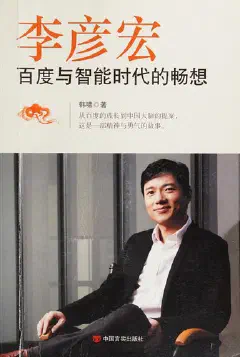
Profile
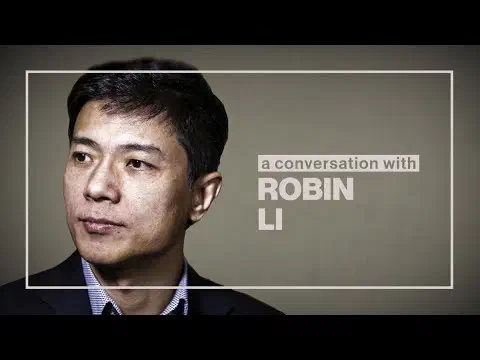
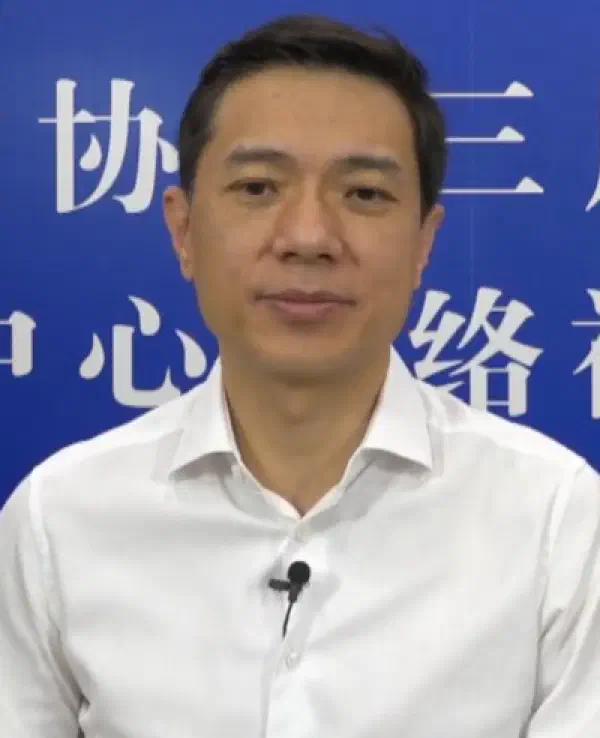
Robin Li — born Li Yanhong in Yangquan, Shanxi Province in 1968 — is one of the few people in AI who can claim to have shipped a piece of the foundational plumbing before the field was cool. In 1996, while working at IDD Information Services (a Dow Jones division) and later at Infoseek, he built RankDex, a site-scoring algorithm that ranked search results by counting inbound links. Larry Page’s 1998 PageRank patent cites Li’s work. That’s not trivia: it means the link-analysis idea that powered Google had a parallel inventor who went home to China and built the search engine that beat Google there. In 2000 he co-founded Baidu with Eric Xu, took it to NASDAQ in 2005, and grew it into the dominant Chinese search engine with north of 80% query share.
For developers, the reason Li matters now is not search — it’s that he bet the company on deep learning roughly a decade before it was consensus, and that bet is finally paying out in the open. Baidu’s ERNIE model series is China’s most credible answer to the GPT lineage, and Li has steered it aggressively: ERNIE 4.5 shipped in March 2025, the whole company made ERNIE Bot free on April 1, and — in a genuine strategic reversal — Baidu open-sourced the full ERNIE 4.5 family (ten models, including a multimodal mixture-of-experts architecture) on Hugging Face, GitHub, and its own PaddlePaddle ecosystem on June 30, 2025. Li had spent years as a vocal skeptic of open-source AI; the pivot came after DeepSeek (from Liang Wenfeng) proved that open weights buy attention and adoption faster than a walled garden. Watching Li change his mind in public is instructive for anyone trying to read where Chinese AI is heading.
At Baidu World 2025 (November 13), Li unveiled ERNIE 5.0, a natively omni-modal foundation model that jointly trains on text, images, audio, and video rather than bolting modalities together after the fact. Alongside it came a real-time digital human, the Miaoda 2.0 no-code app builder, a rebuilt Baidu Search, and the GenFlow 3.0 general agent. Baidu’s pitch is full-stack: models, the homegrown Kunlunxin M100 and M300 AI chips (slated for 2026 and 2027), cloud, and applications under one roof — a vertically integrated hedge against U.S. export controls on Nvidia silicon. ERNIE Assistant reached 202 million monthly active users by December 2025. Li’s framing at the event — “when you internalize AI, it becomes a native capability and transforms intelligence from a cost into a source of productivity” — captures his thesis that agents, not chatbots, are the real product, and that iteration speed is “the only competitive moat.”
For a developer or a student trying to understand how AI diverges between East and West, Li is essential reading precisely because he is not Sam Altman or Kai-Fu Lee. He runs a full-stack incumbent operating under Chinese regulation, competing on price and vertical integration rather than pure frontier bragging rights, and increasingly winning developer mindshare by giving weights away. His track record is uneven — Baidu has been slow before, and has paid real reputational costs — but the man has been right about deep learning for longer than almost any other big-company CEO. Take his roadmap seriously.
Books
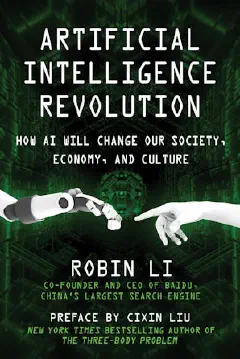
Key Articles & Papers
Baidu Unveils ERNIE 5.0 and a Series of AI Applications at Baidu World 2025 Baidu open-sources ERNIE 4.5 series models, including multimodal MoE architecture Baidu's Robin Li on China's Push to Diffuse AI Throughout Society (TIME interview) Baidu CEO defends heavy AI investments as competition heats up Innovation Can't Be Planned, Baidu's Robin Li Says on DeepSeek Baidu Launches ERNIE 4.5 Turbo and ERNIE X1 TurboControversies
The Wei Zexi tragedy (2016). A 21-year-old student died after pursuing an unproven cancer treatment he found through a paid Baidu search listing. The case triggered national outrage and a government investigation; regulators accused Baidu of prioritizing ad revenue over user safety and forced an overhaul of its advertising and medical-promotion practices. Li apologized publicly, but it remains the deepest scar on Baidu’s reputation. (Wikipedia)
Censorship and privacy. As a Chinese platform, Baidu operates within state content controls. A 2009 leak of internal documents exposed the search engine’s censorship guidelines and blocked-topic lists — a reminder that ERNIE and Baidu Search operate under regulatory constraints that Western developers should weigh when comparing models. (China Digital Times, via Wikipedia)
The open-source flip-flop. Li spent years publicly arguing that closed models were the superior path and that open source was overrated, then reversed course and open-sourced ERNIE 4.5 in 2025 once DeepSeek proved otherwise. Critics read it as reactive rather than principled; supporters call it pragmatic. Either way, it’s a case study in how competitive pressure, not conviction, is driving China’s open-weight movement.
Spotify Podcasts





YouTube