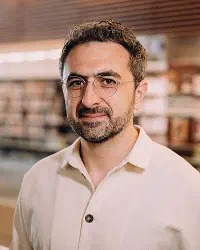
Microsoft superintendent engineer, DeepMind and Inflection co-founder
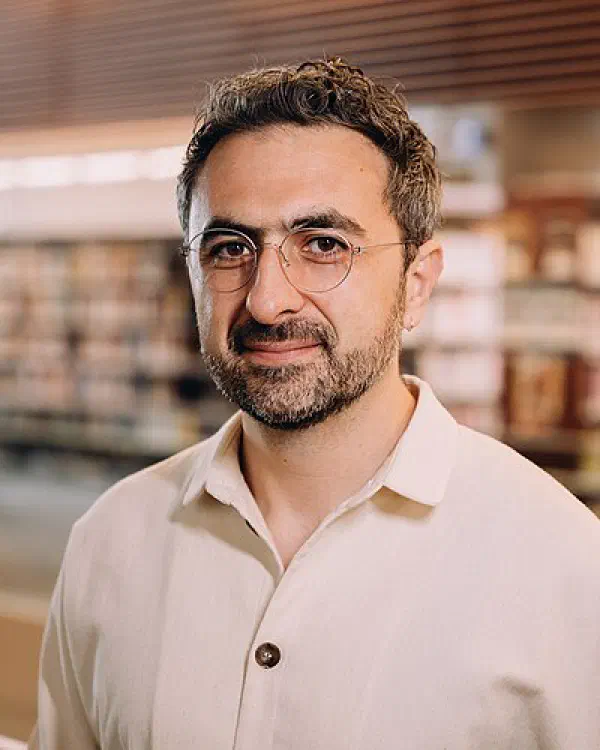
Mustafa Suleyman
Profile
Mustafa Suleyman is one of the very few people who has sat at the center of three separate epochs of modern AI — and he has done it without ever being the researcher writing the math. Born in London to a Syrian taxi-driver father and an English nurse, he dropped out of Oxford, ran a Muslim youth helpline, and worked in conflict resolution before co-founding DeepMind in 2010 with Demis Hassabis and Shane Legg. At DeepMind — acquired by Google in 2014 — Suleyman was the “applied” third of the founding trio, the one focused on real-world deployment, ethics, and the DeepMind Health efforts, while the labs produced landmarks like AlphaGo. For developers, that’s the useful frame: Suleyman has always been the product-and-policy person in rooms full of researchers, and his career is a running argument that shipping AI safely is its own discipline.
After a 2019 exit from DeepMind that was not entirely graceful (see below), he did a stint as Google’s VP of AI product, then left in 2022 to co-found Inflection AI with Reid Hoffman and Karén Simonyan. Inflection’s bet was a personal AI — a chatbot called Pi, tuned for empathy, patience, and emotional support rather than raw benchmark performance. It was a genuinely different product thesis, and it raised money at a $4 billion valuation. Then in March 2024 came one of the most-watched deals of the AI era: Microsoft paid roughly $650 million in a licensing-and-acqui-hire arrangement that vacuumed up Suleyman, Simonyan, and most of Inflection’s team, leaving the shell of the company behind. Suleyman became CEO of the newly created Microsoft AI division.
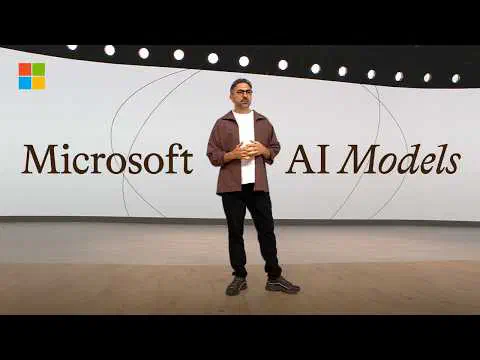
That role has since become far more consequential than “the guy who runs Copilot.” In November 2025 Microsoft formed a MAI Superintelligence Team under Suleyman, and a renegotiated contract with OpenAI — Microsoft’s longtime partner and, effectively, its model supplier — freed the division to pursue frontier models with its own researchers, data, and custom silicon. As Suleyman put it, Microsoft was “only sort of set free from our contract with OpenAI about six months ago to formally pursue superintelligence.” At Build 2026 he unveiled seven in-house MAI models spanning image, voice, transcription, reasoning, and coding — the “building blocks,” in his framing, of what he calls Humanist Superintelligence: AI explicitly designed to serve people rather than replace them, and pointedly not aimed at autonomous, self-improving agents.
For anyone building with AI today, Suleyman matters as the person defining how the world’s largest software company approaches AGI — and as one of the field’s most quotable, most contested public voices. He’s a techno-optimist who wrote the definitive book on why the technology needs containment; a superintelligence-builder who warns that “seemingly conscious” AI could arrive within two to three years and destabilize society; a leader who predicts AI will automate most desk-based professional work within 18 months. Whether you find him prophetic or a marketer of inevitability, his framing — the “containment problem,” AI as a “new digital species,” the risks of AI that merely seems conscious — has shaped how a mainstream audience talks about all of this.
Books
Key Articles & Papers
Seemingly Conscious AI Is Coming Seemingly Conscious AI Is Coming (Project Syndicate) What Is an AI Anyway?Videos
Controversies
DeepMind bullying allegations (2019). Suleyman was placed on administrative leave from DeepMind in 2019 after multiple employees filed complaints alleging verbal harassment, bullying, and public humiliation. Google commissioned an external investigation that substantiated some claims; Suleyman later apologized, admitting his “very emotional” management style had at times crossed into unprofessional conduct. He moved to a Google role shortly afterward. (Wikipedia)
The Inflection acqui-hire. Microsoft’s ~$650M deal to license Inflection’s tech and hire nearly its entire team — while leaving the company itself intact — drew scrutiny as a template for “acqui-hires” that sidestep formal M&A antitrust review, and reinforced worries about AI talent and power concentrating inside a handful of incumbents. (VentureBeat)
Consciousness and “AI rights.” Suleyman’s insistence that only biological beings can be conscious — and that studying AI welfare or consciousness is “dangerous” and premature — has put him at odds with researchers who think the question deserves serious study, making him a lightning rod in the AI-consciousness debate. (CNBC)
Spotify Podcasts

YouTube