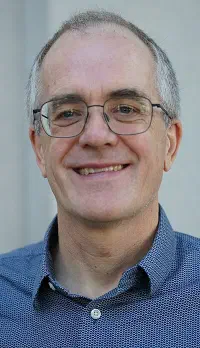
Stanford NLP pioneer, SAIL director, Siebel Professor
Chris Manning
Profile
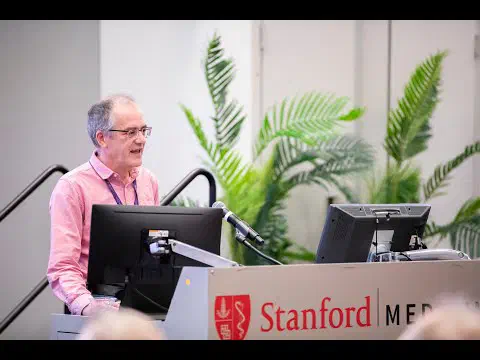
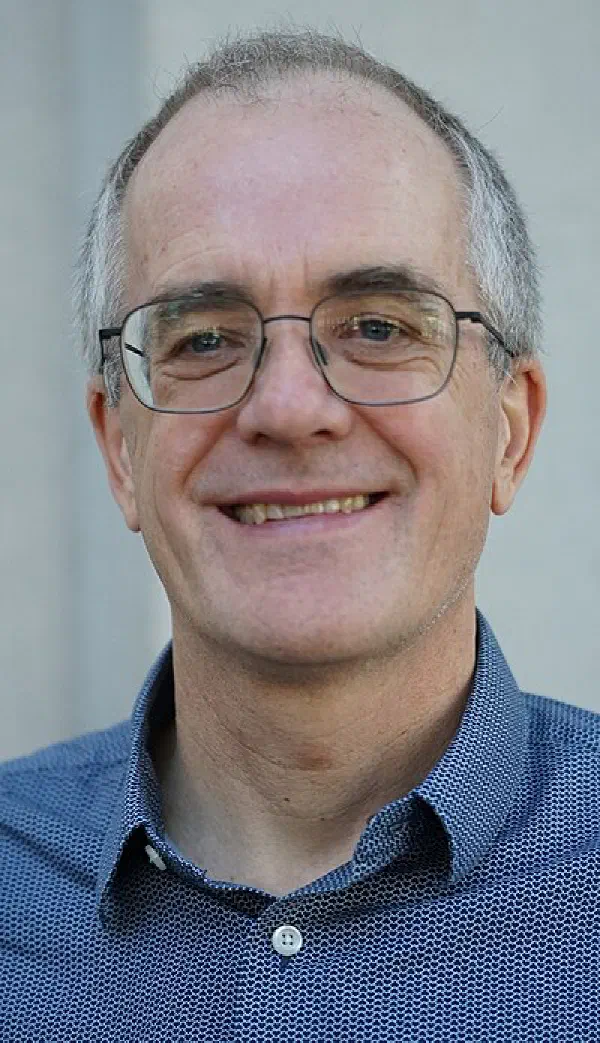
If you have studied natural language processing in the last twenty years, you have almost certainly learned it — directly or at one remove — from Christopher Manning. An Australian-American computer scientist and linguist who earned his PhD at Stanford in 1994, Manning is the inaugural Thomas M. Siebel Professor in Machine Learning, jointly appointed in Linguistics and Computer Science. He co-founded the Stanford NLP Group, directed the Stanford Artificial Intelligence Laboratory (SAIL) from 2018 (succeeding Fei-Fei Li), and serves as an associate director of the Stanford Institute for Human-Centered AI (HAI). In 2025 he was elected to the National Academy of Engineering for the development and dissemination of NLP methods — the kind of recognition that arrives after your ideas have already become other people’s assumptions.
What makes Manning matter to a working developer is less any single model than the throughline of his career: he sat squarely on the seam between old-school computational linguistics and the deep-learning wave, and he was one of the researchers who actually connected them. His group produced GloVe (with Richard Socher and Jeffrey Pennington), the word-embedding method that, alongside word2vec, taught a generation what “words as vectors” means. His lab shipped attention-based neural machine translation, the Stanford Sentiment Treebank, tree-recursive networks, dependency parsers, and reading-comprehension datasets — plus Stanford CoreNLP, the Java toolkit that for years was the default way to actually run NLP in production. He also co-authored ELECTRA, a genuinely clever pre-training scheme that got BERT-quality representations at a fraction of the compute.
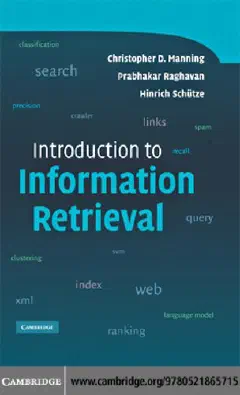
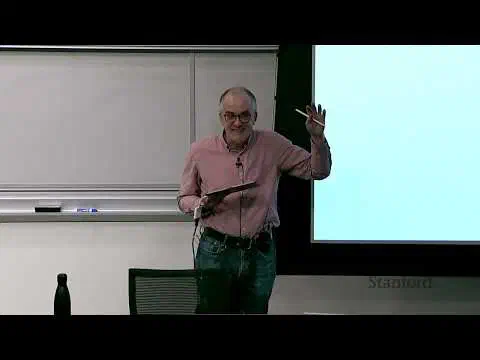
But Manning’s largest footprint is pedagogical. His textbooks — Foundations of Statistical Natural Language Processing and Introduction to Information Retrieval — were the field’s standard references for a decade-plus, and his Stanford course CS224N: Natural Language Processing with Deep Learning is, with the lectures free on YouTube, one of the most-watched NLP courses in existence. Students and collaborators from his orbit — Andrej Karpathy, Percy Liang, Richard Socher, and many now leading AI labs — carry his fingerprints. If you have written import glove, tuned an attention layer, or watched a Stanford lecture to understand transformers, you have been taught by Manning whether you knew it or not.
Where does he land today? Manning is a measured skeptic of the loudest LLM triumphalism without being a dismisser — a linguist who takes structure, meaning, and interpretability seriously, and who has argued (with work like the “structural probe”) that large models learn real syntactic structure from raw text. In an era of OpenAI-scale hype, he is a useful counterweight: someone who has spent thirty years asking what these systems actually understand, and who built much of the ladder the current models climbed.
Books
Key Articles & Papers
GloVe: Global Vectors for Word Representation Effective Approaches to Attention-based Neural Machine Translation ELECTRA: Pre-training Text Encoders as Discriminators Rather Than Generators Recursive Deep Models for Semantic Compositionality over a Sentiment Treebank The Stanford CoreNLP Natural Language Processing Toolkit Get To The Point: Summarization with Pointer-Generator Networks A Structural Probe for Finding Syntax in Word Representations Emergent linguistic structure in artificial neural networks trained by self-supervision Deep Biaffine Attention for Neural Dependency ParsingVideos
Spotify Podcasts

YouTube