
Answer.AI founding CEO, created fast.ai and ULMFiT
Jeremy Howard
Profile
Jeremy Howard has spent two decades doing the same thing over and over: taking something that supposedly requires a PhD and a data center, and proving it can be done by a competent programmer with a laptop and a weekend. He was the top-ranked competitor on Kaggle globally before becoming its president and chief scientist; he founded Enlitic, one of the first companies to apply deep learning to medical imaging; and before any of that he built FastMail and the insurance-pricing firm Optimal Decisions Group. But for most developers, he’s the fast.ai guy — the Australian with the whiteboard-and-Jupyter energy who told you to train a model in lesson one and learn the calculus later.
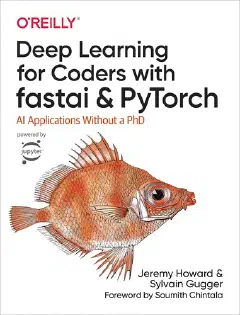
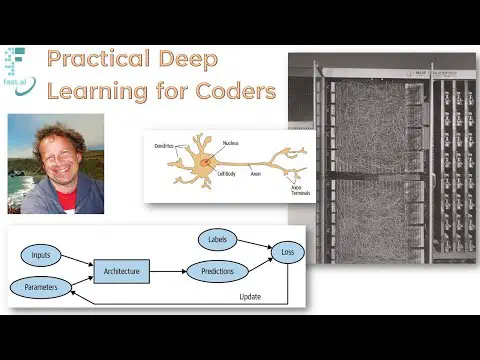
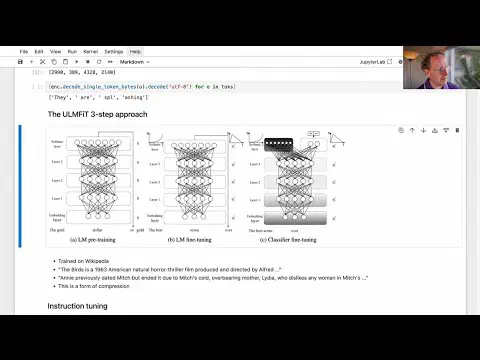
That inversion is the actual contribution. fast.ai, which he founded in 2016 with Rachel Thomas, taught deep learning top-down and code-first at a time when every other course started with matrix calculus and made you wait six weeks to touch a GPU. The accompanying fastai library layered sane defaults over PyTorch, and Practical Deep Learning for Coders has run through free public iterations for nearly a decade. Alongside Andrej Karpathy’s later work, it’s the closest thing the field has to a canonical on-ramp. The research side landed just as hard: ULMFiT, published with Sebastian Ruder in 2018, showed that you could pretrain a language model on a general corpus and fine-tune it for any downstream NLP task — the pretrain-then-finetune recipe that GPT and everything after it runs on. Howard is fairly blunt that the industry adopted his method and forgot to cite the paper, and he’s not wrong.
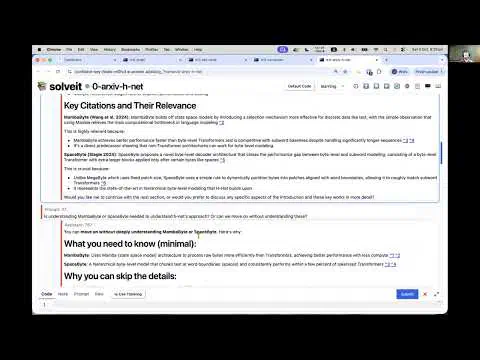
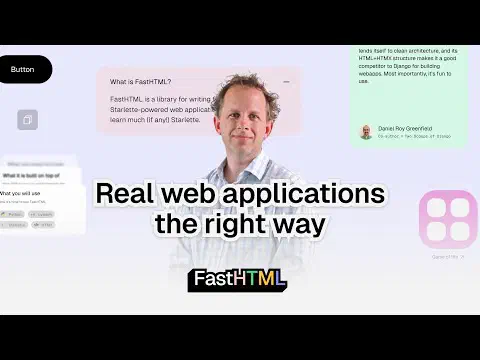
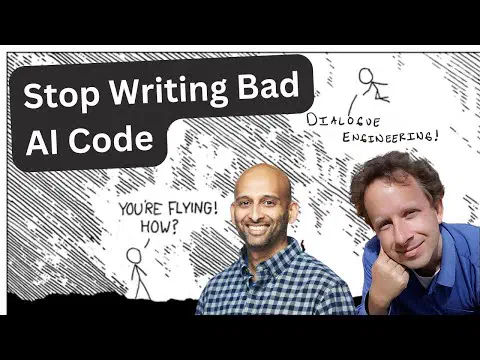
Today he’s founding CEO of Answer.AI, the R&D lab he started in 2023 with Eric Ries of The Lean Startup. Its thesis is deliberately contrarian for the era: stay tiny (roughly a dozen people, no managers), stay open source, and ship end-user products directly out of research rather than publishing and hoping someone commercializes it. The output is unusually good for the headcount. FSDP+QLoRA made 70B-parameter fine-tuning work on two consumer gaming GPUs. ModernBERT dragged the encoder-only architecture into 2024 and is now a default choice for retrieval and classification work where a generative model is overkill. FastHTML lets you write interactive web apps in pure Python. In 2024 fast.ai folded into Answer.AI, and the education arm became Solveit — a course and platform built around what Howard calls “dialogue engineering”: working with a model in small, verified steps rather than accepting a thousand-line dump.
For a developer learning AI right now, Howard is worth following less for predictions than for calibration. He is loudly bearish on the current agent hype and on vibe coding — his line is that it’s a slot machine that gives you the illusion of control, and that outsourcing your thinking wholesale means you stop becoming a more competent engineer. He backs this with data rather than vibes; Answer.AI’s March 2026 post on PyPI package creation rates is a fair example of him asking, in public, where the promised productivity explosion actually shows up. Take the skepticism seriously, but note the man’s incentives: his whole career is a bet that individual practitioners with small models and real understanding matter more than scale. He may be right. He is also not a neutral party.
Books
Key Articles & Papers
Universal Language Model Fine-tuning for Text Classification (ULMFiT) Introducing state of the art text classification with universal language models Smarter, Better, Faster, Longer: ModernBERT You can now train a 70b language model at home AI Safety and the Age of Dislightenment SB-1047 will stifle open-source AI and decrease safety FastHTML: Modern web applications in pure Python Launching Solveit, the antidote to AI fatigue So where are all the AI apps? An evidence review of face masks against COVID-19Videos


Controversies
Opposition to frontier-model regulation. Howard is one of the most persistent critics of the AI-safety-driven regulatory agenda, and his opposition to California’s SB 1047 put him squarely against much of the alignment community. His argument is that liability attached to model development rather than deployment is unenforceable for open weights, and would effectively hand frontier AI to three or four large labs. Critics counter that “openness increases safety” is convenient reasoning from someone whose entire body of work depends on open release, and that it treats catastrophic-risk scenarios as unserious rather than engaging with them. Both readings are defensible; he engages with the disagreement in public rather than dismissing it.
ULMFiT attribution. Howard has repeatedly noted that the pretrain-and-fine-tune paradigm now credited broadly to later transformer papers was demonstrated in ULMFiT first. This is largely accurate on the record, though some researchers see the framing as overstating a single paper’s causal role in a period when several groups converged on similar ideas.
Mask advocacy (2020). His #Masks4All campaign and viral Washington Post op-ed argued for public masking weeks before the CDC reversed its guidance, and drew significant criticism at the time for contradicting official WHO and CDC positions. The subsequent evidence largely vindicated the position, but it remains an instance of him going hard against institutional consensus outside his field — a pattern worth noting when reading his AI policy work.
Spotify Podcasts




YouTube