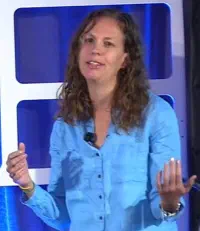
Answer.AI R&D researcher; fast.ai co-founder
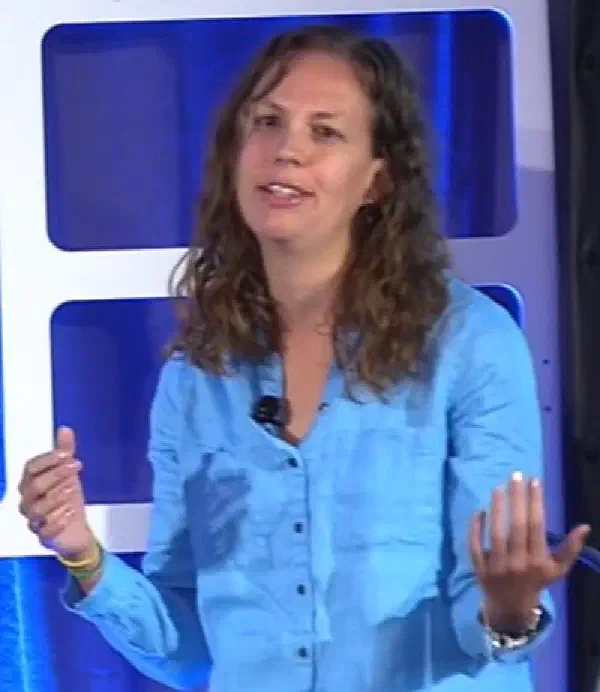
Rachel Thomas
Profile
Rachel Thomas is one of the few people in AI who built a career insisting that the field is too important to be left to a small priesthood of PhDs — and then did the hard work of tearing down the gate. A mathematician by training (PhD from Duke, undergrad at Swarthmore) and an early engineer at Uber, she co-founded fast.ai with Jeremy Howard in 2016 with a deliberately subversive premise: you don’t need a PhD, a research budget, or permission to do world-class deep learning. The free Practical Deep Learning for Coders course that grew out of that premise has trained hundreds of thousands of people, many from nontraditional backgrounds, and remains one of the best on-ramps into modern AI precisely because it teaches top-down — get a model working first, understand the theory later.
What sets Thomas apart from the “democratize AI” crowd is that she took the second half of the sentence seriously. If you’re going to hand powerful tools to everyone, you have an obligation to talk honestly about how those tools cause harm. In 2018 she launched fast.ai’s data ethics teaching, and in 2019 became founding director of the Center for Applied Data Ethics at the University of San Francisco. Her ethics work is refreshingly non-abstract — it’s less about trolley problems and far-future superintelligence, and more about the concrete mechanics of how metric-optimizing systems, biased datasets, and concentrated corporate power hurt real people right now. Developers who’ve only ever heard “AI ethics” as a compliance checkbox should read her instead; she makes the case as an engineer, not a scold.
Thomas is also a genuinely good writer, and one of her most influential contributions is meta: her essay “Why You (Yes, You) Should Blog” convinced a generation of practitioners to write in public. Her own blog is a model of the form — sharp, well-sourced, and willing to pick fights with prestigious institutions (she has a running habit of dismantling Harvard Business Review and other outlets when they get algorithmic bias wrong). She was named to Forbes’ “20 Incredible Women in AI” in 2017.
Today Thomas works in R&D at Answer.AI, Jeremy Howard’s applied research lab, and holds a Professor of Practice appointment at the Queensland University of Technology Centre for Data Science. Her recent focus has shifted toward AI in medicine and the life sciences — she has gone back to school for immunology — writing skeptically but constructively about the promise and peril of applying machine learning to biology. It’s a characteristically Thomas move: go deep into a hard, high-stakes domain rather than stay comfortable at the level of general takes.
Key Articles & Papers
Why You (Yes, You) Should Blog What HBR Gets Wrong About Algorithms and Bias The Problem with Metrics is a Fundamental Problem for AI AI and Power: The Real Risk of AI is How it Concentrates Power Gaps and Risks of AI in the Life Sciences AI & Medicine: Promise & PerilVideos
Notes on my research:
- No Books section — Thomas has contributed chapters (e.g., to 97 Things About Ethics Everyone in Data Science Should Know and the Deep Learning for Coders book), but hasn’t authored a standalone book, so per your rules I omitted the section.
- No Controversies section — I found no notable public controversies; her disputes are intellectual (critiquing HBR, etc.), not scandal-level. Omitted per your rules.
- Video IDs (all surfaced directly in search results):
LqjP7O9SxOM= Artificial Intelligence needs all of us (TEDxSanFrancisco);WC1kPtG8Iz8= Some Healthy Principles About Ethics & Bias in AI (PyBay 2018 keynote);S-6YGPrmtYc= Getting Specific About Algorithmic Bias. Her own channel is @math-rachel — the script’s API pass should surface more from there. - I linked only Jeremy Howard internally, as he’s the only directory person centrally involved in her story.
YouTube