Research professor studying AI's social and material costs
Kate Crawford
Profile
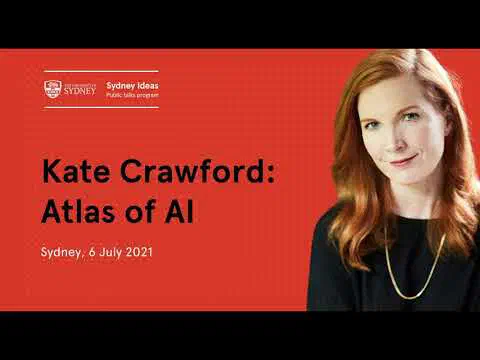
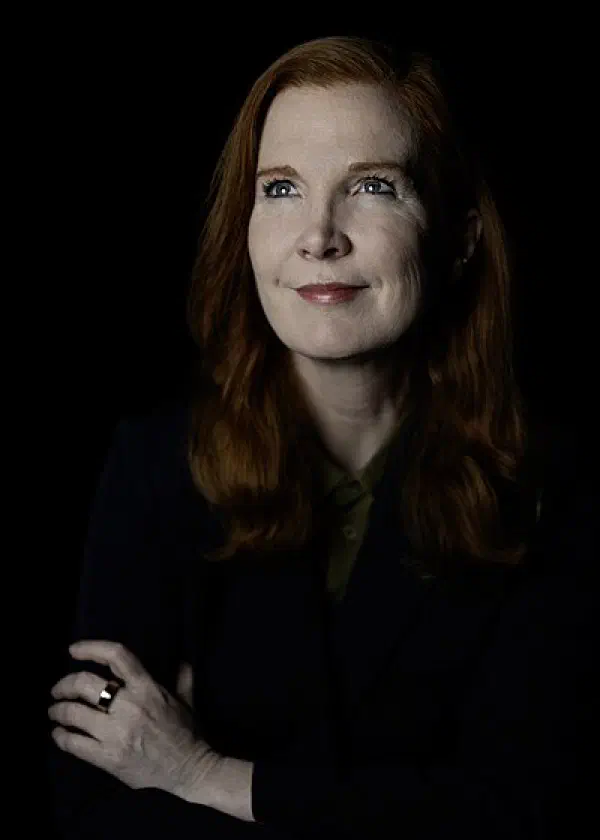
Kate Crawford is one of the most important critical voices in AI — the scholar who did more than anyone to reframe machine learning as a material and political enterprise rather than a purely computational one. If your mental model of AI stops at model weights and GPUs, Crawford’s work is the corrective: it drags the conversation down into lithium mines, container ships, click-worker sweatshops, and the terabytes of scraped human expression that quietly become “training data.” She is a Research Professor at USC Annenberg, a Senior Principal Researcher at Microsoft Research in New York, and the inaugural Visiting Chair for AI and Justice at Paris’s École Normale Supérieure. She currently leads the Knowing Machines Project, a transatlantic research collaboration investigating how AI systems are trained and what those datasets actually contain.
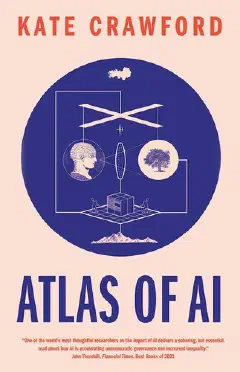
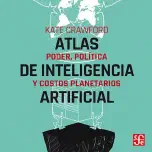
Her defining contribution is Atlas of AI (2021), a book that traces the full supply chain of a technology most engineers experience only as an API call. Crawford’s argument is blunt: AI is “neither artificial nor intelligent.” It is built from natural resources torn out of the earth, from underpaid labor pulled from the global margins, and from data taken — usually without consent — from everyone who has ever posted online. That framing has become required reading for anyone who wants to understand the true cost of the systems they build. Long before “the environmental cost of AI” became a mainstream talking point, Crawford was mapping it, alongside researchers like Sasha Luccioni who now quantify it in detail.
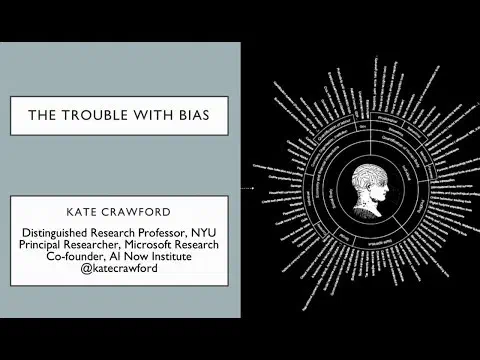
Crawford also pioneered a genuinely unusual mode of research: the investigation-as-artwork. Her Anatomy of an AI System (with artist Vladan Joler), a giant exploded-view diagram of everything required to make a single Amazon Echo answer a question, hangs in the permanent collections of MoMA and the V&A. Excavating AI and the viral ImageNet Roulette app (with Trevor Paglen) exposed the grotesque, racist, and misogynistic labels buried in ImageNet — one of the foundational datasets of the deep learning era — and pushed its maintainers to purge hundreds of thousands of images. Her latest, Calculating Empires (2023–24), a room-sized genealogy of technology and power since 1500, won the Silver Lion at the 2025 Venice Architecture Biennale.
For developers, Crawford matters because she asks the questions that don’t show up in a loss curve. She co-founded the AI Now Institute at NYU in 2017 (stepping back from active involvement in 2024), pushing AI accountability into policy and public discourse alongside colleagues like Meredith Whittaker, Timnit Gebru, and Margaret Mitchell. You may not agree with all of her conclusions — she is unapologetically a critic, not a booster — but if you build with AI and never grapple with where the training data and the electricity actually come from, you are working with an incomplete picture. Crawford’s whole project is to complete it.
Books
Key Articles & Papers
Anatomy of an AI System Excavating AI: The Politics of Images in Machine Learning Training Sets AI Now Report Calculating Empires: A Genealogy of Technology and Power Since 1500 There is a blind spot in AI researchVideos
Controversies
Crawford’s most influential work has also drawn substantive pushback. Excavating AI and ImageNet Roulette were credited with pressuring ImageNet to remove roughly 600,000 images, but critics — most prominently in the response paper “Excavating ‘Excavating AI’: The Elephant in the Gallery” — argued the project displayed some of the same consent and copyright problems it condemned (a figure was later removed from the published version over consent concerns) and overstated flaws in the underlying datasets. More broadly, AI’s builder camp often views Crawford as too relentlessly critical — a skeptic who catalogs harms without much credit for the field’s benefits. Her defenders counter that someone has to keep the receipts on AI’s real-world costs, and that the industry’s discomfort is rather the point.
Spotify Podcasts







YouTube