
Meta Superintelligence Labs VP of Product & Applied Research
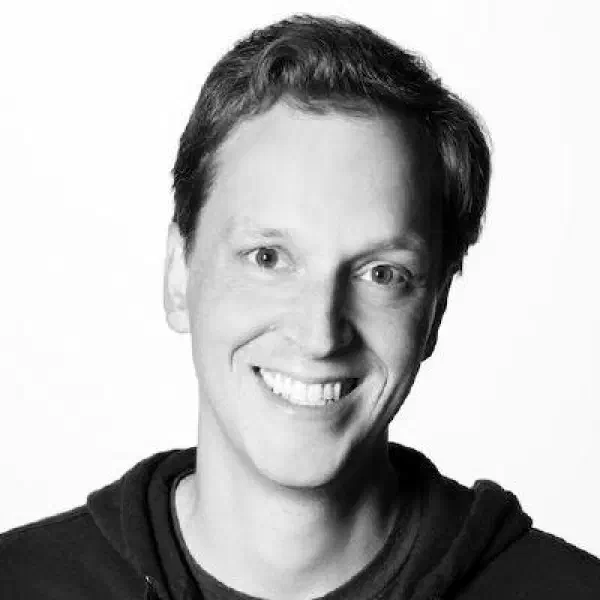
Nat Friedman
Profile
Nat Friedman is the rare figure who has spent his entire career at the seam between open source, developer tools, and now frontier AI — and who keeps ending up early to things that later look inevitable. A GitHub veteran turned investor turned Meta executive, he is best known to most developers as the CEO who shipped GitHub Copilot, arguably the first mainstream AI product that millions of programmers actually integrated into their daily workflow. If you write code with an AI assistant today, you are living downstream of decisions Friedman made.
His path there is worth knowing because it explains how he thinks. In 1999 he co-founded Ximian with Miguel de Icaza to build GNOME desktop software; Novell acquired it in 2003. The two reunited in 2011 to start Xamarin, commercializing the Mono open-source implementation of .NET for cross-platform mobile development — Microsoft bought that in 2016. When Microsoft acquired GitHub for $7.5 billion in 2018, Friedman became CEO. Over three years he turned a beloved-but-static code host into a product engine: Copilot, Codespaces, a real mobile app, Advanced Security, Sponsors, and the acquisitions of npm and Semmle. He stepped down in late 2021, having proven he could ship AI-flavored developer products at scale before “AI product” was a category.
What he did next matters as much as what he built. Friedman had launched AI Grant with Daniel Gross back in 2017 — handing out compute credits and small cash grants to open-source AI founders years before most VCs noticed compute was the real constraint. That instinct hardened into NFDG, a roughly $1.1 billion venture fund the pair raised in 2023 and rode to enormous paper gains, backing some of the most consequential AI companies of the cycle. He also funded and co-created the Vesuvius Challenge with Gross and papyrologist Brent Seales — a prize competition that used machine learning to read the carbonized Herculaneum scrolls buried by Vesuvius in AD 79, a genuinely thrilling demonstration that AI can crack problems no human had solved in 2,000 years.
In June 2025, Meta acqui-hired the pair — partially buying out NFDG’s holdings — and installed Friedman as VP of Product & Applied Research at the newly formed Meta Superintelligence Labs, which he co-leads alongside Alexandr Wang under Mark Zuckerberg. His mandate is essentially the Copilot playbook at planetary scale: turn Llama and Meta’s research into products people use. For developers, Friedman is a useful case study in taste — someone who repeatedly bet on open ecosystems and shipping-over-theorizing, and whose career argues that distribution and developer experience decide which AI research actually reaches the world.
Key Articles & Papers
Nat Friedman — Personal Site & Essays Vesuvius Challenge AI GrantVideos
Controversies
Friedman’s move to Meta came amid the company’s aggressive 2025 AI talent raid, which drew criticism for reported nine- and ten-figure compensation packages used to pull researchers from rivals. The structure of the NFDG deal — a partial buyout and acqui-hire rather than a full acquisition — also fits a broader pattern of big-tech AI “acqui-hires” (Microsoft–Inflection, Amazon–Adept, Google–Character.AI) that critics argue are designed in part to absorb talent and technology while sidestepping the antitrust scrutiny a normal acquisition would attract. None of this is unique to Friedman, and none alleges wrongdoing on his part — but it places him at the center of an ongoing debate about how concentrated AI talent and capital are becoming among a handful of incumbents.
Spotify Podcasts


YouTube