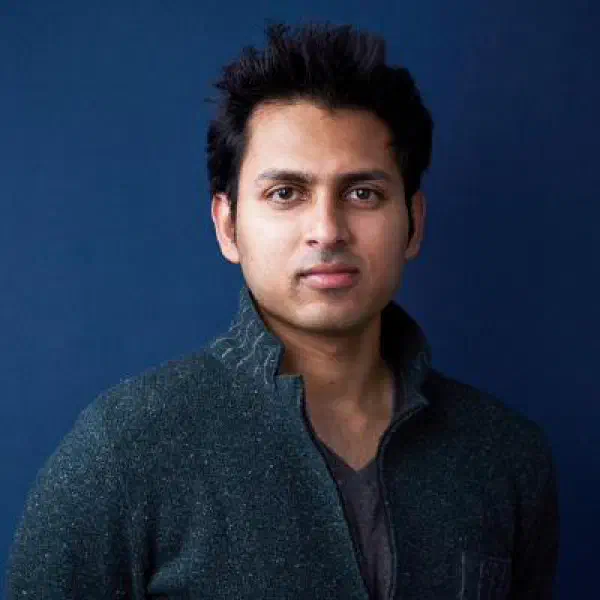

CTO at Thinking Machines Lab, AI infrastructure researcher
Soumith Chintala
Profile
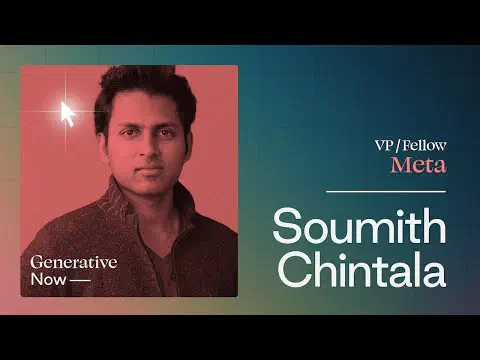
Soumith Chintala is, more than almost anyone, the reason your deep learning code looks the way it does. As co-creator of PyTorch at Meta (then Facebook), he helped build the framework that now underpins the overwhelming majority of AI research — from academic papers to the frontier models coming out of the big labs. If you have ever written import torch, called .backward(), and watched autograd just work, you have felt his design sensibility directly. PyTorch won not by being the most powerful engine but by being the most pleasant to think in: define-by-run graphs, Pythonic ergonomics, and an obsessive respect for the researcher’s workflow over the systems engineer’s convenience. That was a deliberate philosophy, and Chintala was one of its loudest champions.
His path there is worth knowing because it is unusually grassroots for someone this influential. Born and raised in Hyderabad, India, he studied at VIT Vellore and then NYU, and joined Facebook AI Research (FAIR) in 2014. Before PyTorch, he did serious research work — he is a co-author on three of the most-cited early GAN papers: LAPGAN, DCGAN (with Alec Radford and Luke Metz), and Wasserstein GAN. DCGAN in particular became the template for how people actually trained generative image models for years, and his half-serious “How to Train a GAN” tips talk captured how much of that era was hard-won empirical craft rather than clean theory. He also built the widely-used convnet-benchmarks suite that hardware vendors optimized against, giving him an early, unusually concrete view of where deep learning’s performance bottlenecks really lived.
In January 2026, after 11 years at Meta — where he rose to a VP/Fellow-level role leading AI infrastructure and PyTorch — Chintala became CTO of Thinking Machines Lab, the research company co-founded by Mira Murati. It is a fitting move: the person who built the tools everyone else builds on now sets technical direction at one of the most closely watched new labs. For developers, the signal is that Thinking Machines is betting heavily on infrastructure and research tooling as a competitive edge, not just model weights.
What makes Chintala worth studying, beyond the résumé, is his temperament. He is a vocal advocate for open-source AI as trustworthy AI — the argument that if the tools and increasingly the models are open, the community can inspect, adapt, and not be captured by any single vendor. He talks openly about valuing “laziness” (automate the tedium), simplicity, and staying close to the grassroots of the community rather than issuing decrees from on high. Alongside his industry work he collaborates on home-robotics research at NYU with Lerrel Pinto, on projects like “On Bringing Robots Home.” He is a builder’s builder, and his opinions on where ML systems are heading tend to be worth taking seriously precisely because he has shipped the thing the rest of us depend on.
Key Articles & Papers
Unsupervised Representation Learning with Deep Convolutional GANs (DCGAN) Deep Generative Image Models using a Laplacian Pyramid of Adversarial Networks (LAPGAN) Wasserstein GAN PyTorch: An Imperative Style, High-Performance Deep Learning Library On Bringing Robots HomeVideos

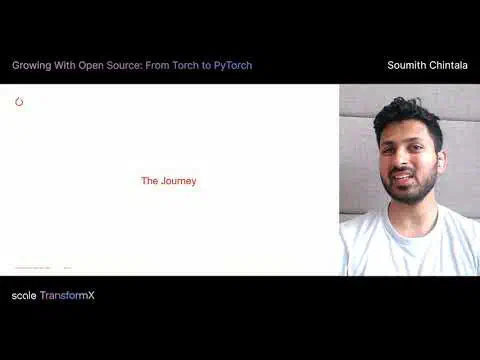
Spotify Podcasts