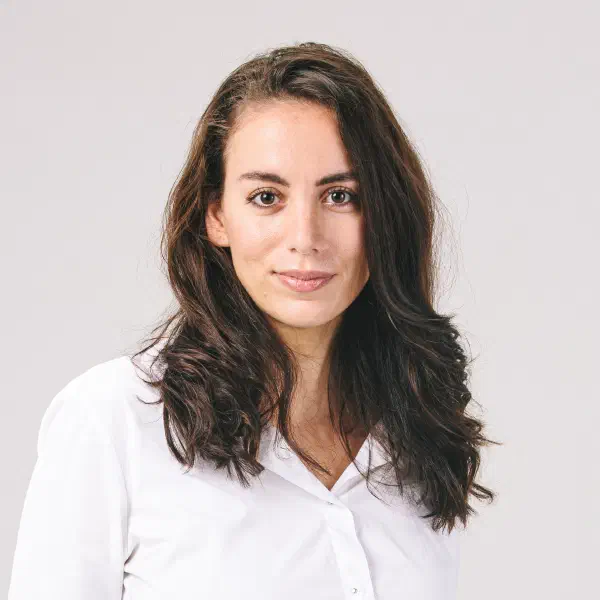
CEO and co-founder of Thinking Machines Lab
Mira Murati
Biographies
Profile
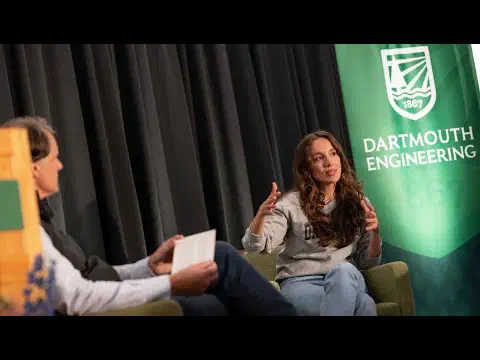
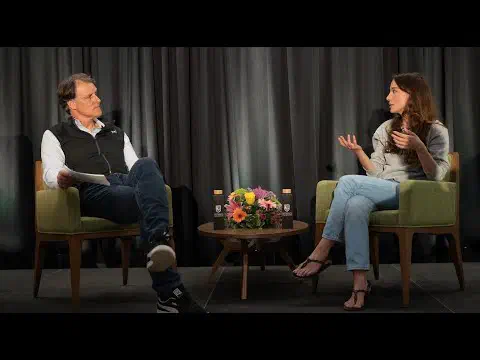
Mira Murati is the rare AI executive whose reputation was built on shipping rather than on papers. Born in Vlorë, Albania in 1988, she left at sixteen on a scholarship to Pearson College UWC in Canada, took a dual degree from Colby and Dartmouth’s Thayer School in mechanical engineering, and spent her early career on hardware — a summer at Goldman Sachs, aerospace concepts at Zodiac, then senior product manager on the Model X at Tesla, followed by VP of product and engineering at the hand-tracking company Leap Motion. She joined OpenAI in June 2018 as VP of Applied AI and Partnerships, became CTO in May 2022, and for six and a half years was the person who converted research artifacts into things you could actually call from a terminal: ChatGPT, GPT-4, DALL·E, GPT-4o, Sora. If you learned to build with LLMs between 2022 and 2024, you were building on a product surface she owned.
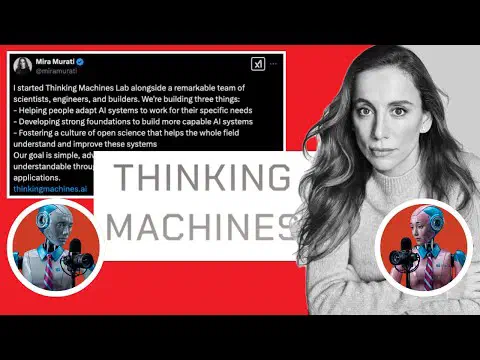
She also spent three days in November 2023 as OpenAI’s interim CEO, after the board removed Sam Altman — a stretch in which she reportedly relayed staff concerns to the board about a “race to the bottom on safety” and then signed the letter demanding Altman’s return. She left in September 2024, in the same week as chief research officer Bob McGrew and VP of research Barret Zoph, as OpenAI restructured its for-profit arm. Five months later she launched Thinking Machines Lab with roughly thirty researchers poached from OpenAI, Meta, and Mistral — John Schulman as chief scientist, Zoph as CTO, Lilian Weng as a co-founder, with Alec Radford advising. In July 2025 the company closed a $2 billion seed round at a $12 billion post-money valuation, the largest seed in history, led by Andreessen Horowitz with Nvidia, AMD, Cisco, and Jane Street participating. Albania’s government put in $10 million, which required a budget amendment.
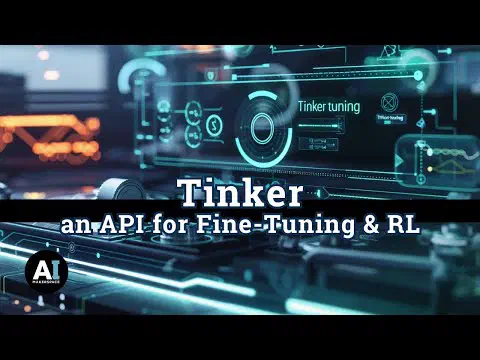
What she is actually building matters more to developers than the funding theatrics. The thesis is that frontier capability is commoditizing and the real bottleneck is customization — that most people don’t need a bigger base model, they need a cheap, reliable way to bend an existing one to their data. The first product, Tinker (October 2025), is a managed fine-tuning and RL API that hides distributed training behind a single-device programming model: you pick a Qwen3 or Llama 3 checkpoint, write a loop with your own loss, and Tinker handles scheduling, multi-tenancy, and crash recovery. It uses LoRA exclusively, which is what makes the multi-tenant economics work. Research groups at Princeton, Stanford, and Berkeley picked it up early. Then in July 2026 came Inkling: a 975B-parameter mixture-of-experts model with 41B active, text/image/audio input, a 1M-token context, trained on 45T tokens and released under Apache 2.0 on Hugging Face. It is not the smartest model in the world and the company doesn’t claim it is — it’s positioned as the best base to customize, given away free rather than metered, with Tinker as the on-ramp. Alongside it runs the “interaction models” line of work previewed in May 2026: continuous, real-time multimodal dialogue targeting ~200ms latency, the speed of a blink.
The company’s research blog, Connectionism, has been disproportionately valuable relative to the lab’s product output — “Defeating Nondeterminism in LLM Inference” and “LoRA Without Regret” are genuinely load-bearing engineering documents that changed how practitioners think about batch-invariant kernels and adapter capacity. The organization around them has been turbulent: a $50–60B funding round collapsed in January 2026 back to the original $12B mark, Andrew Tulloch left for Meta, Zoph and Luke Metz returned to OpenAI in an acrimonious January exit, Soumith Chintala took over as CTO, and Weng resigned on health grounds in July 2026 and also went back to OpenAI. Of the founding leadership, Schulman is largely what remains beside Murati. Judge her by the artifacts: if you are trying to move past prompting a frontier API and into owning a model that behaves the way your product needs, Tinker and Inkling are the most opinionated bet anyone has placed on that being the next default workflow.
Key Articles & Papers
Announcing Tinker Defeating Nondeterminism in LLM Inference LoRA Without Regret On-Policy Distillation Modular Manifolds Interaction Models: A Scalable Approach to Human-AI Collaboration The Future Worth Building Is Human Inkling: Our Open-Weights Model Inkling Model CardVideos
Controversies
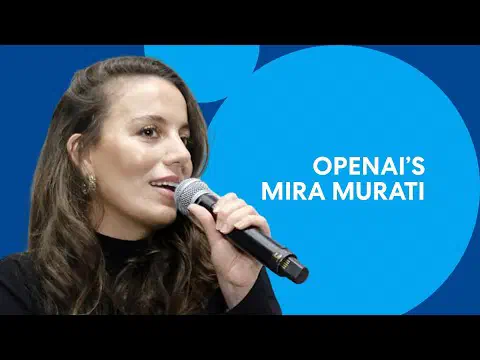
The Sora training data interview (March 2024). Asked by Joanna Stern of the Wall Street Journal whether Sora was trained on YouTube, Instagram, or Facebook video, Murati said “I’m actually not sure about that… I’m not confident about it.” The clip went viral. Whether it was genuine ignorance or careful legal hedging, it was a bad look for a CTO on the exact question driving copyright litigation against OpenAI, and she later confirmed Shutterstock data was used. Fair context: no frontier lab was answering that question honestly in 2024, and OpenAI’s data practices were not hers alone to set.
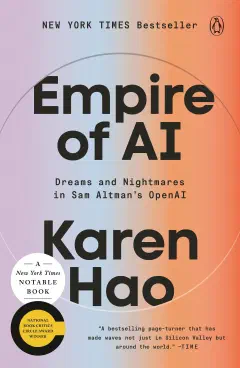
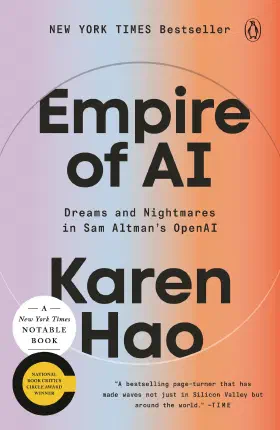
Her role in the November 2023 board crisis. Murati was named interim CEO after the board fired Altman, and reporting — including Karen Hao’s — indicates she had raised concerns to the board about Altman’s management and safety trade-offs. She then publicly backed his return and signed the employee letter. Reasonable people read this as either principled escalation followed by pragmatic acceptance of reality, or as having it both ways.
The valuation and the exodus. A $2 billion seed for a company with no product invited skepticism from the start. When Thinking Machines sought $50–60 billion in late 2025 on the strength of one fine-tuning API, investors declined and the talks collapsed, resetting the company to its original $12B mark. The January 2026 departure of co-founders Barret Zoph and Luke Metz to OpenAI was messier still: the company said Zoph was terminated for “unethical conduct,” while reporting indicated his OpenAI hire had been in motion for weeks beforehand. Lilian Weng’s July 2026 exit on health grounds — she cited stress and workload before also returning to OpenAI — added to a pattern of co-founder attrition that is hard to wave away.
Inkling’s Chinese lineage. At launch, Thinking Machines disclosed that Inkling’s architecture was largely modeled on DeepSeek-V3 and that its post-training was bootstrapped with synthetic data from Moonshot AI’s Kimi K2.5 — arriving while Washington was weighing sanctions on Moonshot over distillation practices. Critics called it a double standard; defenders noted that nearly every major lab now trains on synthetic data from stronger models, and that Thinking Machines at least disclosed it in the model card.
Spotify Podcasts





YouTube