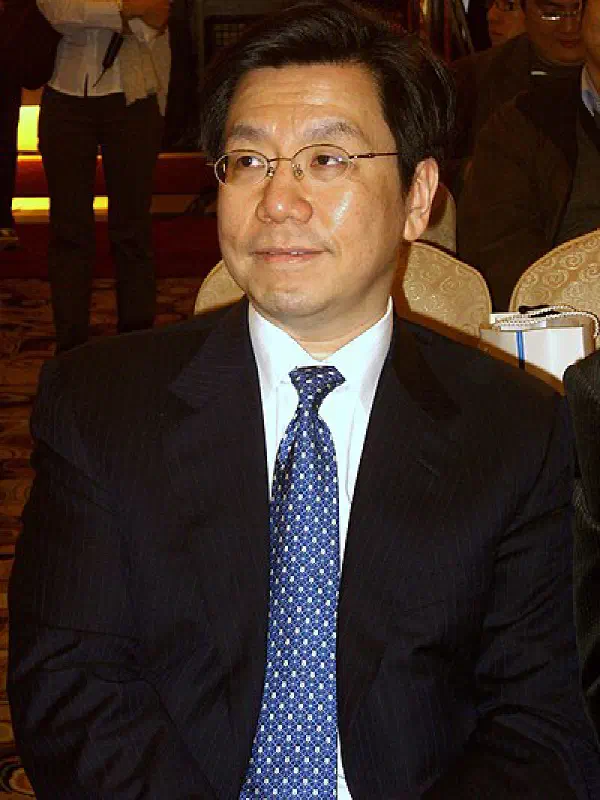
Sinovation Ventures chairman, 01.AI founder and CEO
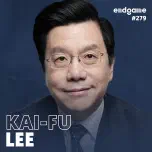
Kai-Fu Lee
Profile
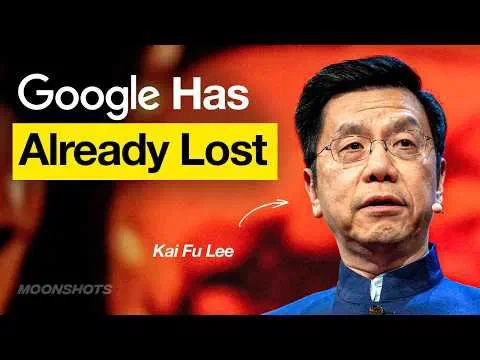
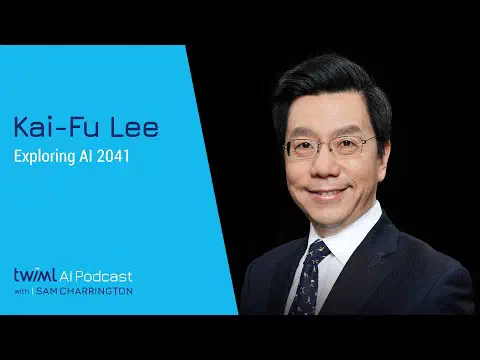
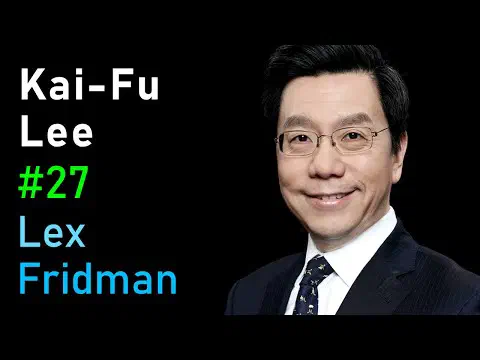
Few people can claim to have shaped AI research, run the China arms of both Microsoft and Google, written the defining book on US–China AI competition, and built a frontier-model startup — but Kai-Fu Lee has done all four. Born in Taiwan in 1961 and educated at Columbia and Carnegie Mellon, Lee’s academic legacy predates the deep learning era entirely: his 1988 PhD work produced Sphinx, one of the first speaker-independent, continuous speech recognition systems, and a genuine milestone in applied machine learning. For developers, that’s the useful context — Lee is not a finance guy who wandered into AI; he was doing statistical speech recognition when most of the field still thought rules would win.
His corporate résumé reads like a map of the industry: speech R&D at Apple in the early 1990s, a stint at Silicon Graphics, then the founding directorship of Microsoft Research Asia in Beijing (1998) — the lab that trained a startling share of China’s senior AI talent — and finally the presidency of Google China from 2005 to 2009. That last move triggered a famous non-compete lawsuit between Microsoft and Google, settled out of court, and cemented Lee as one of the most sought-after technologists bridging Silicon Valley and Beijing. In 2009 he left to found Sinovation Ventures (originally Innovation Works), which today runs roughly $3 billion across dual-currency funds and has backed some of China’s best-known AI and consumer-tech companies.
In 2023 Lee did what many VCs only talk about: he started his own frontier lab, 01.AI, and shipped fast. Its open-weight Yi models — Yi-34B, later Yi-1.5, Yi-Coder, and the GPT-4-class Yi-Lightning — punched above their weight on benchmarks and made 01.AI a unicorn almost overnight, echoing the efficiency-over-scale philosophy also championed by fellow Chinese labs like DeepSeek. The bet was that a lean team could match much larger rivals on cost-per-token rather than raw size.
Then came the hard pivot, and it’s the part developers should study most. Through late 2024 Lee concluded that pre-training giant models is no longer economically viable for a startup; 01.AI reassigned its pre-training and infrastructure teams (many absorbed into Alibaba’s Tongyi/Qwen effort) and repositioned as an enterprise software company — building on top of open Chinese models like Qwen, DeepSeek, and GLM rather than training its own from scratch. Lee now pitches 01.AI as “the Palantir of China,” selling data-organizing, agent-layered enterprise deployment (products like Wanzhi and Boss AI) and eyeing a Hong Kong IPO around 2027. Whether you read that as a graceful retreat or a shrewd read of unit economics, it’s an unusually candid admission from a founder about where the money actually is in the LLM stack.
Books
Videos



Controversies
Yi model and the Llama architecture. When 01.AI open-sourced Yi-34B in late 2023, developers noticed the model reused Meta’s Llama architecture with some tensor/layer names renamed. Critics accused the team of downplaying that lineage; 01.AI acknowledged it had adopted Llama’s architecture (which is standard practice and permitted) but conceded the renaming was a mistake and corrected the naming. It remains a cautionary tale about attribution norms in open-weight AI.
The 2024 pivot and layoffs. 01.AI’s retreat from pre-training, and the transfer of teams to Alibaba, drew reporting that framed it as a stumble for one of China’s highest-profile “AI tiger” startups. Lee has pushed back publicly, arguing the company chose sustainable enterprise economics over an unwinnable capital race rather than failing at model-building — a debate that says as much about the brutal economics of foundation models as about 01.AI itself.
Spotify Podcasts








YouTube