Chief AI officer, Beyond Imagination robotics; author, The Singularity Is Nearer
Ray Kurzweil
Biographies
Profile
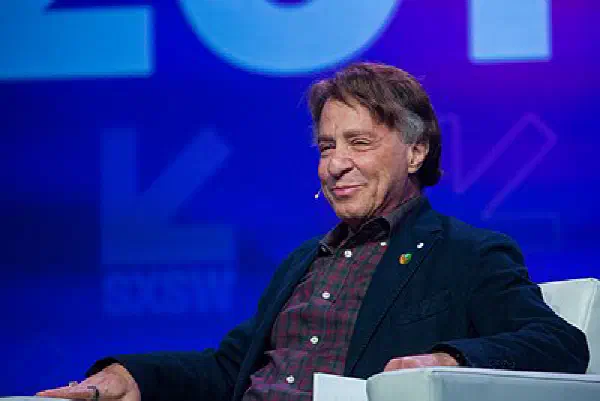
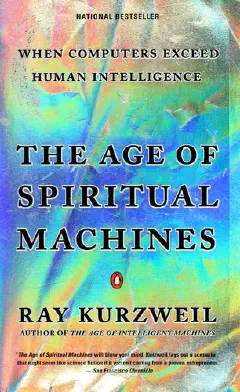
Ray Kurzweil is the closest thing the AI field has to a prophet — and, depending on who you ask, either its most vindicated forecaster or its most stubborn optimist. Long before deep learning made “artificial intelligence” a household phrase, Kurzweil was a serious inventor: he built the first omni-font optical character recognition system, the first print-to-speech reading machine for the blind (a project he pursued after a chance meeting with Stevie Wonder), and the Kurzweil K250 music synthesizer that convincingly reproduced a grand piano. That engineering pedigree matters, because it’s the foundation for the argument that made him famous — that technology doesn’t advance linearly, it compounds. His “Law of Accelerating Returns” reframed Moore’s Law as a special case of a much broader exponential curve running through all of information technology.
From 2012 he spent over a decade at Google as a Director of Engineering (later Principal Researcher), working on natural-language understanding — the same problem space that eventually produced the large language models now reshaping software. Today he serves as Chief AI Officer at Beyond Imagination, a humanoid-robotics startup he co-founded aimed at industrial automation, and remains a director at United Therapeutics. But his real influence isn’t organizational — it’s memetic. The vocabulary that developers and executives now use to talk about AI timelines (“the singularity,” “human-level AI by 2029,” “merging with machines by 2045”) is very largely Kurzweil’s, coined and stress-tested across three decades of books.
For a developer, the interesting thing about Kurzweil is his scoreboard. He claims roughly 86% accuracy across ~147 predictions made since the 1990s, and while critics dispute how he grades himself, the directional calls — ubiquitous mobile computing, cloud-connected knowledge, machines that answer questions in natural language, self-driving vehicles, computers beating humans at hard cognitive tasks — landed. His signature date, human-level AI by 2029, once looked absurd; after GPT-4-class models it looks, at minimum, no longer crazy. That’s the useful lens: Kurzweil is a calibration exercise. Reading him teaches you to reason about capability curves rather than snapshots.
Where he becomes genuinely contentious is when the exponential curve leaves silicon and enters biology. Kurzweil doesn’t just predict smarter software; he predicts nanobots repairing cells, brains connected to the cloud, and radical life extension pushing past “longevity escape velocity.” He reportedly takes a large daily regimen of supplements in pursuit of living long enough to reach it. Whether you find this visionary or magical thinking, it’s worth engaging with honestly — because the same aggressive-extrapolation instinct that nailed the trajectory of computing is what makes his biological forecasts so much harder to take at face value. He is best read as a provocateur who forces you to defend your own assumptions about what’s impossible.
Books
Key Articles & Papers
The Law of Accelerating Returns Ray Kurzweil '70 reinforces his optimism in tech progress (MIT News)Videos
Controversies
Kurzweil’s critics rarely dispute his record on computing; they dispute his leaps into biology and medicine. Aging researchers such as Boston University’s Thomas Perls have compared his immortality claims to the promises of “quacks,” arguing the human body is a messy dynamic system that won’t follow a clean exponential the way transistor counts do. Bioethicists including Leon Kass have challenged the ethics of his radical life-extension agenda, and technology critic Evgeny Morozov has attacked the “technological solutionism” running through his work — the assumption that complex social problems yield to better machines. There’s also a persistent fairness question about how Kurzweil scores his own predictions: the 86% figure depends on generous interpretation of vaguely worded forecasts, and skeptics note that a prediction hedged across a decade is hard to falsify. None of this is fraud — it’s the standard tension around a futurist who states bold dates in public and then grades the exam himself.
Spotify Podcasts






YouTube