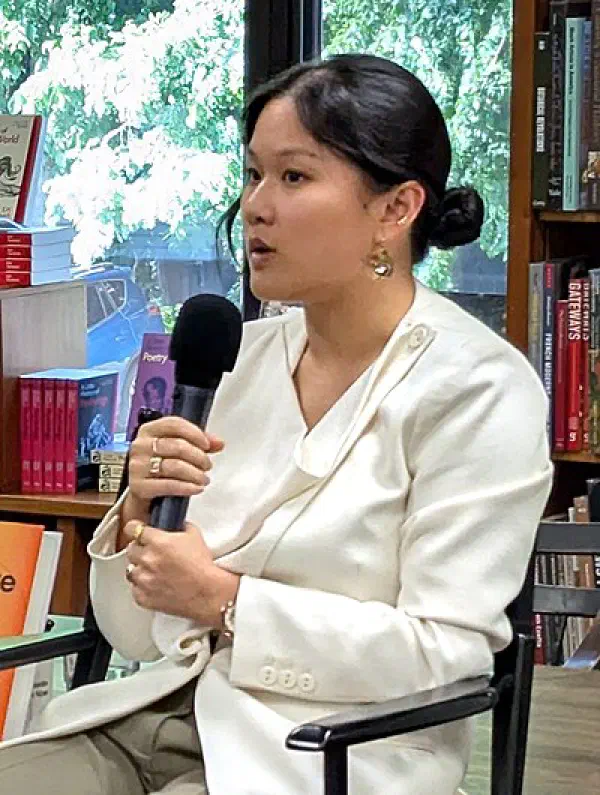
Empire of AI author and freelance journalist
Karen Hao
Profile
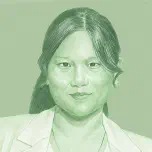
Karen Hao is arguably the most consequential journalist covering artificial intelligence today — not because she explains how transformers work, but because she has spent a decade documenting what the AI industry does to people, and who pays the price for it. A trained mechanical engineer (she holds a B.S. from MIT and once worked as an application engineer at the first startup to spin out of Google[x]), Hao brings a builder’s literacy to reporting that most beat writers lack. She got her start as a data scientist and reporter at Quartz, then became senior AI editor at MIT Technology Review, where in 2020 she became the first journalist ever to profile OpenAI — a piece that reportedly enraged the company precisely because it was accurate.
For developers, Hao matters because she is the counterweight to the industry’s own marketing. While much of the discourse around AI is written by people selling it, Hao follows the supply chain to its ends: the Kenyan data labelers paid a few dollars an hour to filter traumatic content out of ChatGPT, the Chilean communities whose freshwater is diverted to cool data centers, the criminal-risk algorithms quietly deciding who stays in jail. Her long-running “AI Colonialism” series at MIT Technology Review reframed the whole industry as a system that concentrates power and extracts resources from the global South — a thesis she later expanded into a book. If you’re building with AI, her work is the uncomfortable-but-necessary reminder that models have material costs and human labor behind every benchmark.
Her 2025 book Empire of AI: Dreams and Nightmares in Sam Altman’s OpenAI — built on roughly 300 interviews, including 90 with people inside OpenAI — became an instant New York Times bestseller and won the National Book Critics Circle Award for Nonfiction, among six awards total. It chronicles the departure of early backer Elon Musk, the boardroom coup that briefly ousted and then reinstated Sam Altman, and the ideological fervor around artificial general intelligence that Hao argues functions less like science and more like a belief system. The book cemented her 2025 TIME100 AI recognition.
Today Hao freelances for The Atlantic and other outlets, co-hosts the BBC podcast The Interface, sits on the board of the AI Now Institute, and co-created the Pulitzer Center’s AI Spotlight Series, a free program training thousands of journalists worldwide to cover AI with rigor. That last role may be her most durable contribution: she is not just reporting on AI, she is building the capacity for others to do it well.
Books
Key Articles & Papers
The messy, secretive reality behind OpenAI's bid to save the world How Facebook got addicted to spreading misinformation Inside the chaos at OpenAI We read the paper that forced Timnit Gebru out of Google AI is sending people to jail—and getting it wrong AI is taking water from the desert Inside the fight to reclaim AI from Big Tech's control How Facebook and Google fund global misinformation Inside the story that enraged OpenAIVideos




Controversies
Hao’s reporting has repeatedly put her at odds with the companies she covers, which is worth understanding as context rather than as a mark against her. OpenAI was reportedly furious about her 2020 profile and, by her account, grew more guarded with the press afterward. Her 2021 Facebook investigation drew immediate public pushback from Facebook leadership — including AI chief Yann LeCun — while AI ethics researchers such as Timnit Gebru and Margaret Mitchell defended it. Critics of Empire of AI, generally from industry-aligned circles, argue that the “colonialism” framing is polemical and understates AI’s benefits; supporters counter that it is the most rigorously sourced critical account of the industry to date. Readers should weigh her clear point of view against her unusually deep sourcing — she reports from a perspective, but she reports.
Spotify Podcasts




YouTube