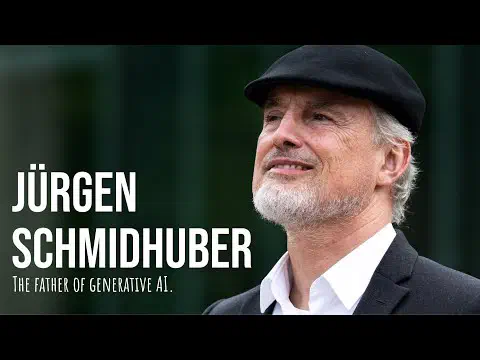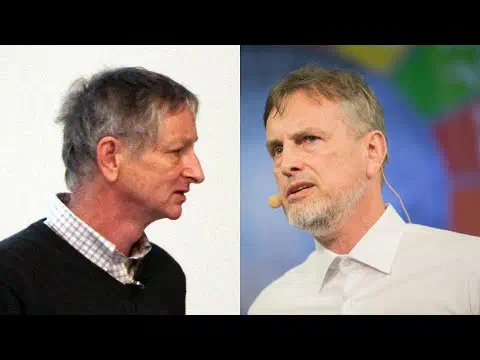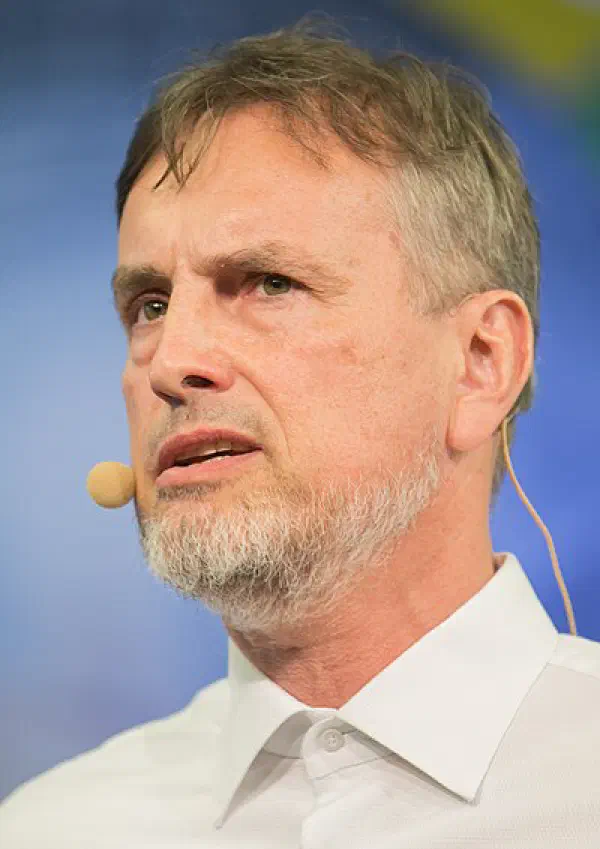

KAUST AI director advancing generative AI and self-improving systems
Jürgen Schmidhuber
Profile
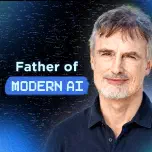
Jürgen Schmidhuber is the closest thing deep learning has to a founding heretic — a researcher whose lab built some of the machinery the modern field runs on, and who has spent the last decade insisting, loudly and in exhaustive detail, that the field forgot to credit him for it. If you have ever used Google Translate, dictated to Siri, or asked Alexa a question in the years before transformers took over, you were using descendants of the Long Short-Term Memory (LSTM) network he developed with his student Sepp Hochreiter in the 1990s. For roughly two decades, LSTM was the default answer to the question “how does a neural network remember?” — and that lineage runs straight through to the sequence models developers train today.
His deeper claim is philosophical: that intelligence is compression. Schmidhuber’s worldview, rooted in algorithmic information theory, holds that learning is nothing more than finding regularities in data and exploiting them to build a compact, predictive model of the world. From that seed grew a startlingly prophetic body of work in what he calls his “annus mirabilis” of 1990–91: artificial curiosity driven by two networks competing in a minimax game (which he argues is the core idea later popularized as GANs), unsupervised pre-training for deep networks, recurrent world models for planning, and “fast weight programmers” that later turned out to be formally equivalent to the linearized attention inside modern Transformers. Whether or not you accept his priority claims, the technical throughline is real and worth understanding — a lot of what feels new in 2026 has roots he can point to in yellowing tech reports.
Today Schmidhuber is co-chair of the Center of Excellence for Generative AI at King Abdullah University of Science and Technology (KAUST) in Saudi Arabia, a professor of computer science there, and still Scientific Director of the Swiss AI Lab IDSIA. At KAUST he directs research spanning healthcare, drug design, materials science, robotics, and NLP, part of the Kingdom’s Vision 2030 bet on AI. He also co-founded NNAISENSE to pursue general-purpose AI commercially, and runs his sprawling personal site at juergen.ai.
For a developer, Schmidhuber matters in two ways. First, he is the connective tissue of deep learning history — reading his 2015 survey and his 1990s papers is one of the fastest ways to see how meta-learning, curiosity-driven RL, world models, and attention all fit into a single intellectual lineage. Second, he never abandoned his most ambitious idea: the Gödel machine, a program that rewrites its own code once it can prove the rewrite is an improvement. In 2025 his KAUST group revived that vision in practice with the Huxley-Gödel Machine, a self-improving coding agent that reaches human-level performance on SWE-bench — a reminder that his decades-old obsessions are becoming shippable engineering.
Key Articles & Papers
Long Short-Term Memory Deep Learning in Neural Networks: An Overview Linear Transformers Are Secretly Fast Weight Programmers Formal Theory of Creativity, Fun, and Intrinsic Motivation Gödel Machines: Self-Referential Universal Problem Solvers Huxley-Gödel Machine: Human-Level Coding Agent Development Annotated History of Modern AI and Deep LearningVideos
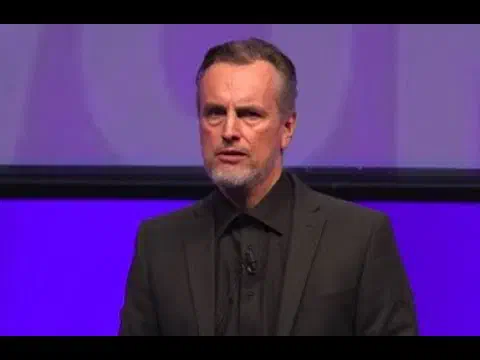
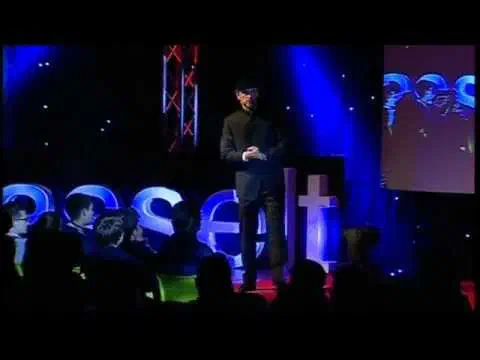
Controversies
Schmidhuber is as famous for priority disputes as for his research. In a widely-read 2015 critique he argued that Geoffrey Hinton, Yoshua Bengio, and Yann LeCun — who later shared the 2018 Turing Award — “heavily cite each other” while failing to credit the field’s true pioneers. He has published detailed rebuttals claiming earlier invention of GANs, backpropagation-through-time applications, planning agents, and more. LeCun responded that Schmidhuber is “manically obsessed with recognition” and “systematically stand[s] up at the end of every talk to claim credit for what was just presented.” The pattern repeats across the field — from public exchanges with Ian Goodfellow over the originality of GANs to ongoing sparring on social media.
The fair reading is that Schmidhuber is often technically right that similar ideas appeared earlier in his group’s work, and often rhetorically counterproductive in how he presses the point — conflating “someone published a related idea first” with “someone deserves the credit for the version that changed the world.” For a developer, the useful takeaway is neither hero-worship nor dismissal: read the primary sources he cites, and treat the disputes as a real, instructive window into how messy and contested the intellectual history of AI actually is.
Spotify Podcasts







YouTube