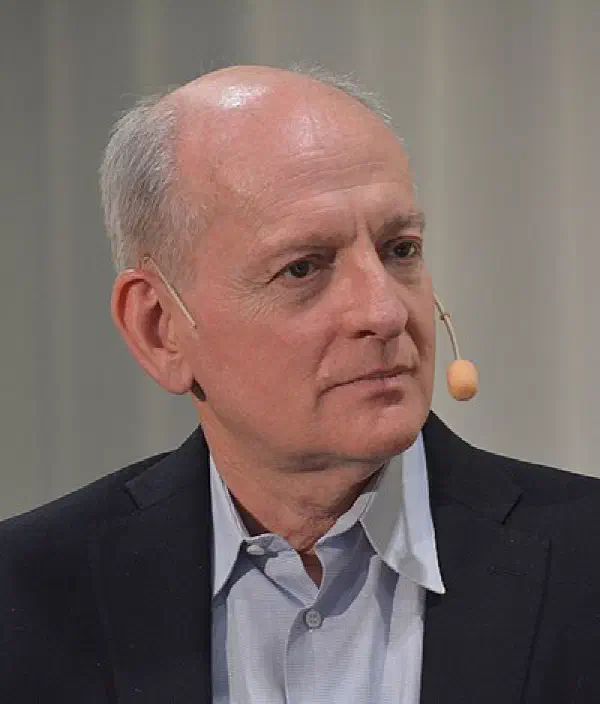
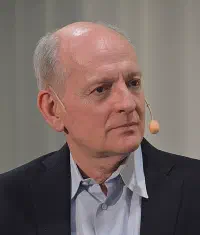
UC Berkeley Distinguished Professor, AI safety and governance
Stuart Russell
Profile
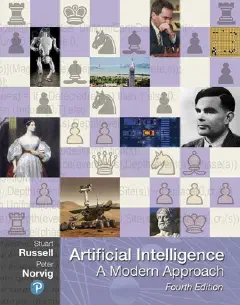
If you have taken a university AI course anywhere in the world, you have almost certainly met Stuart Russell — even if only through the spine of a book. Russell is a Distinguished Professor of Computer Science at UC Berkeley, where he holds the Smith-Zadeh Chair in Engineering, and with Peter Norvig he wrote Artificial Intelligence: A Modern Approach, the field’s canonical textbook. It is used in more than 1,500 universities across some 130 countries, which means a good fraction of every working generation of AI researchers learned how to think about search, logic, probability, and learning from the same pages. For developers, that lineage matters: the vocabulary you use when you say “agent,” “utility,” or “rational action” is largely the vocabulary Russell helped standardize.
What makes Russell interesting today is that he turned his authority against the field’s default trajectory. The standard “model” of AI — build a machine that optimizes a fixed objective you hand it — is, in his view, a mistake that becomes catastrophic as systems grow more capable. His alternative, laid out in his 2019 book Human Compatible, is what he calls provably beneficial or human-compatible AI: machines that are explicitly uncertain about what humans want, that defer to us, and that treat their own objective as something to be learned rather than assumed. This is not hand-waving about “aligning values”; it is a concrete research program, formalized in work like Cooperative Inverse Reinforcement Learning. If you build agentic systems, this is the school of thought that argues an agent too confident in its goal is a bug, not a feature.
Russell directs Berkeley’s Center for Human-Compatible AI (CHAI), founded in 2016, which did as much as any single institution to make AI safety and alignment respectable academic disciplines rather than fringe speculation. He has since scaled that up into policy and institution-building: he founded and serves as President of the International Association for Safe and Ethical AI (IASEAI), whose inaugural Paris conference in February 2025 drew Nobel laureates and hundreds of researchers, and he co-chairs the OECD’s expert group on AI Futures. He was named to the 2025 TIME100 AI list. He is also a persistent, effective campaigner against lethal autonomous weapons — the viral Slaughterbots film was his doing — and an advisor to the UN on arms control.
For someone learning AI now, Russell is worth reading precisely because he is neither a doomer caricature nor an industry cheerleader. He argues, with the credibility of a founding figure, that the risks are real and technical, that regulation should make safety “a condition of doing business” the way it is for aircraft and drugs, and — crucially — that the engineering path to safer systems is a research problem you can actually work on. Alongside Geoffrey Hinton, Yoshua Bengio, and Max Tegmark, he has been one of the most senior voices insisting that capability without control is not progress.
Books
Key Articles & Papers
Cooperative Inverse Reinforcement Learning Research Priorities for Robust and Beneficial Artificial Intelligence Of Myths and Moonshine (Edge response to Jaron Lanier) The long-term future of (Artificial) Intelligence Lethal Autonomous Weapons SystemsVideos
Controversies
Russell is a lightning rod in the long-running dispute over how seriously to take AI existential risk. Critics — including researchers who emphasize present-day harms like bias and labor impacts — argue that his focus on long-term control risks can distract from immediate accountability, while some accelerationist voices dismiss the “control problem” framing as speculative. His IASEAI conference and safety-first regulatory proposals have also drawn pushback: some in the effective-altruism and AI-policy communities publicly questioned whether the inaugural conference translated its ambitions into concrete outcomes. Russell’s counter is consistent — that near-term and long-term risks are complementary, not competing, and that treating provable safety as a precondition for deployment is ordinary engineering prudence, not alarmism.
Spotify Podcasts