MIT physicist, Future of Life Institute president, AI safety advocate
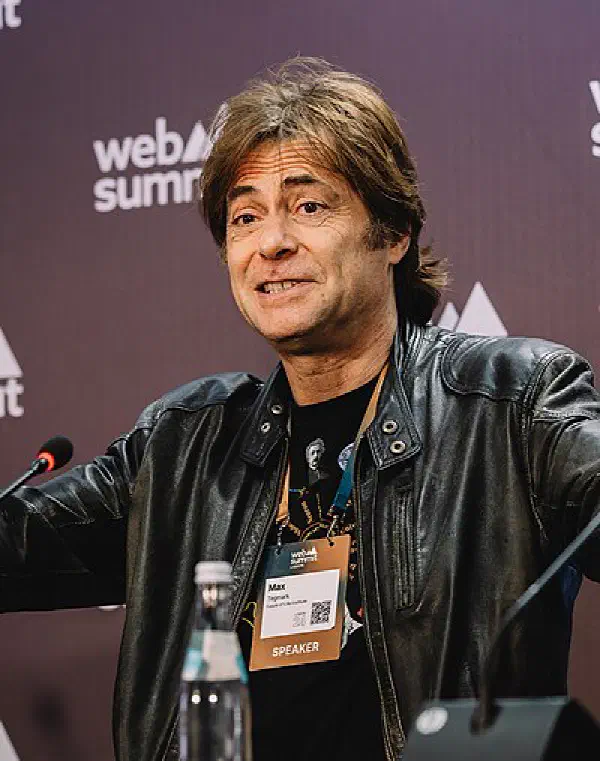
Max Tegmark
Profile
Max Tegmark is the physicist who dragged AI existential risk out of the philosophy seminar and into the boardrooms of Washington and Brussels. A Stockholm-born, Berkeley-trained cosmologist, he spent the first 25 years of his career on the big questions of the universe — the cosmic microwave background, galaxy surveys, and his provocative “Mathematical Universe Hypothesis” that reality is mathematics. Then he pivoted his MIT research group to machine learning, becoming a founding figure at MIT’s Institute for Artificial Intelligence and Fundamental Interactions. For developers, that dual fluency matters: Tegmark talks about neural networks as a physicist talks about a physical system — something whose internals we should be able to understand, not just prompt and pray.
In 2014 he co-founded the Future of Life Institute (FLI) with Skype’s Jaan Tallinn, DeepMind’s Viktoriya Krakovna, his wife Meia Chita-Tegmark, and physicist Anthony Aguirre. FLI has become one of the most consequential AI-safety advocacy organizations on the planet — funding alignment research, shaping the EU AI Act, and, most famously, publishing the March 2023 open letter calling for a six-month pause on training systems “more powerful than GPT-4.” That letter drew tens of thousands of signatures — Yoshua Bengio, Stuart Russell, Elon Musk, Steve Wozniak — and, whatever you think of its central demand, it undeniably moved the Overton window. Overnight, worrying aloud about AI extinction risk went from fringe to respectable dinner-table conversation.
Tegmark is not a doomer who wants to stop the field; he’s an unusually optimistic one who thinks safety and capability can be co-engineered. His current research bets on mechanistic interpretability and “guaranteed safe AI” — the idea, laid out with Steve Omohundro, that provably-safe systems built around a world model, a formal safety specification, and a verifier are the only reliable path to controllable AGI. If that program works, it’s a very developer-friendly future: safety as formal proof rather than red-team whack-a-mole. He also runs the Improve the News Foundation, whose Improve The News aggregator tries to surface media bias with machine learning.
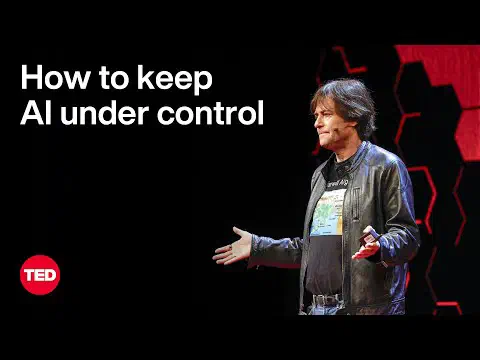
Why he matters to anyone building with AI today: Tegmark is the field’s most effective translator. He can hold a technical conversation about transformer internals and then, an hour later, explain existential risk to a senator. That combination has made him a lightning rod — but it’s also why so much of the current AI-governance conversation runs through arguments he helped popularize. In October 2025 he organized FLI’s “Statement on Superintelligence,” a call to prohibit superintelligence development until there’s scientific consensus it can be done safely, signed by an almost surreal coalition spanning Geoffrey Hinton, Wozniak, Steve Bannon, and Prince Harry.
Books
Key Articles & Papers
Pause Giant AI Experiments: An Open Letter Statement on Superintelligence Provably Safe Systems: The Only Path to Controllable AGI Towards Guaranteed Safe AI: A Framework for Ensuring Robust and Reliable AI Systems Statement on AI Risk (CAIS)
Videos
Controversies
The Nya Dagbladet grant (2023). In January 2023, Swedish anti-racism magazine Expo reported that FLI had sent a signed letter of intent offering roughly $100,000 to Nya Dagbladet Foundation, tied to a Swedish outlet Expo characterizes as far-right and antisemitic. Tegmark initially said FLI had “not approved grants to any person or organization in Scandinavia,” which critics called misleading given the letter of intent. FLI’s published statement says its due diligence later surfaced the outlet’s nature and that it declined to fund the grant in November 2022, before the story broke. The episode drew scrutiny over FLI’s vetting process and Tegmark’s initial framing. Coverage: Vice.
The “pause” letter itself. Critics — including some AI-ethics researchers — argued the pause letter was unenforceable, hyped speculative long-term risk over present-day harms, and effectively advertised the very capabilities it warned about. Supporters counter that it durably legitimized safety concerns. Reasonable people still disagree on whether it helped or distracted.
Spotify Podcasts



YouTube